2026 China EV market mid-year performance review
💡Insights into how AI-integrated manufacturing and supply chain management are shaping the competitive landscape of EVs.
⚡ 30-Second TL;DR
What Changed
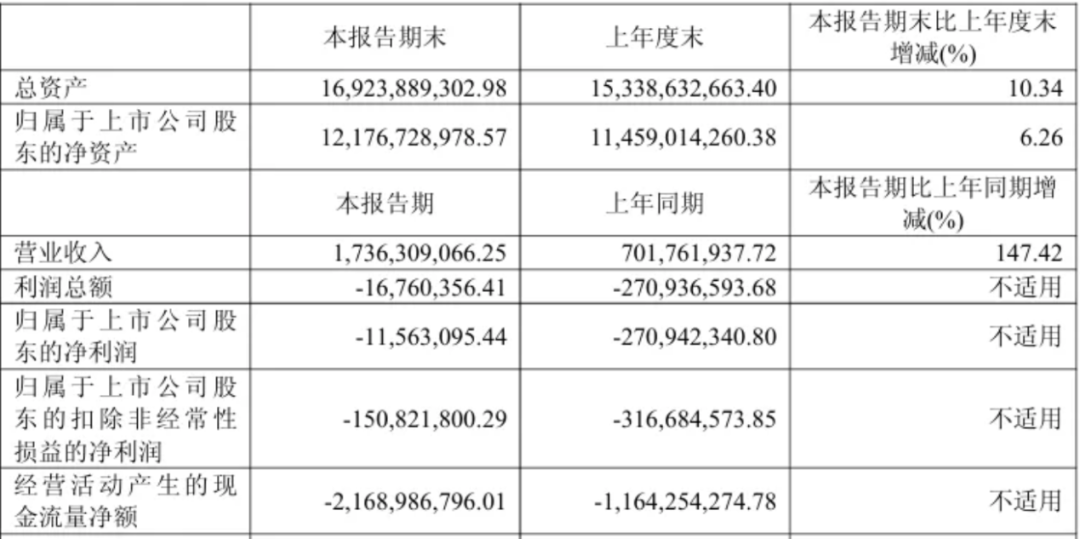
Leapmotor and Nio show strong growth, while the overall market remains highly competitive.
Why It Matters
Automakers are shifting focus from price wars to product definition and supply chain management to survive the industry consolidation.
What To Do Next
Evaluate the integration of AI-driven supply chain management tools to optimize costs in high-competition manufacturing sectors.
Key Points
- •Leapmotor and Nio show strong growth, while the overall market remains highly competitive.
- •Market recovery is driven by 'trade-in' policies and the release of high-demand vehicle categories.
- •Rising costs of raw materials like lithium and chips are squeezing profit margins for automakers.
🧠 Deep Insight
AI-generated analysis for this event — not the original article.
🔑 Enhanced Key Takeaways
- •The Chinese government's 'trade-in' policy, officially known as the 'Action Plan to Promote Large-scale Equipment Renewal and Consumer Goods Trade-in,' has specifically incentivized the scrappage of older internal combustion engine vehicles for new energy vehicles (NEVs), significantly boosting mid-2026 sales volume.
- •Leapmotor's growth is largely attributed to its 'tech-sharing' business model, which has allowed it to lower manufacturing costs by leveraging shared platforms across its C-series SUV and sedan lineups.
- •Nio's mid-2026 performance has been bolstered by the successful ramp-up of its sub-brand, Onvo, which targets the mass market segment to compete directly with Tesla's Model Y.
- •Supply chain analysis indicates that while lithium prices have stabilized compared to 2024, the cost of high-performance AI chips for autonomous driving features has surged due to export restrictions and increased demand for L3/L4 capabilities.
- •Regional data shows that EV penetration in lower-tier Chinese cities has finally surpassed 40% in the first half of 2026, marking a shift from coastal-dominated adoption to nationwide market saturation.
📊 Competitor Analysis▸ Show
| Feature/Metric | Leapmotor (C16) | Nio (Onvo L60) | Tesla (Model Y) |
|---|---|---|---|
| Market Segment | Budget-Friendly SUV | Mass-Market Family SUV | Premium Mid-Size SUV |
| Pricing (CNY) | 155,800 - 185,800 | 200,000 - 250,000 | 249,900 - 354,900 |
| Battery Tech | LFP (Cell-to-Chassis) | LFP/NMC (Swappable) | LFP/NMC (Structural) |
| Key Advantage | High Price-to-Perf Ratio | Battery Swap Ecosystem | FSD Software Maturity |
🛠️ Technical Deep Dive
- Leapmotor C16 utilizes the LEAP 3.0 architecture, featuring a centralized electronic and electrical (E/E) architecture that reduces wiring harness complexity by 20%.
- Nio's Onvo L60 is built on a 900V high-voltage platform, enabling ultra-fast charging that adds 250km of range in approximately 5 minutes.
- Integration of Qualcomm Snapdragon 8295 cockpit chips has become the standard for mid-2026 models, supporting multi-screen interaction and localized LLM-based voice assistants.
- Advanced Driver Assistance Systems (ADAS) in these vehicles are increasingly shifting toward 'BEV + Transformer + Occupancy Network' perception algorithms, reducing reliance on high-definition maps.
🔮 Future ImplicationsAI analysis grounded in cited sources
⏳ Timeline
Weekly AI Recap
Read this week's curated digest of top AI events →
👉Related Updates

AI-curated news aggregator. All content rights belong to original publishers.
Original source: 虎嗅 ↗
This is a summary, not the original. Read the source, or get the weekly briefing.
Weekly AI briefing
One email a week. Unsubscribe anytime.