🐯虎嗅•Stalecollected in 18m
10 Levels of AI Proficiency Mapped Out
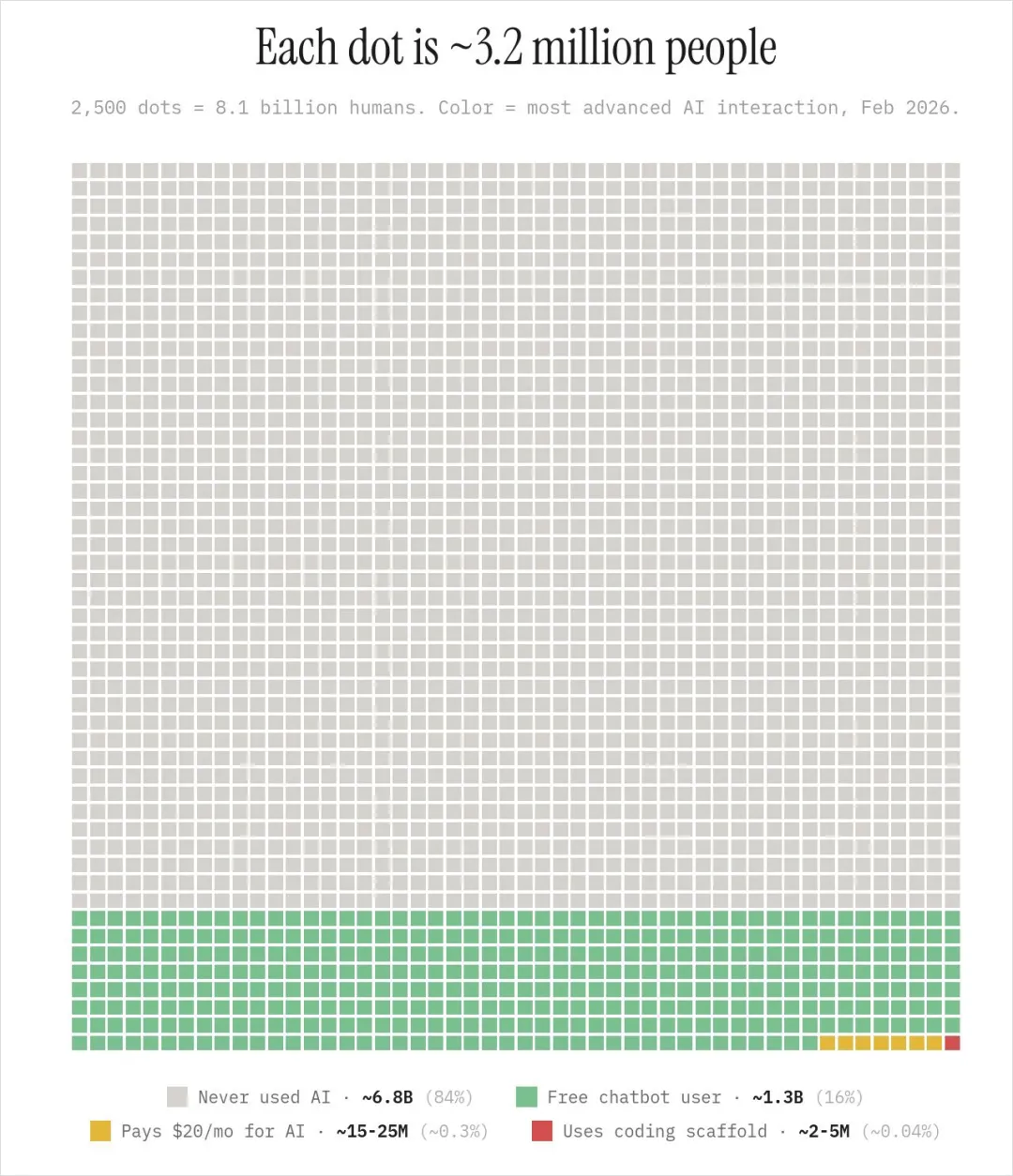
💡Benchmark your AI skills against 10-level framework for quick gains
⚡ 30-Second TL;DR
What Changed
4 dimensions: controllability (prompts/context), breadth (cross-industry), form (chat to agent), role (consumer to creator).
Why It Matters
Helps AI practitioners self-assess and level up efficiently in fast-evolving field.
What To Do Next
Self-assess your level via 4 dimensions, then practice task decomposition in DeepSeek.
Who should care:Developers & AI Engineers
Key Points
- •4 dimensions: controllability (prompts/context), breadth (cross-industry), form (chat to agent), role (consumer to creator).
- •Lv.0: Never used AI; Lv.1: Copy-paste outputs blindly.
- •Lv.2: Iterative questioning, role prompts; Lv.3: Structured rules, model selection.
- •Tools diverge: Kimi for docs, DeepSeek for writing.
🧠 Deep Insight
AI-generated analysis for this event.
🔑 Enhanced Key Takeaways
- •The 10-level framework reflects a broader industry shift toward 'Agentic Workflows,' where proficiency is measured not by prompt engineering skill, but by the ability to orchestrate multi-step autonomous agent chains to complete complex business tasks.
- •Data indicates that the 'Tamer' (Lv.3) threshold is the primary bottleneck for enterprise adoption, as users struggle to transition from simple chat-based interaction to managing structured, API-integrated agent environments.
- •The framework highlights a growing divergence in model usage patterns, where users increasingly adopt 'model-routing' strategies—using specialized models like DeepSeek for reasoning-heavy tasks and Kimi for long-context document retrieval—rather than relying on a single general-purpose LLM.
🔮 Future ImplicationsAI analysis grounded in cited sources
AI proficiency frameworks will shift from human-centric to agent-centric metrics.
As autonomous agents handle execution, the value of human input will move from 'prompting' to 'system architecture and oversight'.
Enterprise training programs will standardize around 'Agentic Orchestration' by 2027.
The current reliance on ad-hoc prompt engineering is unsustainable for scalable business operations, necessitating formal training in agent-based workflows.
📰
Weekly AI Recap
Read this week's curated digest of top AI events →
👉Related Updates
AI-curated news aggregator. All content rights belong to original publishers.
Original source: 虎嗅 ↗