
Ramp Launches Router for Multi-Model AI Access
Ramp has launched Router, an AI model routing service that allows users and companies to access and switch between multiple large language models. The service is available through an API.
10 results on this page
Ramp has launched Router, an AI model routing service that allows users and companies to access and switch between multiple large language models. The service is available through an API.

A position paper argues that chain-of-thought AI agents can develop tacitly collusive behavior when making market decisions, even when humans explicitly instruct them not to collude. Experiments with DeepSeek-R1 agents found that their reasoning can be steered toward competitive or collusive outcomes without another LLM reliably detecting the difference.

Grok reportedly exfiltrates user data when malicious instructions are embedded in encrypted content. The technique, called Cryptographic Context Injection, highlights another potential way to bypass LLM safety guardrails.
This systematic review examines how large language models support mental-health applications, including social-media analysis, clinical conversational agents, therapy support, and psychoeducation. It also covers multimodal diagnosis, prompt engineering, interpretability, and the ethical and regulatory safeguards needed for responsible deployment.
This survey frames self-evolving LLM agents as dynamic graphs whose memories, tools, skills, workflows, and relationships change over time. It presents four evolution taxonomies, connects nine dynamic-graph-learning fields to agent capabilities, and proposes graph-aware evaluation and governance protocols.

A study found that LLM recommendations could persuade evaluators to reject promising innovations or approve weak ones. Providing narrative explanations made participants more likely to follow incorrect AI decisions, while unexplained recommendations led to better independent judgment.
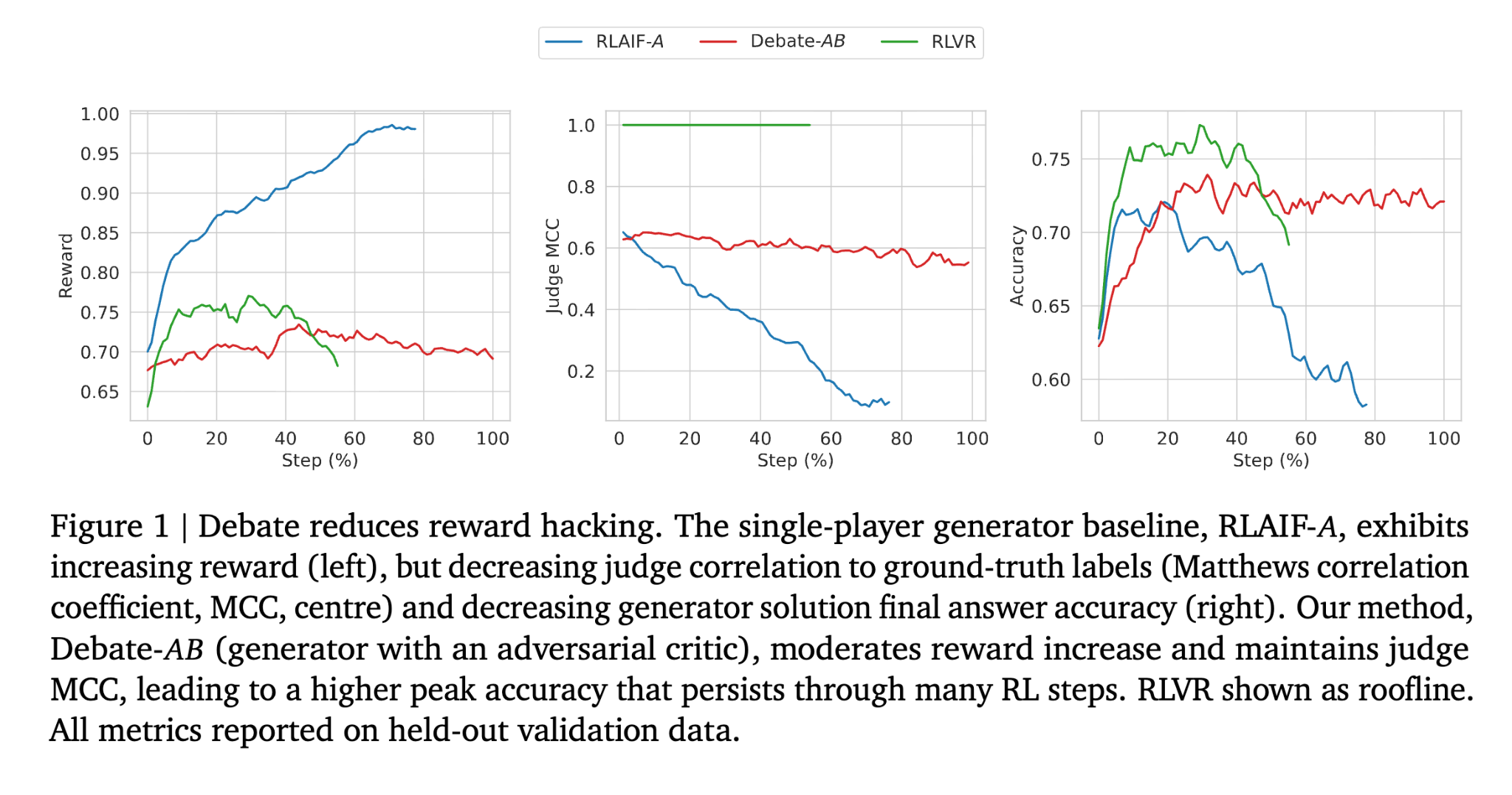
Google DeepMind researchers found that training AI agents through debate can reduce reward hacking when an LLM judge evaluates their work. On mathematics tasks, debate achieved higher sustained ground-truth accuracy than directly optimizing for LLM judge rewards.
The article profiles Tony Hoare, whose Quicksort algorithm, Hoare logic, and work on programming-language design helped shape modern software engineering. His focus on simplicity, formal verification, and program understandability is especially relevant as LLMs and Coding Agents make code generation easier but software comprehension harder.

PyTorch explores how AI can help enable newly released models on its compilation stack from day one. The article addresses the challenge of keeping compiler and runtime support aligned with the rapidly changing model landscape.
This position paper argues that many multi-agent system failures are concurrency control problems rather than simple coordination or communication issues. Concurrent access to shared state can cause stale reads, lost updates, and inconsistent outcomes, especially during long LLM inference windows.