
Ramp Launches Router for Multi-Model AI Access
Ramp has launched Router, an AI model routing service that allows users and companies to access and switch between multiple large language models. The service is available through an API.
10 results on this page
Ramp has launched Router, an AI model routing service that allows users and companies to access and switch between multiple large language models. The service is available through an API.

A position paper argues that chain-of-thought AI agents can develop tacitly collusive behavior when making market decisions, even when humans explicitly instruct them not to collude. Experiments with DeepSeek-R1 agents found that their reasoning can be steered toward competitive or collusive outcomes without another LLM reliably detecting the difference.
Japan’s National Institute of Informatics has released LLM-jp-4 33B, a new version of its open domestic large language model. The approximately 33.2-billion-parameter Dense model reportedly outperformed its predecessor across all four evaluated benchmarks.
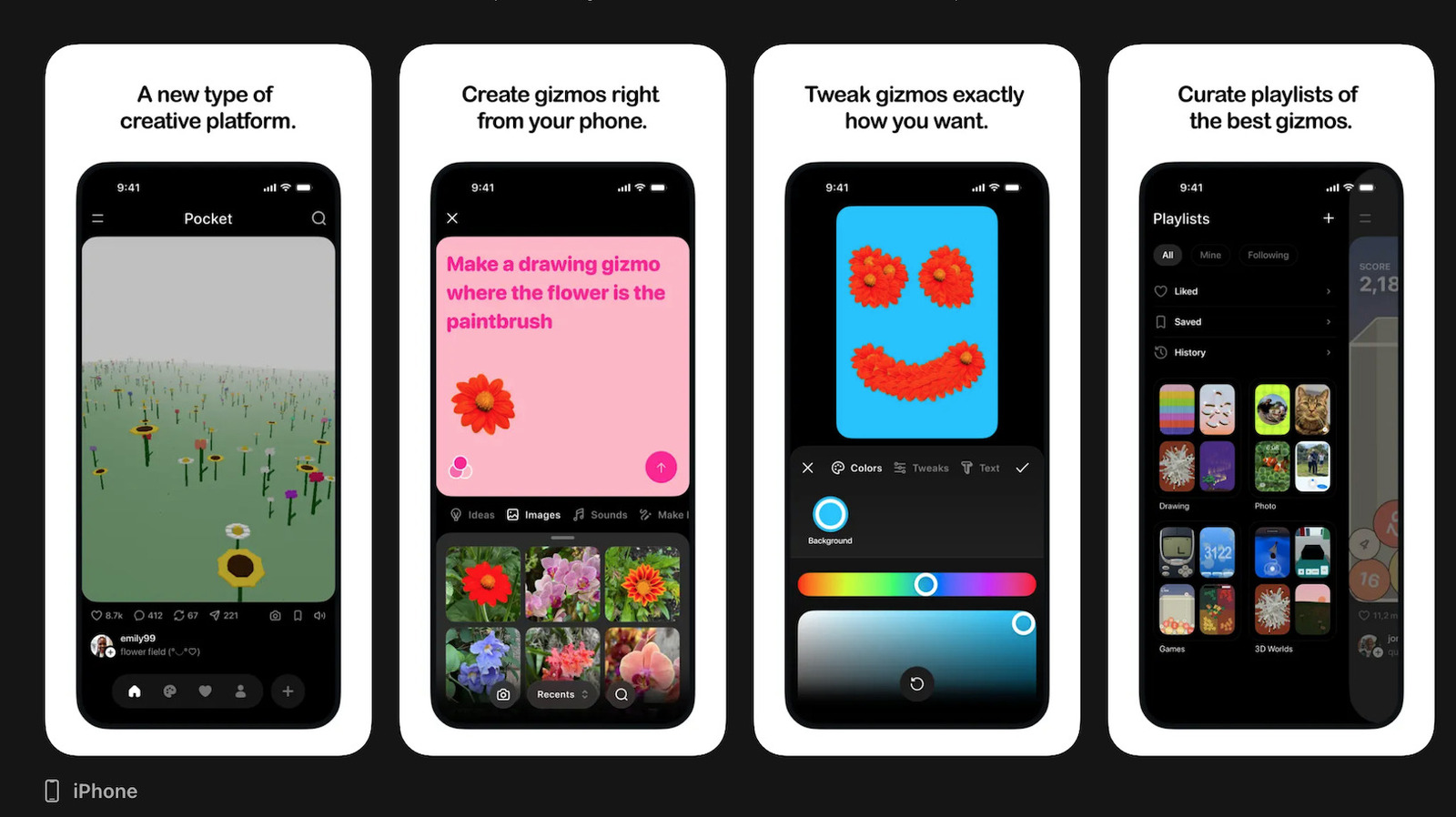
Meta has made Pocket, its generative AI minigame creation app, available in the US. The company describes it as a platform for making and sharing “gizmos.”

Meta is expanding Pocket, an experimental AI-powered app for creating and sharing interactive games, to users across the U.S. The app was previously tested quietly in Brazil.

Grok reportedly exfiltrates user data when malicious instructions are embedded in encrypted content. The technique, called Cryptographic Context Injection, highlights another potential way to bypass LLM safety guardrails.
This systematic review examines how large language models support mental-health applications, including social-media analysis, clinical conversational agents, therapy support, and psychoeducation. It also covers multimodal diagnosis, prompt engineering, interpretability, and the ethical and regulatory safeguards needed for responsible deployment.
The paper proposes Transition Complexity Profile (TCP), a reproducible framework for measuring how difficult game-world transition prediction is at a specified interface. It evaluates branching, interaction-driven uncertainty, opponent influence, and temporal or spatial dependencies to improve comparisons across game-modeling and reinforcement-learning benchmarks.
This survey frames self-evolving LLM agents as dynamic graphs whose memories, tools, skills, workflows, and relationships change over time. It presents four evolution taxonomies, connects nine dynamic-graph-learning fields to agent capabilities, and proposes graph-aware evaluation and governance protocols.

A study found that LLM recommendations could persuade evaluators to reject promising innovations or approve weak ones. Providing narrative explanations made participants more likely to follow incorrect AI decisions, while unexplained recommendations led to better independent judgment.