🐼Pandaily•較早收集於 2h
XPeng Robotaxi 進入量產,預計 2026 年正式上路
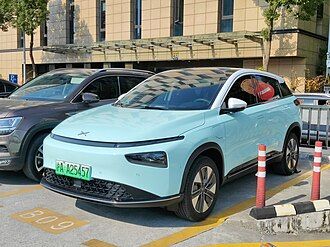
💡具身智慧的重要里程碑:中國首款量產型 L4 Robotaxi,具備 3,000 TOPS 運算能力。
⚡ 30-Second TL;DR
有什麼變化
中國首款由整車製造商全端自研並進入量產的 Robotaxi。
為什麼重要
此發展顯示自動駕駛產業正轉向垂直整合,車廠同時掌握硬體與 AI 軟體堆疊。這將增加現有 Robotaxi 營運商在優化運算效能比方面的競爭壓力。
下一步行動
關注 XPeng 的開源自動駕駛數據集或開發者 SDK,以了解其 L4 感知堆疊架構。
誰應關注:Developers & AI Engineers
關鍵要點
- •中國首款由整車製造商全端自研並進入量產的 Robotaxi。
- •搭載 3,000 TOPS 的車載運算能力,以處理複雜的自動駕駛任務。
- •專為 L4 自動駕駛能力而設計。
- •試營運計畫正式定於 2026 年下半年。
🧠 深度解析
Web-grounded analysis with 14 cited sources.
🔑 增強重點摘要
- •The robotaxi is built on XPeng's GX platform, which is designed from the ground up for L4 autonomous driving, rather than being a retrofit of existing consumer vehicles.
- •XPeng's robotaxi adopts a pure vision-based approach, operating without LiDAR sensors or high-definition maps, and is powered by its VLA 2.0 end-to-end large model, which reduces system response latency to under 80 milliseconds.
- •The company aims to achieve fully driverless operations without an on-site safety officer by early 2027, following pilot operations in the second half of 2026.
- •The robotaxi is part of XPeng's broader 'physical AI strategy,' sharing its VLA 2.0 foundation with other projects like the humanoid robot IRON and future flying vehicles.
- •XPeng established a dedicated Robotaxi Business Unit in March 2026 to oversee product definition, R&D testing, and operations, accelerating its commercialization roadmap.
📊 競品分析▸ Show
| Company/Service | Key Technology Approach | Operational Status (China) | Operational Status (US/Global) | XPeng Differentiator |
|---|---|---|---|---|
| XPeng Robotaxi | Vision-only (VLA 2.0 end-to-end model), no LiDAR/HD maps | Mass production started, pilot operations H2 2026 in Guangzhou | N/A (targeting global expansion) | Full-stack in-house development (software, chips, vehicle), GX platform designed for L4, 3,000 TOPS with Turing AI chips |
| Baidu Apollo Go | Hybrid (LiDAR, cameras, radar) | Dominates with >700 robotaxis in 16 cities (as of 2024) | Partnered with Lyft for Europe (pending approval), Uber in Abu Dhabi | Largest fleet and operational presence in China |
| Pony.ai | Hybrid (LiDAR, cameras, radar) | Rapidly expanding, >1,000 vehicles by end of 2025, operations in Guangzhou, Shenzhen, Beijing, Shanghai | Operations in Dubai, Qatar, Singapore (with Grab) | Strong AI capabilities, backed by major investors like Toyota |
| WeRide | Hybrid (LiDAR, cameras, radar) | Fully driverless service in Guangzhou, expanding | Operations in Singapore (with Grab), Dubai, Abu Dhabi (with Uber) | Aggressive global expansion, strategic partnerships |
| Didi Chuxing | Hybrid | Emerging as top competitor to Baidu, integrating into existing ride-hailing platform | N/A | Leverages large existing ride-hailing user base |
| Waymo (US) | Lidar-based | N/A | >600 vehicles in Phoenix, San Francisco, Los Angeles; testing in 10+ cities | Industry leader in the U.S., slow but steady approach, strong safety records |
| Tesla FSD (US) | Vision-only (cameras, neural networks) | N/A (FSD Beta in China for consumer vehicles) | FSD Beta in US, aiming for robotaxi | Relies entirely on cameras and neural networks, potentially more scalable and cost-effective |
🛠️ 技術深入
- Built on XPENG's GX platform, engineered for L4 autonomous driving from the factory floor.
- Powered by four self-developed Turing AI chips.
- Delivers a combined effective on-board computing power of 3,000 TOPS.
- Adopts a pure vision-based approach, operating without LiDAR sensors or high-definition maps.
- Decision-making is driven by XPENG's VLA 2.0 end-to-end large model.
- The VLA 2.0 model eliminates the 'language translation' step found in traditional Vision-Language-Action architectures, compressing system response latency to under 80 milliseconds.
- Offers enhanced urban generalization capabilities, supporting cross-city and potentially cross-border deployment.
- Features practical intelligent cabin configurations including privacy glass, zero-gravity comfort seating, and rear in-car entertainment screens.
- Includes a built-in voice assistant for passengers to control settings and access multimedia features.
- Incorporates dual hardware redundancy across perception, steering, braking, communications, energy, and compute systems.
🔮 前景展望AI analysis grounded in cited sources
XPeng's full-stack, vision-only approach could significantly reduce the cost and complexity of L4 robotaxi deployment.
By developing its own chips, software, and vehicle platform, and eliminating expensive LiDAR and high-definition maps, XPeng aims for a more scalable and cost-effective solution compared to many competitors.
XPeng's entry into mass production will intensify competition in the global robotaxi market, particularly challenging established players and Tesla's FSD ambitions.
As a major Chinese automaker with in-house technology and a clear commercialization roadmap, XPeng is positioned to become a significant player, potentially accelerating the adoption and technological arms race in autonomous driving.
The integration of the VLA 2.0 large model across robotaxis, humanoid robots, and flying vehicles signifies XPeng's strategic shift towards becoming a comprehensive 'physical AI company.'
This unified AI foundation suggests a long-term vision to monetize its AI stack across diverse intelligent mobility and robotics applications, moving beyond just electric vehicles.
⏳ 時間線
2014-06
XPeng Motors officially founded in Guangzhou.
2018-12
First production model, the G3 SUV, launched with XPilot 1.0.
2020-08
XPeng listed on NYSE; P7 mass deliveries begin with XPILOT 3.0.
2021-09
P5 sedan launched, notable for being the first production car with LiDAR sensors for ADAS.
2023-07
Volkswagen takes a 4.99% stake in XPeng and agrees to co-develop B-class EVs on XPeng's platform.
2026-01
XPeng Robotaxi secures a road testing permit for intelligent connected vehicles in Guangzhou, formally entering routine L4 public road testing.
2026-03
XPeng establishes a dedicated Robotaxi Business Unit.
2026-05-18
XPeng officially rolls out its first mass-produced Robotaxi in Guangzhou.
📎 來源 (14)
Factual claims are grounded in the sources below. Forward-looking analysis is AI-generated interpretation.
📰
AI 週報
閱讀本週精選 AI 大事摘要 →
👉相關動態
AI 策展新聞聚合。所有內容版權歸原始發布者所有。
原始來源: Pandaily ↗