來源較早收集於 77m

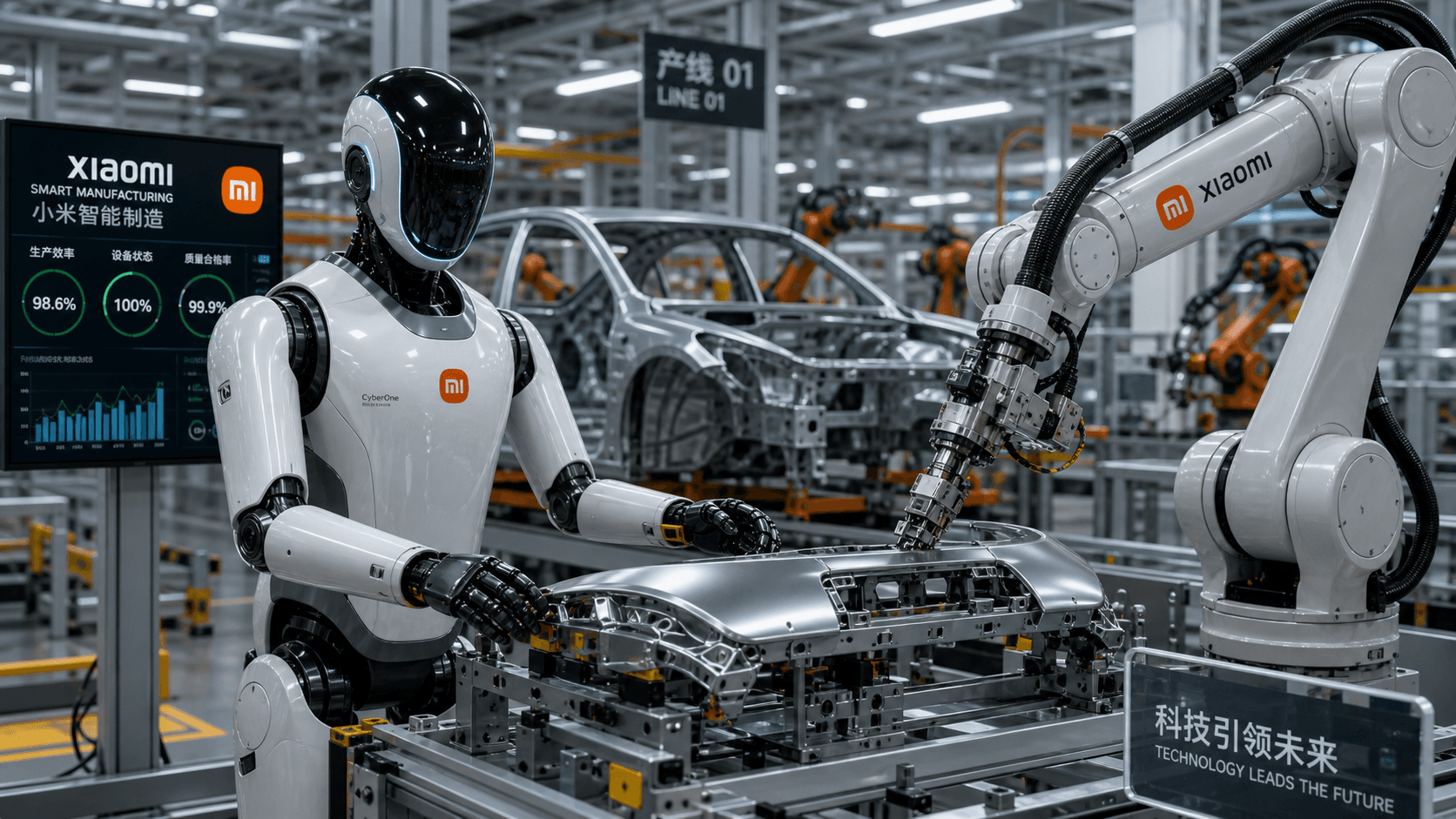
Xiaomi 人形機器人進駐 SU7 生產線

閱讀原文: Pandaily
#robotics#embodied-ai

Xiaomi 機器人在實際工廠任務中達到 90% 成功率,這是具身智能在製造業的一大勝利。

30 秒速覽

有什麼變化

機器人現已能執行複雜的柔性工件操作,而不僅僅是鎖螺絲。

為什麼重要

此里程碑驗證了人形機器人在高精度製造中的可行性,有望降低複雜組裝任務的人力成本。

下一步行動

檢視 Xiaomi 機器人所使用的訓練方法,以了解如何提升您自身機器人模擬環境中的成功率。

誰應關注:Developers & AI Engineers

關鍵要點

  • 機器人現已能執行複雜的柔性工件操作,而不僅僅是鎖螺絲。
  • 在真實製造環境中達到 90% 以上的成功率。
  • 展示了在汽車生產環境中,具身智能(Embodied AI)訓練的快速進展。

深度解析

本篇為 AI 生成分析,非原文內容。

增強重點摘要

  • Xiaomi's humanoid robot, known as CyberOne, serves as the foundational research platform for the embodied AI systems currently being refined in the SU7 factory environment.
  • The integration utilizes a proprietary 'End-to-End' large model architecture that allows robots to process visual and tactile feedback in real-time without relying on pre-programmed paths.
  • Xiaomi has established a dedicated 'Robot Lab' within its Beijing manufacturing hub to accelerate the iteration cycle between simulation (digital twin) and physical deployment.
  • The deployment utilizes advanced force-control sensors developed in-house, enabling the robots to handle delicate automotive components that previously required human dexterity.
  • Xiaomi's strategy involves a 'dual-track' approach, simultaneously developing humanoid robots for industrial manufacturing and consumer-facing service roles.

競品分析

Primary Focus
Xiaomi (CyberOne/Industrial)
Automotive Manufacturing
Tesla (Optimus)
General Purpose/Factory
Figure AI (Figure 02)
Logistics/Manufacturing
Integration
Xiaomi (CyberOne/Industrial)
Deeply tied to SU7 ecosystem
Tesla (Optimus)
Tied to GigaFactory operations
Figure AI (Figure 02)
Platform-agnostic/Partnerships
Key Advantage
Xiaomi (CyberOne/Industrial)
Rapid iteration in-house
Tesla (Optimus)
Massive data collection scale
Figure AI (Figure 02)
Advanced neural network speed

技術深入

  • Architecture: Employs a transformer-based embodied AI model that maps visual inputs directly to motor control commands.
  • Sensing: Utilizes a combination of Mi-Sense depth vision modules and high-frequency force/torque sensors at the end-effectors.
  • Training: Leverages a digital twin environment where robots undergo millions of simulated cycles before physical deployment to the SU7 line.
  • Control: Implements a hierarchical control system where high-level task planning is separated from low-level joint torque control for stability.

前景展望基於引用來源的 AI 分析

Xiaomi will launch a commercialized industrial humanoid robot by 2027.
The successful 90%+ success rate in a high-stakes automotive environment provides the necessary validation data to move toward external enterprise sales.
Humanoid robot density in Xiaomi's factories will increase by 300% within two years.
The transition from basic tasks to complex workpiece handling proves the scalability of the current embodied AI model across different assembly stations.

時間線

2022-08
Xiaomi officially unveils its first full-size humanoid robot, CyberOne.
2023-08
Xiaomi showcases the second generation CyberOne with improved motion control and sensing capabilities.
2024-03
Xiaomi SU7 officially launches, establishing the high-tech manufacturing base for future robot integration.
2026-01
Xiaomi initiates intensive six-month factory training program for humanoid robots on the SU7 line.

AI 週報

閱讀本週精選 AI 大事摘要 →

AI 策展新聞聚合。所有內容版權歸原始發布者所有。
原始來源: Pandaily

這是摘要,不是原文。去看原站,或訂閱每週簡報。

每週電子報

每週一封,可隨時退訂。