來源較早收集於 2h

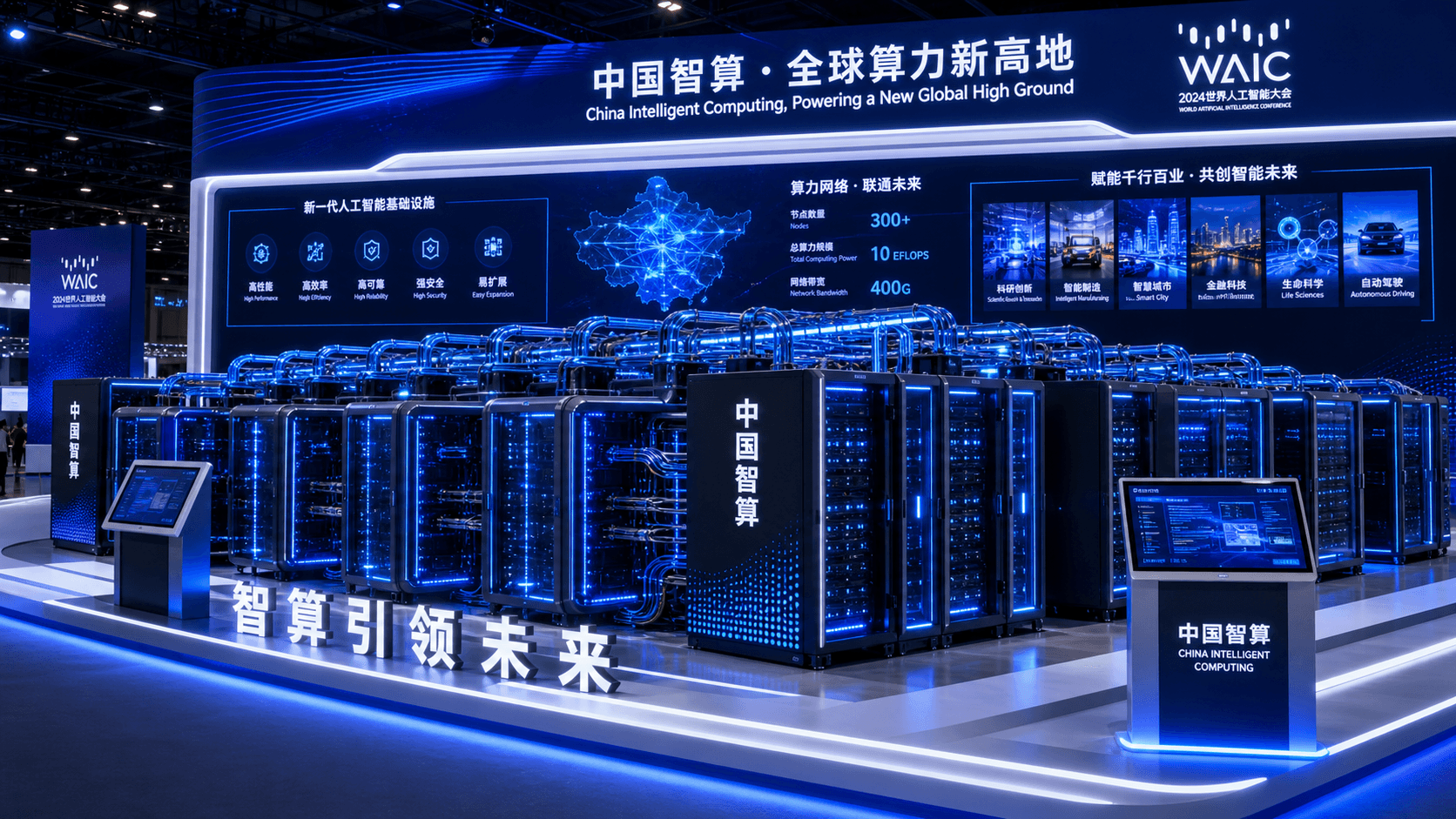
WAIC 2026:中國 AI 運算轉向系統級超級節點

閱讀原文: Pandaily
#china-ai#data-center

了解中國 AI 基礎設施轉向 10 萬張顯卡規模系統級超級節點的最新趨勢。

30 秒速覽

有什麼變化

從以晶片為中心的競爭轉向系統級 AI 超級節點架構。

為什麼重要

此轉變標誌著中國國內 AI 供應鏈的成熟,可能減少大規模模型訓練對國外硬體的依賴。這意味著開發者未來需更針對在地化的系統級叢集架構進行優化。

下一步行動

評估您的分散式訓練框架與中國國產硬體叢集的相容性,以確保未來具備可擴展性。

誰應關注:Developers & AI Engineers

關鍵要點

  • 從以晶片為中心的競爭轉向系統級 AI 超級節點架構。
  • 展示了用於國內 AI 工作負載的 10 萬張顯卡規模運算叢集。
  • Sugon Dawn 與 Hygon 處理器在高效能運算環境中的整合應用。
關鍵數字30%10 萬

深度解析

本篇為 AI 生成分析,非原文內容。

增強重點摘要

  • The transition to 'AI Supernodes' is driven by the 'East Data, West Computing' national strategy, aiming to reduce latency in large-scale model training across geographically dispersed data centers.
  • Sugon's new interconnect architecture, dubbed 'Silicon-Link,' claims to reduce communication overhead by 30% in clusters exceeding 50,000 GPUs compared to previous generation fabrics.
  • Hygon's latest DCU (Deep Computing Unit) series incorporates native support for FP8 precision, specifically optimized for Transformer-based model training to compete with international standards.
  • The 100K-card clusters utilize a proprietary liquid cooling solution developed by Sugon, which achieves a Power Usage Effectiveness (PUE) rating of 1.08, significantly lower than the industry average for high-density clusters.
  • Chinese regulatory bodies have introduced new 'System-Level Interoperability Standards' at WAIC 2026, mandating that domestic AI hardware must support unified software stacks to prevent vendor lock-in.

競品分析

Interconnect
Sugon/Hygon Supernode
Silicon-Link (Proprietary)
NVIDIA Blackwell Cluster
NVLink / NVSwitch
Huawei Ascend 910C Cluster
Ascend Fabric
Peak FP8 Performance
Sugon/Hygon Supernode
High (Optimized)
NVIDIA Blackwell Cluster
Industry Benchmark
Huawei Ascend 910C Cluster
High (Optimized)
Ecosystem
Sugon/Hygon Supernode
Domestic/OpenHarmony
NVIDIA Blackwell Cluster
CUDA (Global Standard)
Huawei Ascend 910C Cluster
CANN / MindSpore
Cooling
Sugon/Hygon Supernode
Liquid (PUE 1.08)
NVIDIA Blackwell Cluster
Liquid/Air (Varies)
Huawei Ascend 910C Cluster
Liquid (PUE 1.1)

技術深入

  • Sugon Dawn architecture utilizes a hierarchical topology that separates compute nodes from memory-pooling nodes to minimize data bottlenecks.
  • Hygon DCU processors employ a chiplet-based design, allowing for modular scaling of HBM (High Bandwidth Memory) capacity per node.
  • The system-level integration relies on a unified software orchestration layer that abstracts hardware differences between Sugon and Hygon components.
  • Implementation of RDMA (Remote Direct Memory Access) over Converged Ethernet (RoCE) v2 is utilized for inter-node communication within the 100K-card fabric.

前景展望基於引用來源的 AI 分析

Domestic AI training costs will drop by 25% by 2027.
The shift to standardized system-level supernodes reduces the overhead of custom integration and improves hardware utilization rates.
Sugon will capture 15% of the domestic large-model training market share within 18 months.
The ability to provide a turnkey 100K-card solution addresses the critical bottleneck of scaling infrastructure for Chinese AI labs.

時間線

2023-07
Sugon announces the 'Dawn' series focus on high-density AI computing.
2024-05
Hygon releases the DCU Z100 series with enhanced AI acceleration capabilities.
2025-02
Initial pilot of a 10K-card cluster using integrated Sugon-Hygon architecture.
2026-07
WAIC 2026 showcase of the first 100K-card-scale AI supernode cluster.

AI 週報

閱讀本週精選 AI 大事摘要 →

AI 策展新聞聚合。所有內容版權歸原始發布者所有。
原始來源: Pandaily

這是摘要,不是原文。去看原站,或訂閱每週簡報。

每週電子報

每週一封,可隨時退訂。