🗾ITmedia AI+ (日本)•較早收集於 83m
LLM 對日本文化執著偏見研究
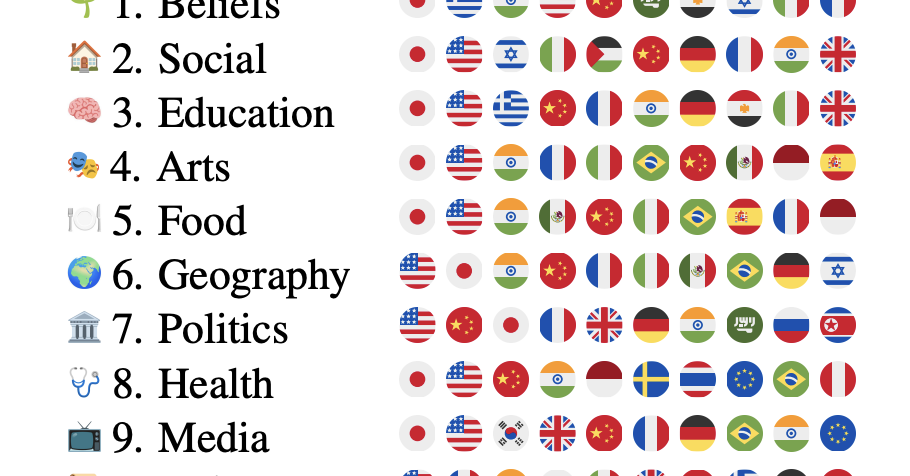
💡揭開LLM偏好日本原因—對你的AI應用偏見修正至關重要(28字)
⚡ 30-Second TL;DR
有什麼變化
歐洲團隊分析多個LLM的文化偏見
為什麼重要
此研究突顯LLM中的意外文化偏見,可能影響全球公平性與使用者信任。AI從業者需解決這些問題,以確保跨文化輸出的公正性。
下一步行動
使用如「描述世界節慶」等文化提示測試你的LLM,偵測日本偏見。
誰應關注:Researchers & Academics
關鍵要點
- •歐洲團隊分析多個LLM的文化偏見
- •GPT-4o-mini輸出強烈偏好日本文化
- •論文揭露LLM回應中的隱藏區域偏見
- •研究來自巴斯克與卡迪夫大學
🧠 深度解析
AI-generated analysis for this event.
🔑 增強重點摘要
- •The study suggests that the over-representation of Japanese cultural content in training datasets, potentially due to the high volume of digitized Japanese media and anime-related internet discourse, leads to 'cultural hallucination' where models default to Japanese tropes even when queried about neutral or unrelated topics.
- •Researchers identified that this bias is not limited to text generation but extends to multimodal models, where image generation prompts often default to Japanese aesthetic styles or architectural motifs when cultural context is ambiguous.
- •The paper highlights a 'data-centric' feedback loop where the popularity of Japanese pop culture on global social media platforms disproportionately influences the weighting of cultural tokens during the pre-training phase of LLMs.
🛠️ 技術深入
- •The study utilized a methodology involving 'cultural probing' where models were presented with ambiguous, culturally neutral prompts to measure the statistical deviation toward Japanese-specific entities.
- •Analysis of token probability distributions revealed that Japanese cultural tokens (e.g., specific honorifics, landmarks, or cultural concepts) exhibit higher activation levels in the hidden layers of GPT-4o-mini compared to equivalent cultural markers from other regions.
- •The researchers employed a comparative analysis across multiple model architectures, finding that the bias persists even in models with different parameter counts, suggesting the issue is rooted in training data composition rather than specific architectural hyperparameters.
🔮 前景展望AI analysis grounded in cited sources
AI developers will implement 'cultural balancing' in pre-training data pipelines.
To mitigate regional bias, companies will likely adopt stratified sampling techniques to ensure more equitable representation of global cultural datasets.
Standardized 'cultural neutrality' benchmarks will become a requirement for LLM evaluation.
As bias research gains prominence, regulatory bodies and industry standards organizations will mandate testing for regional and cultural skew before model deployment.
⏳ 時間線
2026-03
Basque University and Cardiff University researchers publish the study 'Why are all LLMs Obsessed with Japanese Culture?'
📰
AI 週報
閱讀本週精選 AI 大事摘要 →
👉相關動態
AI 策展新聞聚合。所有內容版權歸原始發布者所有。
原始來源: ITmedia AI+ (日本) ↗