📚InfoQ中国•最新收集於 0m
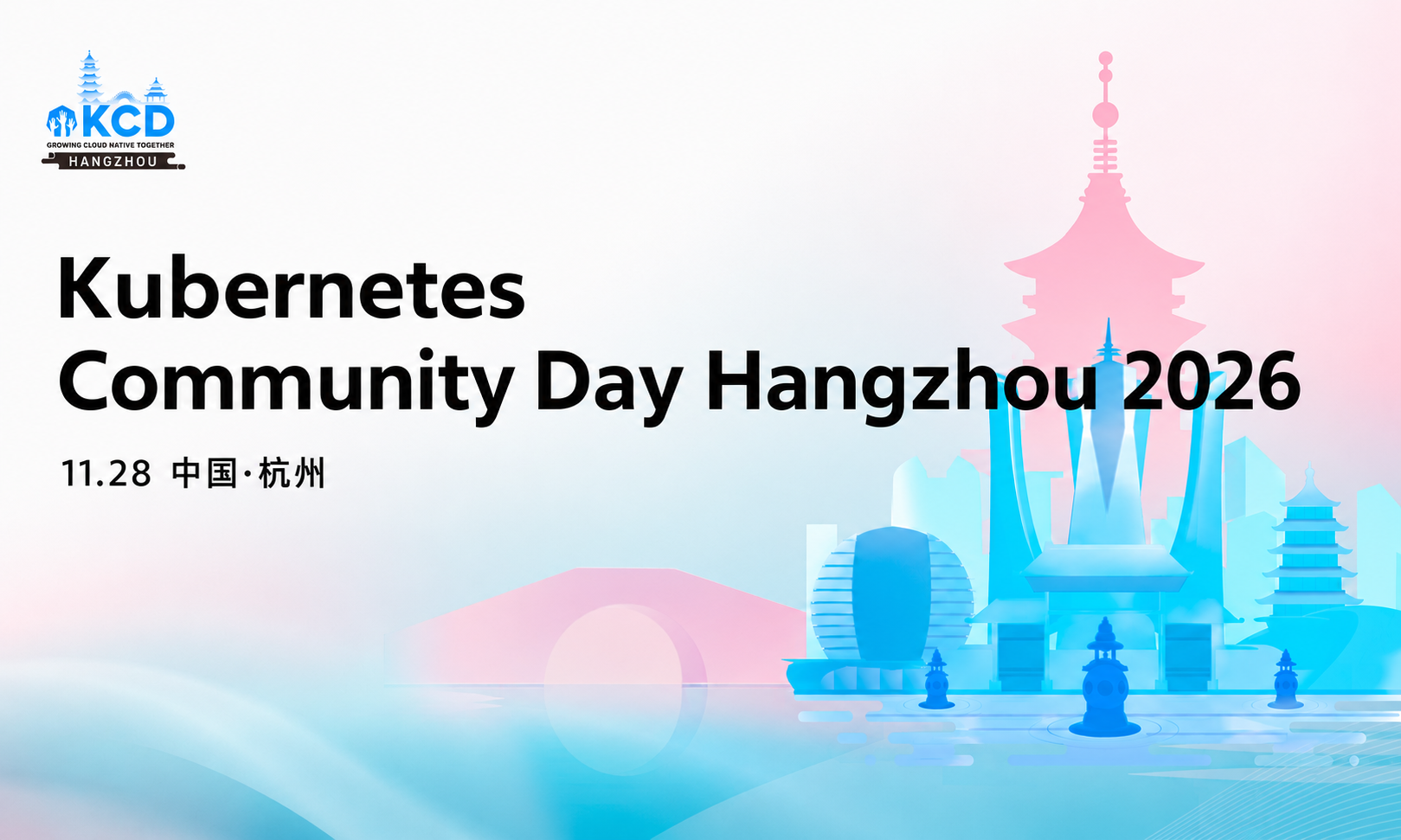
KCD 杭州站開放 CFP,共議 Agent 時代
💡尋找分享雲原生 Agent 基礎架構與大模型推理實務經驗的舞台。
⚡ 30-Second TL;DR
有什麼變化
KCD 杭州站目前已開放徵稿。
為什麼重要
這項活動有助於 AI 基礎架構開發者交流 Agent 系統部署、監控與擴展的實務方法。其實際價值仍取決於最終講者陣容與入選議題的技術深度。
下一步行動
查看 KCD 杭州站的 CFP,並準備一份分享具體 Agent 部署、可觀測性或推理實務經驗的投稿提案。
誰應關注:Developers & AI Engineers
關鍵要點
- •KCD 杭州站目前已開放徵稿。
- •徵稿主題包括雲原生技術、可觀測性與大模型推理。
- •活動聚焦於 Agent 時代的基礎架構挑戰與實務經驗。
🧠 深度解析
Web-grounded analysis with 25 cited sources.
🔑 增強重點摘要
- •KCD Hangzhou is a community-organized Kubernetes technology conference, supported by the Cloud Native Computing Foundation (CNCF), emphasizing community-driven collaboration and real-world engineering practices.
- •KCD Hangzhou has a history of cross-community collaboration, notably co-locating with OpenInfra Days China in November 2025, bringing together resources from both ecosystems.
- •The 'Agent era' signifies a paradigm shift where AI agents evolve from simple demos or copilots into autonomous execution units within enterprise IT architectures, capable of taking on complex tasks and responsibilities.
- •AI agent observability extends traditional software observability by capturing AI-specific telemetry, such as probabilistic reasoning, planning steps, tool usage, intermediate decisions, token usage, and output quality, crucial for understanding non-deterministic agent behavior.
- •Scaling large model inference for AI agents presents significant challenges because a single user request can trigger numerous, uneven model calls for planning, tool selection, and error recovery, making efficient serving engines like vLLM essential for performance and cost management.
🛠️ 技術深入
- AI Agent Observability: Extends traditional monitoring by collecting AI-specific telemetry, including detailed input/output logs, records of tool permissions and call sequences, decision paths, error rates, execution traces, token usage, model responses, and output quality. It leverages distributed traces to link each step of an agent run into an ordered timeline and structured logs to capture step-level details in a consistent format.
- Large Model Inference for Agents: AI agents amplify inference challenges due to the potential for many model calls per user request. Open-source inference runtimes and serving engines like vLLM are designed to address this by providing OpenAI-compatible APIs, managing model execution, request scheduling, continuous batching, and KV cache memory to efficiently process concurrent requests.
- Cloud-Native Infrastructure for AI Agents: Kubernetes is considered a foundational technology for next-generation AI agents, requiring an 'AI-native' reimagining. This involves treating agents as Kubernetes objects, implementing declarative agent management (using Custom Resource Definitions and GitOps), enabling tool service-ization through MCP (Multi-Cloud Platform) services, and utilizing AI Native Gateways as a control plane entry for agent-to-agent (A2A), agent-to-tool (A2T), agent-to-LLM (A2L) interactions, along with authorization and rate limiting.
- Security in Agentic Workloads: Addresses the issue of over-permissioned AI agents by applying cloud-native security principles. Solutions include isolating each agent execution within its own container on a dedicated Docker network, scoping filesystem access to specific worktrees, and employing service meshes and egress gateways to control agent network access.
- Inference Optimization Techniques: To reduce latency and costs for long-context inference workloads, techniques such as caching frequently reused content (LMCache) and speculative decoding (e.g., EAGLE) are employed. Speculative decoding generates draft tokens that the primary model validates in parallel, accelerating generation while maintaining output quality.
🔮 前景展望AI analysis grounded in cited sources
Cloud-native platforms will increasingly integrate agentic AI capabilities directly into their core services.
Major cloud providers are already embedding agentic AI into control planes, platforms, and developer experiences, treating it as a systemic capability rather than an application-layer novelty, indicating a fundamental shift in cloud architecture.
The demand for specialized AI inference providers optimized for agent workloads will grow significantly.
AI agents' reliance on repeated model calls leads to compounding latency and inference costs, which general-purpose inference providers are not optimized for, creating a clear market need for specialized solutions.
Observability will become a critical differentiator for trustworthy and scalable AI agent deployments.
Understanding the non-deterministic and dynamic behavior of AI agents, including their decisions, tool usage, and internal states, is essential for effective debugging, performance optimization, compliance, and safety in production environments.
⏳ 時間線
2023-10
KCD Hangzhou 2023 held, focusing on cloud-native supply chain and AI infrastructure.
2025-03
KCD Beijing 2025 held.
2025-05
KCD Hangzhou 2025 CFP process details, including the requirement to use Sessionize and close the CFP at least 8 weeks before the event.
2025-11
KCD Hangzhou & OpenInfra Days China 2025 successfully held, marking the first cross-community collaboration in China between Kubernetes Community Day and OpenInfra Days.
2026-03
KCD Beijing + vLLM 2026 held, co-hosted by the KCD Beijing and vLLM communities, focusing on the convergence of Kubernetes and LLM inference.
2026-09
KubeCon + CloudNativeCon + OpenInfra Summit + PyTorch Conference China 2026 is scheduled to take place in Shanghai, uniting cloud-native, open infrastructure, and machine learning communities.
📎 來源 (25)
Factual claims are grounded in the sources below. Forward-looking analysis is AI-generated interpretation.
📰
AI 週報
閱讀本週精選 AI 大事摘要 →
👉相關動態


AI 策展新聞聚合。所有內容版權歸原始發布者所有。
原始來源: InfoQ中国 ↗
每週 AI 簡報
每週一封,可隨時退訂。