全球衰退:中國須定AI時代議程
💡AI job displacement stats + bubble warnings shape 2026 funding & hiring strategies
⚡ 30-Second TL;DR
有什麼變化
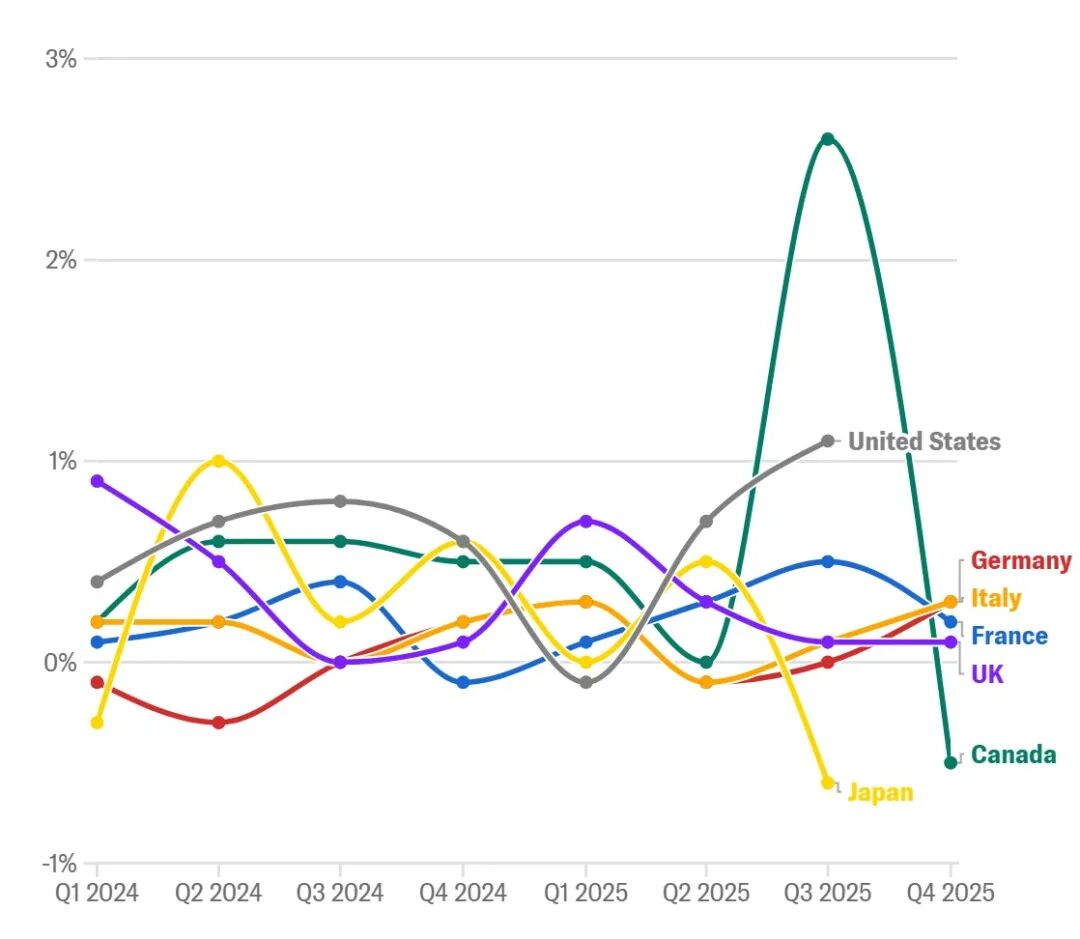
G7 GDP增長預測2025年1.2%、2026年降至1.0%,多國低於1%。
為什麼重要
強調AI生產力炒作過頭對比真實就業威脅,警示AI創辦人注意衰退抑制採用及泡沫破裂估值風險。顯示AI策略與國家議程設定的地緣政治轉變。
下一步行動
Analyze OECD NEET data to forecast AI-driven hiring needs in your AI startup's talent pipeline.
關鍵要點
- •G7 GDP增長預測2025年1.2%、2026年降至1.0%,多國低於1%。
- •全球青年失業率為成人的兩倍;尼特族比例達25%,AI加劇初級職位裁減。
- •AI炒作無規模效應卻推高股市;美前十大AI股佔比翻倍,泡沫風險加劇。
- •新興市場2000年來違約率40%;低收入經濟體比疫情前更貧窮。
- •WEF 2026風險報告指秩序崩潰,中國須做「出題人」。
🧠 深度解析
背景與延伸:來自公開資料,非原文內容。引用 7 個來源。
🔑 增強重點摘要
- •China's 15th Five-Year Plan prioritizes 'industrial upgrading' through AI deployment across industries, positioning emerging technologies like AI and robotics as the main engine for future growth and productivity enhancement[1][2][4].
- •AI is shifting from consumer applications to an 'AI-plus' strategy, integrating as a general-purpose technology in manufacturing, healthcare, robotics, and services, with MIIT identifying 'AI + Manufacturing' as a 2026 priority[2][3][5].
- •President Xi Jinping emphasized accelerating 'AI-plus' initiatives alongside consumer spending to counter economic headwinds, including income growth and tech breakthroughs ahead of 2026 parliamentary meetings[5].
- •China leverages scale, state capacity, and industrial data for embodied AI, intelligent robots, and standards development, aiming to lead in AI industrial applications by 2030 without pursuing singular AGI[1][3][4].
- •US dominates AI supercomputing (75% global performance by March 2025 vs China's 15%), prompting China to focus on applications-oriented AI to recalibrate global competition[6].
🛠️ 技術深入
- No specific model architectures or implementation details found; focus is on policy-driven integration of AI as a cross-cutting layer in embodied systems like robots, drones, and autonomous vehicles[2].- Emphasis on AI agents for autonomous perception, planning, and execution in physical and digital systems, leveraging China's hardware manufacturing strengths[2].
🔮 前景展望AI analysis grounded in cited sources
China's proactive 'AI-plus' agenda positions it to lead in industrial AI applications amid global recession risks, potentially boosting productivity and countering youth unemployment through reskilling and embedding AI across the economy, while challenging US dominance via scale and standards[1][2][4][5][6].
⏳ 時間線
📎 來源 (7)
Factual claims are grounded in the sources below. Forward-looking analysis is AI-generated interpretation.
- institute.global — What to Expect From Chinas New Five Year Plan
- china-briefing.com — Chinas Industries to Watch in 2026
- cms.law — China
- thenationalnews.com — China Is Leading the AI Plus Intelligence Economy
- scmp.com — Chinas Xi Prioritises AI Plus and Consumer Spending Counter Economic Headwinds
- chathamhouse.org — 03 Strategy Meets Reality
- aei.org — Chinas Transition to Scalable Intelligence
AI 週報
閱讀本週精選 AI 大事摘要 →
👉相關動態

AI 策展新聞聚合。所有內容版權歸原始發布者所有。
原始來源: 虎嗅 ↗
每週 AI 簡報
每週一封,可隨時退訂。