GitHub 2026 開源預測
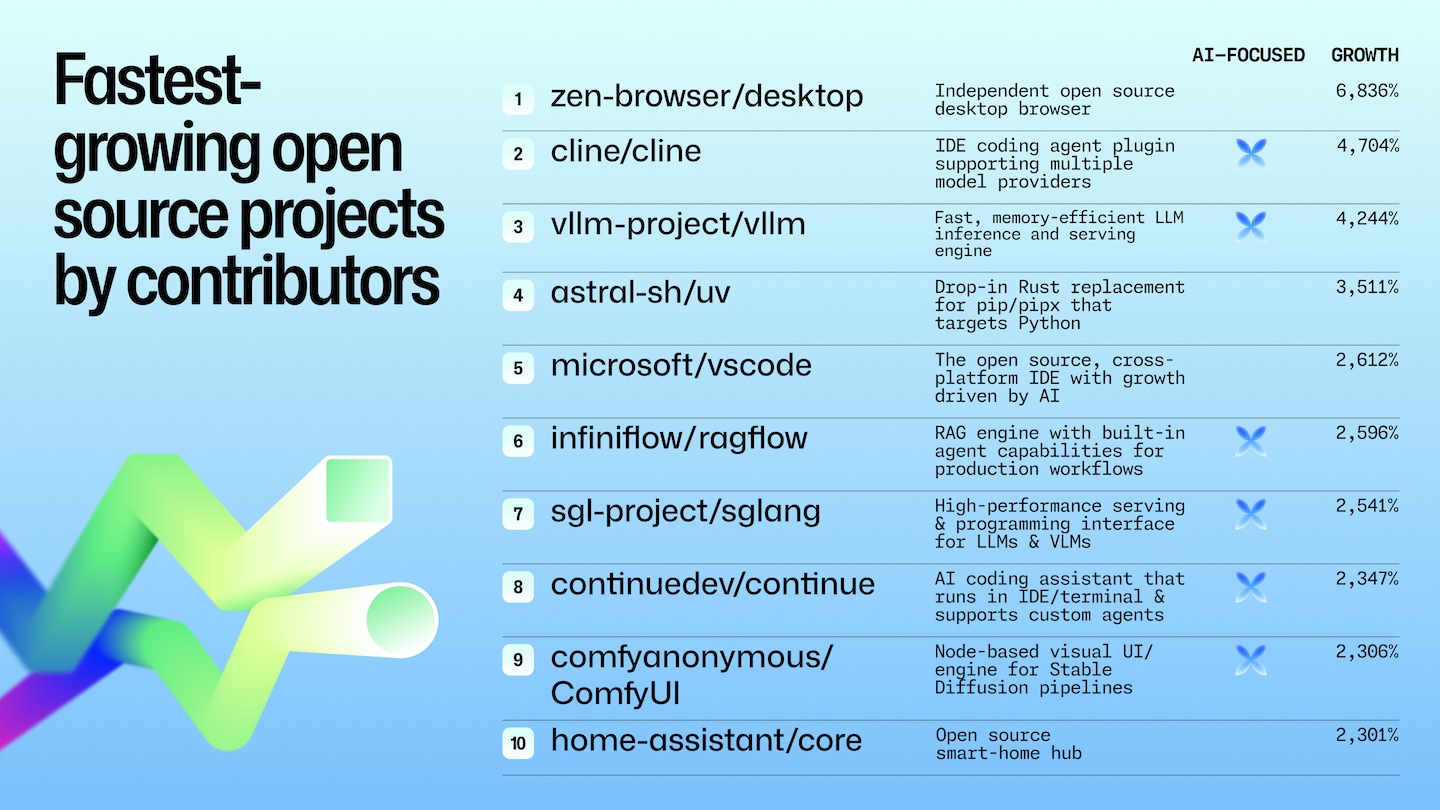
💡GitHub data reveals 2026 open source trends critical for AI devs' tool choices.
⚡ 30-Second TL;DR
有什麼變化
分析 2025 年 GitHub 開源活動數據
為什麼重要
幫助 AI 從業者預測熱門開源工具與函式庫,用於模型訓練與部署。引導投資新興儲存庫。形塑協作 AI 專案策略。
下一步行動
Download GitHub's 2025 open source dataset to analyze rising AI repos.
關鍵要點
- •分析 2025 年 GitHub 開源活動數據
- •預測 2026 年開源關鍵趨勢
- •從近期數據提煉未來規劃教訓
🧠 深度解析
背景與延伸:來自公開資料,非原文內容。引用 5 個來源。
🔑 增強重點摘要
- •Google is expanding GSoC 2026 with approximately 30 new organizations focused on AI, ML, and Security, signaling institutional commitment to these domains[1]
- •Claude Code is authoring 4% of GitHub public commits currently, with projections reaching 20%+ by end of 2026, representing a fundamental shift in software development workflows[2]
- •Open source is experiencing an 'Eternal September' phenomenon, prompting GitHub to introduce interaction limits and maintainer protection tools to preserve community trust[3]
- •AI agents like OpenClaw achieved 180,000 GitHub stars rapidly, triggering a $2 trillion market cap correction in SaaS as investors reassess software defensibility in an AI-augmented economy[4]
- •Organizational structures are evolving toward fluid, project-based teams of AI-augmented generalists replacing permanent cross-functional structures, fundamentally reshaping how open source contributions are coordinated[5]
🛠️ 技術深入
• Claude Code integration with GitHub enables AI-assisted commit authoring at scale, currently 4% of public commits[2] • ONNX Runtime (Microsoft) provides cross-platform ML inference optimization in C++, Python, and C# with 15k+ GitHub stars[1] • Stability AI's Generative Models framework supports image/video generation with 24k+ GitHub stars, representing enterprise-grade open source AI infrastructure[1] • Great Expectations offers Python-based data validation and quality assurance with 10k+ GitHub stars, addressing data pipeline reliability[1] • OpenClaw represents vibe-coded AI agent architecture achieving viral adoption with 180,000 GitHub stars in record timeframe[4]
🔮 前景展望AI analysis grounded in cited sources
The convergence of AI-assisted development (Claude Code), rapid AI agent adoption (OpenClaw), and expanded institutional support (GSoC 2026) is reshaping software economics. The $2 trillion SaaS market correction reflects investor concerns that AI agents may commoditize traditional software, forcing companies to compete on defensibility rather than feature parity[4]. Open source maintainers face unprecedented scaling challenges as contribution volume increases while quality assurance becomes critical[3]. Organizations adopting fluid, AI-augmented team structures may gain competitive advantage over those maintaining rigid hierarchies[5]. The trajectory suggests 2026 will be a pivotal year determining which software categories remain defensible versus those disrupted by AI automation.
⏳ 時間線
📎 來源 (5)
Factual claims are grounded in the sources below. Forward-looking analysis is AI-generated interpretation.
- dev.to — Gsoc 2026 Predictions 30 New Aimlsecurity Organizations You Should Start Contributing to Now 5ccn
- newsletter.semianalysis.com — Claude Code Is the Inflection Point
- devops.com — Open Sources Eternal September Github Keeps Maintainers Covered for All Seasons
- techbuzz.ai — The 2 Trillion Saa Spocalypse How to Become Unsloppable in 2026
- GitHub — Vibe Coding Enterprise 2026
AI 週報
閱讀本週精選 AI 大事摘要 →
👉相關動態

AI 策展新聞聚合。所有內容版權歸原始發布者所有。
原始來源: GitHub Blog ↗
每週 AI 簡報
每週一封,可隨時退訂。