⚛️Ars Technica•較早收集於 81m
聖嬰現象引發全球極端氣候事件
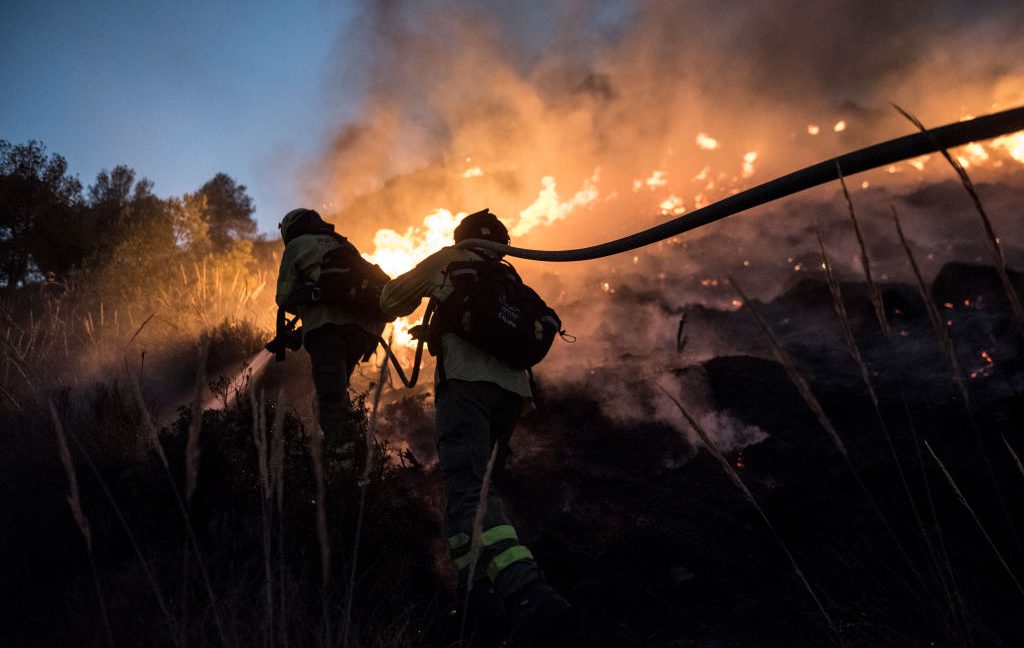
💡了解氣候波動如何影響 AI 營運的基礎設施與資料中心可靠性。
⚡ 30-Second TL;DR
有什麼變化
海洋熱含量正達到破紀錄的極端水準
為什麼重要
氣候波動影響資料中心的冷卻需求與供應鏈穩定性。AI 從業者在進行長期基礎設施規劃時,應將環境不穩定性納入考量。
下一步行動
將 NOAA 的即時氣候數據集整合至您的預測模型中,以提高區域風險評估的準確性。
誰應關注:Researchers & Academics
關鍵要點
- •海洋熱含量正達到破紀錄的極端水準
- •全球暖化正在放大聖嬰現象週期的影響
- •野火與洪水頻率增加,需要更精確的預測數據
🧠 深度解析
Web-grounded analysis with 23 cited sources.
🔑 增強重點摘要
- •Over 90% of the excess heat from human-caused climate change is absorbed by the world's oceans, making ocean heat content a critical and reliable indicator of long-term global warming.
- •El Niño is the warm phase of the El Niño-Southern Oscillation (ENSO), a natural climate phenomenon driven by variations in tropical Pacific winds and sea surface temperatures, involving a key mechanism known as the Bjerknes feedback.
- •While El Niño is a natural cycle, human-induced climate change significantly amplifies its impacts, leading to more intense and frequent extreme weather events like heatwaves, droughts, and floods than would occur with El Niño alone.
- •Despite advancements in climate modeling, predicting the precise timing of ENSO phase transitions, particularly La Niña onsets, remains a significant challenge due to the system's inherent nonlinearity, stochasticity, and persistent model biases such as the 'cold tongue' bias.
- •Past strong El Niño events have resulted in billions of dollars in economic damages and affected tens of millions of people globally, exacerbating food insecurity and causing widespread damage to critical infrastructure.
🛠️ 技術深入
- ENSO Measurement: The Oceanic Niño Index (ONI) is a primary metric, tracking sea surface temperature (SST) anomalies in the Niño 3.4 region (5ºN-5ºS, 120º-170ºW) of the equatorial Pacific.
- Modeling Approaches:
- Dynamical Models: These models simulate ocean-atmosphere interactions by solving physics-based equations.
- Statistical Models: These models rely on historical relationships between various climate variables for predictions.
- Deep Learning Models: Advanced methods like Convolutional Neural Networks (CNNs) and Graph Neural Networks (GNNs) are increasingly used, with CNN-transformer hybrid models showing robust performance for forecasts up to 18 months.
- Key Predictors: Sea surface temperature (SST) and upper ocean heat content (OHC) anomalies are crucial for ENSO predictability. Sea surface salinity (SSS) has also been identified as a significant factor for improving forecast skill.
- Underlying Mechanisms: The Bjerknes feedback, a positive feedback loop where atmospheric changes alter sea temperatures which in turn affect atmospheric winds, is fundamental to El Niño development. Westerly wind bursts (WWBs) in the western and central equatorial Pacific can further strengthen this feedback, contributing to extreme El Niño events.
- Challenges in Prediction:
- Spring Predictability Barrier (SPB): A period from late boreal winter to spring where ENSO forecasting skill is notoriously low.
- Model Biases: Common issues include the "cold tongue" bias, where models show abnormally below-average SSTs in the western and central equatorial Pacific, and difficulties in accurately modeling atmospheric convection.
- System Complexity: The inherent nonlinearity, stochasticity, and multivariate dependencies of the climate system pose significant hurdles for long-term and precise ENSO prediction.
🔮 前景展望AI analysis grounded in cited sources
Global average temperatures will continue to reach new record highs, even during La Niña phases.
The underlying human-induced climate change provides a warmer baseline, meaning El Niño events will push temperatures higher, and even La Niña events may not fully offset the warming trend.
Infrastructure development and disaster preparedness will increasingly focus on anticipatory action and climate resilience.
The escalating frequency and intensity of extreme weather events necessitate proactive measures to protect communities, agriculture, and critical infrastructure, moving beyond reactive responses.
Global food security and supply chains will face increased instability due to asymmetric impacts on agricultural production.
El Niño conditions are projected to cause droughts in some key agricultural regions (e.g., Asia, Australia) and floods in others (e.g., Americas), leading to volatile prices and potential food shortages.
⏳ 時間線
1877-1878
Strongest and deadliest El Niño on record, contributing to a global famine that killed over 50 million people.
1969
Jacob Bjerknes describes the Bjerknes feedback, a key mechanism of the El Niño-Southern Oscillation (ENSO).
1986
First El Niño predictions from Columbia University, accurately forecasting the 1986-87 event.
1997-1998
A 'super' El Niño event, causing record global temperatures and estimated economic losses of US$32 to 96 billion.
2019
A study finds compelling evidence that industrial age El Niño-La Niña oscillations are 25% stronger than in pre-industrial records.
2025
World's oceans stored more heat than ever before, continuing a nine-year record streak, indicating relentless global warming.
📎 來源 (23)
Factual claims are grounded in the sources below. Forward-looking analysis is AI-generated interpretation.
- Google Search Source
- Google Search Source
- Google Search Source
- Google Search Source
- Google Search Source
- Google Search Source
- Google Search Source
- Google Search Source
- Google Search Source
- Google Search Source
- Google Search Source
- Google Search Source
- Google Search Source
- Google Search Source
- Google Search Source
- Google Search Source
- Google Search Source
- Google Search Source
- Google Search Source
- Google Search Source
- Google Search Source
- Google Search Source
- Google Search Source
📰
AI 週報
閱讀本週精選 AI 大事摘要 →
👉相關動態
AI 策展新聞聚合。所有內容版權歸原始發布者所有。
原始來源: Ars Technica ↗