🔥PyTorch Blog•較早收集於 35m
DeepSpeed 提升多模態訓練與記憶體效率
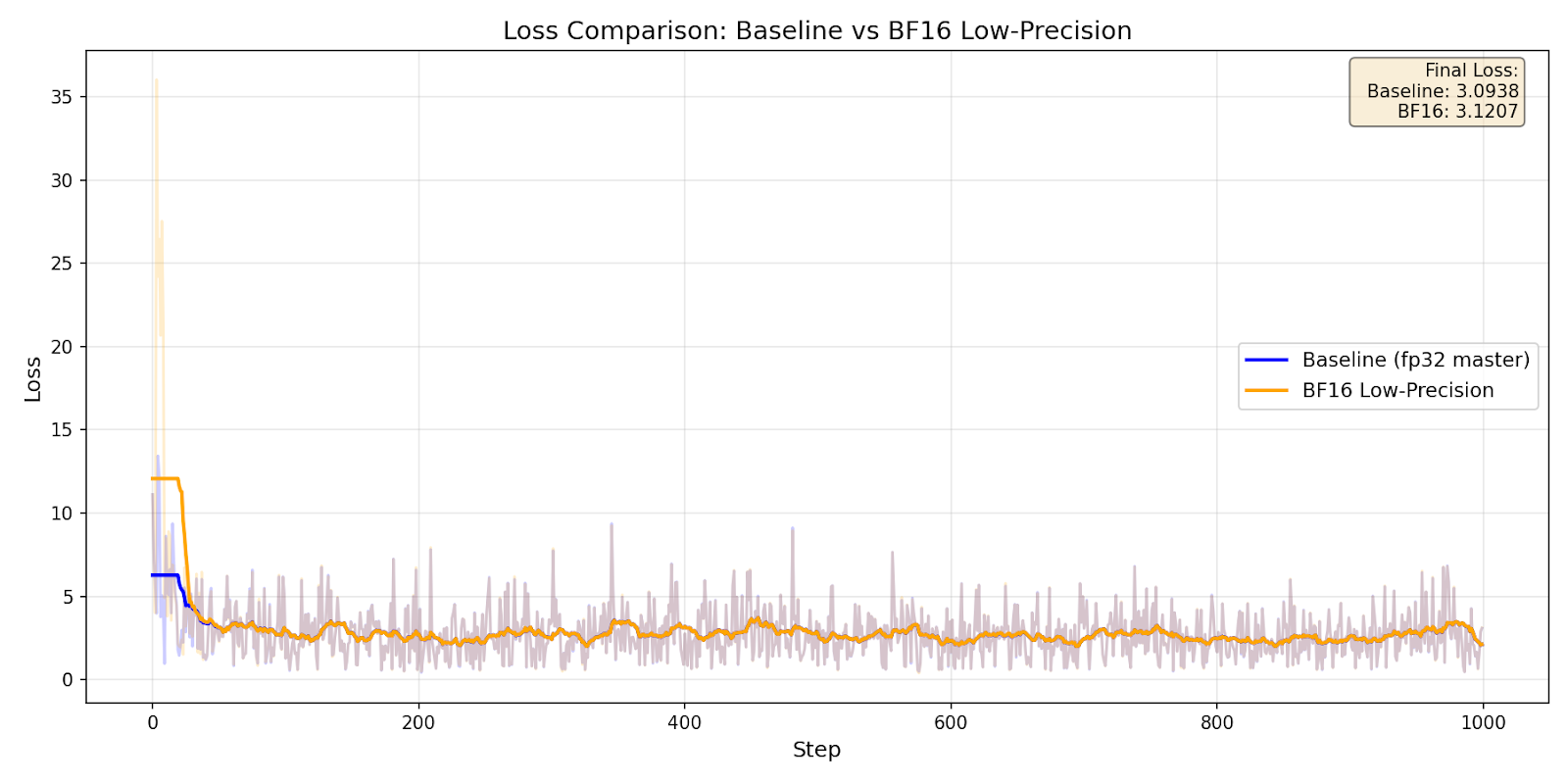
💡Unlock efficient multimodal training with DeepSpeed's PyTorch-compatible API and low-precision boosts—save memory now.
⚡ 30-Second TL;DR
有什麼變化
與 PyTorch 相同的 backward API 支援多模態模型訓練
為什麼重要
這些更新降低訓練大型多模態模型的門檻,讓研究者和開發者能更快迭代。它們減少硬體成本,並民主化先進訓練技術的存取。
下一步行動
Install latest DeepSpeed via pip and test the new backward API on your PyTorch multimodal training script.
誰應關注:Developers & AI Engineers
關鍵要點
- •與 PyTorch 相同的 backward API 支援多模態模型訓練
- •支援非純量 backward 呼叫,用於多組件模型
- •低精度最佳化提升記憶體效率
- •促進複雜 AI 架構的高效訓練
🧠 深度解析
背景與延伸:來自公開資料,非原文內容。引用 7 個來源。
🔑 增強重點摘要
- •Ray's disaggregated hybrid parallelism (sequence parallelism + tensor parallelism) achieves 1.26–1.37x throughput speedup over uniform tensor parallelism for Qwen-VL 32B multimodal training and supports sequences up to 65k tokens where DeepSpeed ZeRO-3 encounters OOM errors.[1]
- •DeepSpeed's roadmap for Q2 2026 explicitly prioritizes multimodal model support, highlighting sequence parallelism as critical due to significantly longer sequence lengths in vision-language models.[7]
- •DeepSpeed ZeRO stages, including ZeRO-3, enable training models up to 200B parameters with 16-way model parallelism by partitioning model states, gradients, and optimizer states across GPUs.[2]
🛠️ 技術深入
- •Disaggregated hybrid parallelism in Ray applies sequence parallelism (SP) + DeepSpeed ZeRO-1 to the smaller vision encoder and tensor parallelism (TP) to the larger LLM, avoiding communication bottlenecks and OOM from uniform strategies.[1]
- •DeepSpeed ZeRO partitions model states, gradients, and optimizer states across data-parallel processes, reducing memory by up to 8x in ZeRO-2 compared to basic data parallelism.[2]
🔮 前景展望AI analysis grounded in cited sources
DeepSpeed multimodal backward API will integrate with sequence parallelism to match or exceed Ray's sequence length capabilities
Low-precision optimizations in DeepSpeed will enable training of trillion-parameter multimodal models on fewer GPUs
ZeRO-Infinity and compression techniques already support trillion-scale models, extending to multimodal via new API and low-precision features.[4]
⏳ 時間線
2020-05
DeepSpeed ZeRO-1 released, introducing model state partitioning for memory efficiency.
2021-03
ZeRO-2 launched, reducing memory up to 8x with gradient and optimizer partitioning.
2021-07
ZeRO-3 introduced, enabling 200B+ parameter models with full state partitioning.
2022-06
DeepSpeed powers BLOOM and MT-530B, largest models at the time.
2026-02
PyTorch-identical backward API released for multimodal and non-scalar training.
2026-04
Roadmap drafts Q2 multimodal support with sequence parallelism focus.
📎 來源 (7)
Factual claims are grounded in the sources below. Forward-looking analysis is AI-generated interpretation.
📰
AI 週報
閱讀本週精選 AI 大事摘要 →
👉相關動態
AI 策展新聞聚合。所有內容版權歸原始發布者所有。
原始來源: PyTorch Blog ↗
每週 AI 簡報
每週一封,可隨時退訂。