DeepSpeed Boosts Multimodal Training Efficiency
💡Unlock efficient multimodal training with DeepSpeed's PyTorch-compatible API and low-precision boosts—save memory now.
⚡ 30-Second TL;DR
What Changed
PyTorch-identical backward API enables multimodal model training
Why It Matters
These updates lower barriers for training large multimodal models, enabling faster iteration for researchers and builders. They reduce hardware costs and democratize access to advanced training techniques.
What To Do Next
Install latest DeepSpeed via pip and test the new backward API on your PyTorch multimodal training script.
Key Points
- •PyTorch-identical backward API enables multimodal model training
- •Supports non-scalar backward calls for multi-component models
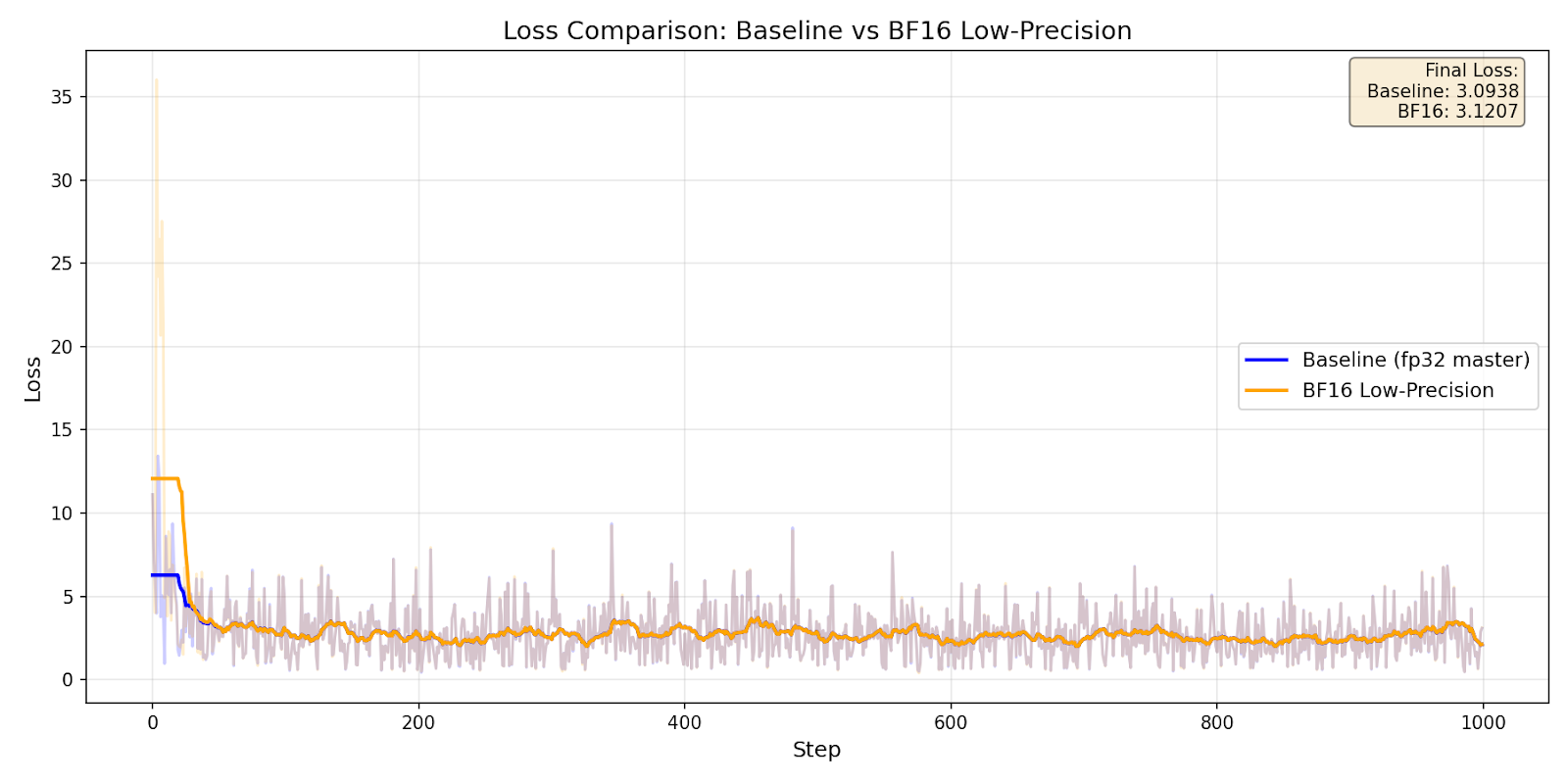
- •Low-precision optimizations improve memory efficiency
- •Facilitates efficient training of complex AI architectures
🧠 Deep Insight
Background and context from public sources — not the original article. 7 sources cited.
🔑 Enhanced Key Takeaways
- •Ray's disaggregated hybrid parallelism (sequence parallelism + tensor parallelism) achieves 1.26–1.37x throughput speedup over uniform tensor parallelism for Qwen-VL 32B multimodal training and supports sequences up to 65k tokens where DeepSpeed ZeRO-3 encounters OOM errors.[1]
- •DeepSpeed's roadmap for Q2 2026 explicitly prioritizes multimodal model support, highlighting sequence parallelism as critical due to significantly longer sequence lengths in vision-language models.[7]
- •DeepSpeed ZeRO stages, including ZeRO-3, enable training models up to 200B parameters with 16-way model parallelism by partitioning model states, gradients, and optimizer states across GPUs.[2]
🛠️ Technical Deep Dive
- •Disaggregated hybrid parallelism in Ray applies sequence parallelism (SP) + DeepSpeed ZeRO-1 to the smaller vision encoder and tensor parallelism (TP) to the larger LLM, avoiding communication bottlenecks and OOM from uniform strategies.[1]
- •DeepSpeed ZeRO partitions model states, gradients, and optimizer states across data-parallel processes, reducing memory by up to 8x in ZeRO-2 compared to basic data parallelism.[2]
🔮 Future ImplicationsAI analysis grounded in cited sources
⏳ Timeline
📎 Sources (7)
Factual claims are grounded in the sources below. Forward-looking analysis is AI-generated interpretation.
Weekly AI Recap
Read this week's curated digest of top AI events →
👉Related Updates
AI-curated news aggregator. All content rights belong to original publishers.
Original source: PyTorch Blog ↗
This is a summary, not the original. Read the source, or get the weekly briefing.
Weekly AI briefing
One email a week. Unsubscribe anytime.