來源虎嗅•較早收集於 24m
世界模型與 AI 產業趨勢辯論
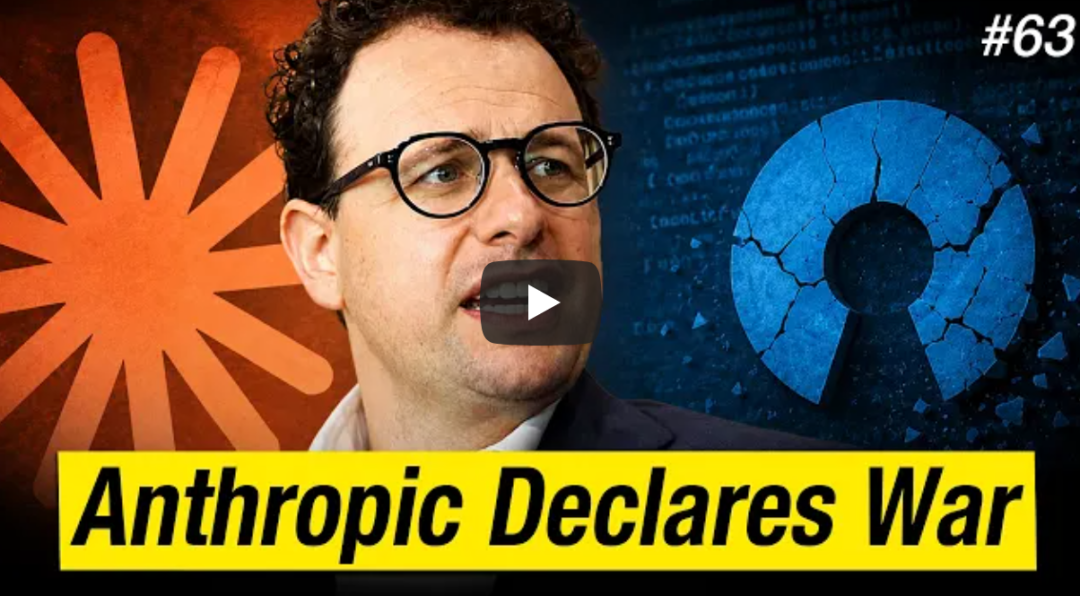
💡深入了解頂尖研究人員為何質疑機器人領域中「世界模型」的炒作。
⚡ 30 秒速覽
有什麼變化
Anthropic 正加強對開源開發者的限制。
為什麼重要
對世界模型的質疑顯示機器人策略正轉向開發「狹窄」但具備高度實用能力的模型,以提升現實生產力。
下一步行動
評估您的機器人或代理專案是否過度依賴通用世界模型;考慮開發專門針對特定任務的模型以獲得更佳效能。
誰應關注:Researchers & Academics
關鍵要點
- •Anthropic 正加強對開源開發者的限制。
- •Pete Florence 認為「世界模型」並非實現實用機器人的首要目標。
- •投資人正將重心從通用模型轉向專業垂直領域的 AI 代理。
🧠 深度解析
本篇為 AI 生成分析,非原文內容。
🔑 增強重點摘要
- •Pete Florence, formerly of Google DeepMind and now at Physical Intelligence, advocates for 'policy-first' learning where robots learn behaviors directly from sensorimotor data rather than attempting to build comprehensive, physics-accurate world models.
- •The shift toward vertical AI agents is driven by the 'last mile' problem in robotics, where general-purpose models fail to handle the high-precision, unstructured environments of industrial or domestic tasks.
- •Anthropic's recent API policy updates have introduced stricter rate limits and usage monitoring, which industry analysts interpret as a defensive move to protect proprietary model weights and prevent unauthorized distillation.
- •Emerging research in 'embodied AI' suggests that scaling laws for robotics may differ significantly from LLMs, favoring high-quality, diverse physical interaction data over massive, static internet-scale datasets.
- •Venture capital funding for robotics startups in 2026 has pivoted toward companies demonstrating 'zero-shot' transfer capabilities in real-world settings, moving away from companies relying solely on simulated training environments.
📊 競品分析▸ Show
| Feature | General World Models (e.g., Sora/Genie) | Task-Oriented Agents (e.g., Physical Intelligence) |
|---|---|---|
| Primary Goal | Generative simulation of physics | Direct execution of physical tasks |
| Data Source | Internet video/synthetic data | Sensorimotor/teleoperation data |
| Compute Focus | High-compute pre-training | High-frequency inference/low latency |
| Benchmarks | Video fidelity/coherence | Success rate/task completion time |
🛠️ 技術深入
- Policy-first architectures utilize Transformer-based policies that map visual/proprioceptive tokens directly to motor commands (actions).
- Implementation often involves Diffusion Policies, which model the distribution of actions to handle multi-modal behaviors in complex environments.
- Latency requirements for embodied agents typically demand sub-50ms inference times, necessitating model quantization and specialized edge hardware deployment.
- Training pipelines increasingly rely on 'Sim-to-Real' transfer techniques, utilizing domain randomization to bridge the gap between synthetic training data and physical reality.
🔮 前景展望基於引用來源的 AI 分析
Robotics foundation models will decouple from LLM-centric architectures.
The distinct requirements for real-time sensorimotor control and physical safety are forcing a divergence from the transformer-based text generation paradigm.
Open-source AI development will face increasing 'walled garden' restrictions.
As AI companies prioritize commercial viability and safety, they are increasingly restricting access to model weights to prevent competitive distillation.
⏳ 時間線
2023-05
Pete Florence contributes to the development of RT-2 (Robotic Transformer 2) at Google DeepMind.
2024-03
Physical Intelligence is founded with a focus on building a universal brain for robots.
2025-09
Anthropic updates its commercial API terms, signaling a shift toward more restrictive developer access.
📰
AI 週報
閱讀本週精選 AI 大事摘要 →
👉相關動態

AI 策展新聞聚合。所有內容版權歸原始發布者所有。
原始來源: 虎嗅 ↗
每週電子報
每週一封,可隨時退訂。