來源量子位•較早收集於 65m
中國企業於 CVPR 2026 展示物理 AI 技術
💡了解中國企業如何於 CVPR 2026 與 Nvidia 和 Tesla 同台,定義物理 AI 的技術標準。
⚡ 30 秒速覽
有什麼變化
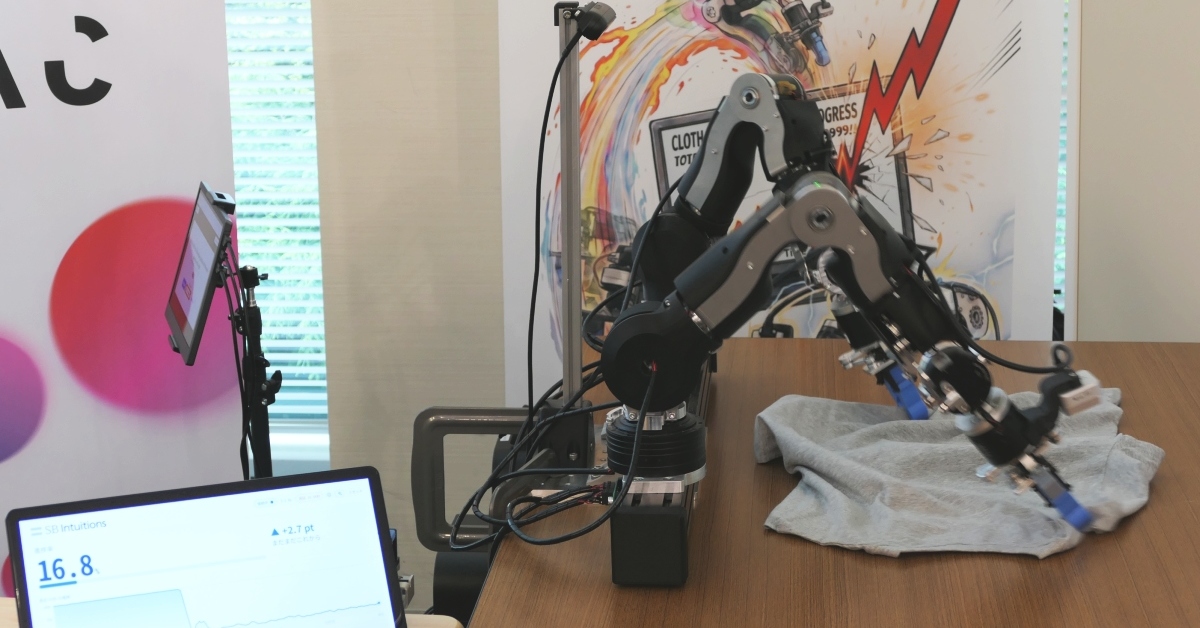
中國企業於 CVPR 2026 大會展示物理 AI 技術能力。
為什麼重要
這標誌著產業正轉向具身智慧(Embodied AI),模擬到現實的流程正逐漸標準化。這顯示中國企業在全球機器人與自動駕駛系統研究領域的影響力正顯著提升。
下一步行動
查閱 CVPR 2026 關於物理 AI 的最新論文集,以了解目前機器人領域採用的數據閉環架構。
誰應關注:Researchers & Academics
關鍵要點
- •中國企業於 CVPR 2026 大會展示物理 AI 技術能力。
- •Nvidia、Tesla 及 Waymo 等行業巨頭出席了此次發表會。
- •核心成就在於建立了物理 AI 開發的閉環飛輪。
- •研究重點在於彌合數位 AI 模型與物理世界互動之間的差距。
🧠 深度解析
背景與延伸:來自公開資料,非原文內容。引用 19 個來源。
🔑 增強重點摘要
- •Chinese startup Spirit AI's foundation model, Spirit v1.6, recently surpassed Nvidia's Cosmos3-Nano-Policy on the RoboArena global leaderboard for embodied intelligence, marking a significant competitive achievement in core AI model capabilities for physical interaction.
- •China's robust manufacturing base and existing leadership in electric vehicles provide a strategic advantage, allowing for the repurposing of components like batteries, sensors, and lidar for physical AI systems, which accelerates hardware localization efforts.
- •The Chinese government actively supports Physical AI development through national policies like the "Robot+" initiative and "AI + Manufacturing" roadmap, aiming to double manufacturing robot density by 2030 and projecting the domestic market to exceed 1 trillion yuan ($146 billion) by 2035.
- •The core achievement of a "closed-loop flywheel" for physical AI involves a continuous cycle of real-world data collection, model refinement through techniques like reinforcement learning and simulation, and subsequent deployment, with teleoperation playing a crucial role in generating valuable training data.
- •Chinese firms are rapidly moving towards mass production and commercialization of humanoid robots, with over 80% of global humanoid robot installations in 2025 attributed to China, and companies like UBTech showcasing innovations such as self-charging capabilities for 24/7 operation.
📊 競品分析▸ Show
| Feature/Benchmark | Spirit AI (Spirit v1.6) | Nvidia (Cosmos3-Nano-Policy) |
|---|---|---|
| Category | Foundation model for embodied intelligence | Foundation model for physical AI |
| RoboArena Score | 1,924 | 1,881 |
| Global Ranking | 1st | 2nd |
| Origin | China (Hangzhou, Zhejiang province) | USA |
🛠️ 技術深入
- Physical AI systems utilize a range of sensors, including cameras, microphones, temperature sensors, inertial measurement units (IMUs), radar, and lidar, along with actuators to perceive and interact with the physical world.
- Reinforcement learning is a primary mechanism for these systems, enabling them to learn by trial and error through positive or negative feedback to improve task performance.
- The development heavily relies on world foundation models (WFMs) that learn the dynamics of the physical world (geometry, motion, physics) from extensive real-world data, facilitating the generation of realistic, physics-aware scenarios for training, often through digital twins.
- The closed-loop flywheel process encompasses continuous data processing, model customization (e.g., using large language model techniques like domain adaptive pretraining (DAPT), LoRA, and supervised fine-tuning (SFT)), rigorous model evaluation, and subsequent deployment.
- Simulation is a critical component, allowing engineers to integrate and test AI models within high-fidelity digital twins of physical systems and environments before hardware deployment, thereby minimizing risk and cost.
- Physical AI systems are designed for real-time performance, robustness to noise and uncertainty in sensor data, and require extensive safety and reliability testing due to real-world consequences of failure.
- Chinese firms are developing vision-language-action (VLA) models that integrate perception, locomotion, and reasoning functionalities for more capable and versatile robots.
🔮 前景展望基於引用來源的 AI 分析
China will likely achieve global leadership in Physical AI deployment and manufacturing.
Its aggressive state-backed policies, robust manufacturing base, and rapid scaling of humanoid robot production, combined with a focus on localizing the supply chain, position it to outpace other nations in real-world application and data collection.
The "closed-loop flywheel" approach will become the standard for Physical AI development.
This continuous learning and improvement cycle, leveraging real-world data, simulation, and human-in-the-loop teleoperation, is essential for building resilient, adaptive, and autonomous physical AI systems capable of handling real-world complexities.
Competition in Physical AI, particularly in foundation models for embodied intelligence, will intensify between Chinese and Western tech giants.
Recent benchmark results showing a Chinese startup surpassing Nvidia highlight a growing rivalry in core AI model capabilities for physical interaction, indicating a new battleground in the global tech race.
⏳ 時間線
2024
China installed 295,000 new industrial robots, more than all other countries combined, and domestic manufacturers gained over 57% market share, laying a strong foundation for physical AI.
2025-03
China's Government Work Report identified embodied AI as a core tool for future industries, signaling national strategic importance.
2025-09
Chinese firms were projected to manufacture over 10,000 humanoid robots, accounting for over half of global output, demonstrating rapid scaling.
2025-11
UBTech unveiled the Walker S2, the world's first humanoid robot capable of autonomously changing its own batteries, showcasing advanced capabilities.
2026-05
China launched a national-level AI pilot-testing base for embodied intelligence in Hangzhou, fostering innovation and deployment.
2026-06-04
Chinese startup Spirit AI's foundation model, Spirit v1.6, topped the RoboArena global leaderboard, surpassing Nvidia, indicating a significant competitive edge in embodied intelligence models.
📎 來源 (19)
Factual claims are grounded in the sources below. Forward-looking analysis is AI-generated interpretation.
📰
AI 週報
閱讀本週精選 AI 大事摘要 →
👉相關動態

AI 策展新聞聚合。所有內容版權歸原始發布者所有。
原始來源: 量子位 ↗
每週電子報
每週一封,可隨時退訂。