🌍The Next Web (TNW)•較早收集於 44m
蘋果探索Intel、三星製造M系列晶片
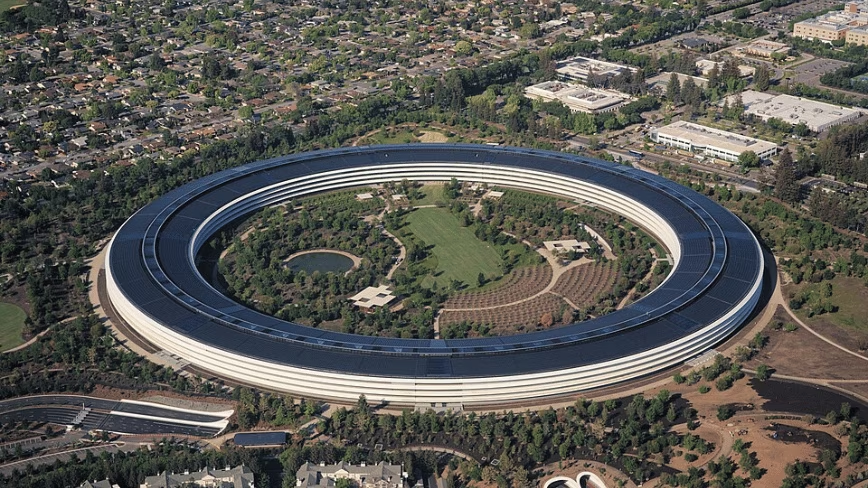
💡蘋果晶片多元化提升M系列對邊緣AI運算供應(28字元)
⚡ 30-Second TL;DR
有什麼變化
與Intel及三星早期討論M系列晶片生產
為什麼重要
多元化晶圓代工可提升M系列產能,降低Apple Intelligence功能的風險。這有利依賴高效Apple矽晶進行端側ML的AI開發者。供應鏈轉變可能影響晶片價格與供應。
下一步行動
使用MLPerf基準測試M4晶片,預測Intel/三星對未來Apple AI硬體影響。
誰應關注:Developers & AI Engineers
關鍵要點
- •與Intel及三星早期討論M系列晶片生產
- •終結TSMC十年Apple晶片獨佔地位
- •彭博社報導的探索性討論
- •Apple晶圓代工夥伴潛在多元化
🧠 深度解析
AI-generated analysis for this event.
🔑 增強重點摘要
- •The shift is reportedly driven by Apple's desire to mitigate geopolitical risks associated with Taiwan-centric manufacturing and to leverage Intel Foundry's advanced packaging capabilities, such as Foveros, for future high-performance M-series iterations.
- •Samsung's potential involvement hinges on their progress with 2nm (SF2) gate-all-around (GAA) transistor technology, which Apple is evaluating as a competitive alternative to TSMC's N2 process nodes.
- •Industry analysts suggest that Apple's move is a strategic leverage play to negotiate better pricing and capacity allocation with TSMC, rather than a complete abandonment of the foundry that has successfully scaled Apple Silicon since 2020.
📊 競品分析▸ Show
| Feature | Apple M-Series (TSMC) | Intel Foundry (18A) | Samsung Foundry (SF2) |
|---|---|---|---|
| Process Node | N3E / N2 | 18A (Angstrom) | SF2 (2nm GAA) |
| Architecture | ARM-based | x86 / Custom ARM | Custom ARM |
| Packaging | InFO / CoWoS | Foveros | I-Cube / X-Cube |
| Primary Focus | Power Efficiency | Performance/Density | GAA Scaling |
🛠️ 技術深入
- •Apple is specifically evaluating the integration of Intel's 18A process, which utilizes RibbonFET (GAA) transistors and PowerVia backside power delivery to improve energy efficiency.
- •The transition to multi-foundry production requires Apple to standardize its design rule manuals (DRMs) and physical IP libraries to ensure parity across TSMC, Intel, and Samsung nodes.
- •Potential implementation involves a 'chiplet' strategy where Apple could mix-and-match dies manufactured at different foundries, connected via high-speed interconnects like UCIe (Universal Chiplet Interconnect Express).
🔮 前景展望AI analysis grounded in cited sources
Apple will adopt a multi-foundry strategy for M-series chips by 2028.
The complexity of qualifying new foundry processes typically requires an 18-24 month lead time from initial design to mass production.
TSMC's market share of Apple's total chip volume will drop below 80% within three years.
Diversification efforts are intended to reduce dependency, and Apple's historical supply chain management favors splitting orders once secondary suppliers meet yield requirements.
⏳ 時間線
2020-11
Apple launches the M1 chip, marking the transition from Intel processors to Apple Silicon.
2022-03
Apple completes the transition of its Mac lineup to M-series silicon with the release of the Mac Studio.
2024-05
Apple introduces the M4 chip, manufactured on TSMC's second-generation 3nm process.
📰
AI 週報
閱讀本週精選 AI 大事摘要 →
👉相關動態


AI 策展新聞聚合。所有內容版權歸原始發布者所有。
原始來源: The Next Web (TNW) ↗