20世紀發明的所有職業,都難逃AI的衝擊
💡Taleb + Atlantic warn AI agents wipe out white-collar jobs; 90% Anthropic code already AI-generated.
⚡ 30-Second TL;DR
有什麼變化
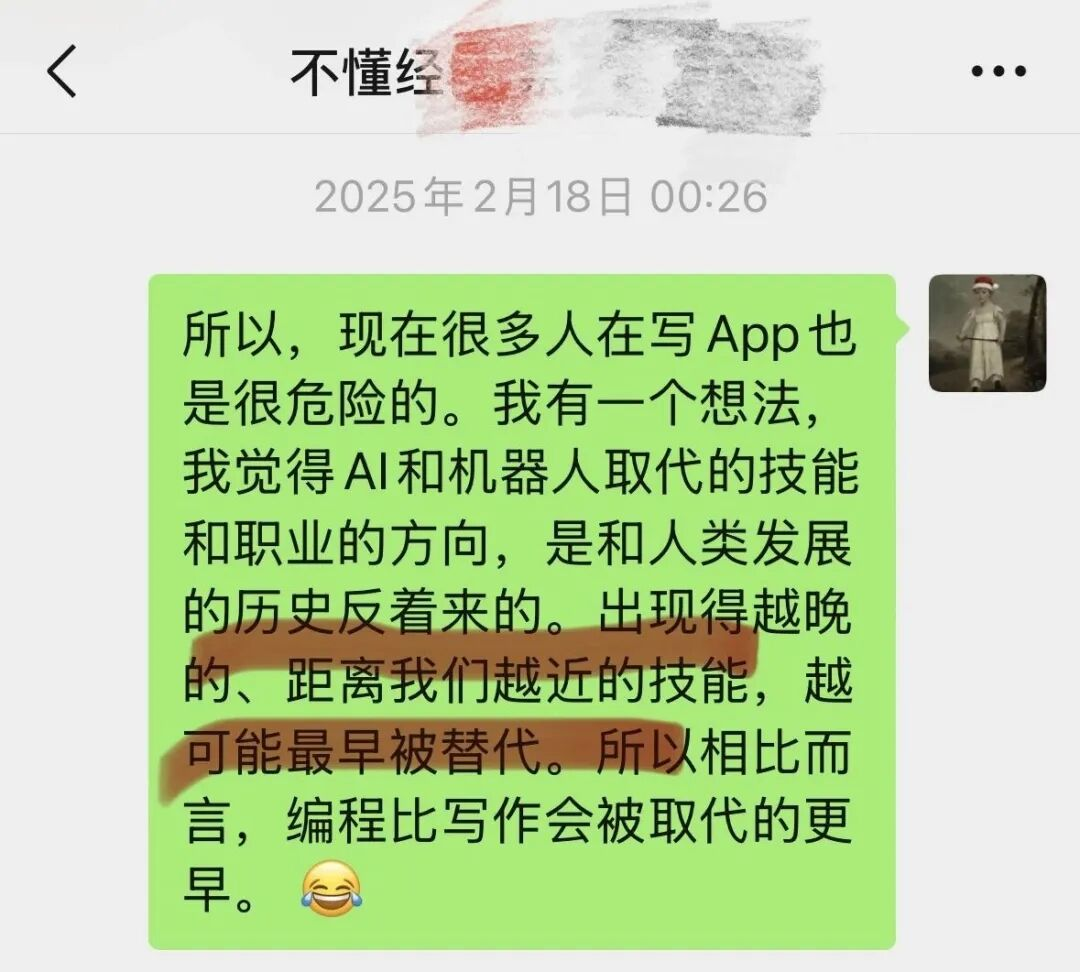
塔勒布推文:所有20世紀職業難逃AI衝擊。
為什麼重要
白領自動化加速,擴大技能差距;開發者須適應智能體AI,否則面臨淘汰。預示知識工作者就業市場動盪。
下一步行動
Test Anthropic Claude's agentic coding by prompting it to build and debug a full app autonomously.
關鍵要點
- •塔勒布推文:所有20世紀職業難逃AI衝擊。
- •AI逆向技能演化—抽象認知最先被取代,體力勞動最晚。
- •《大西洋月刊》文章強調AI智能體引發白領失業激增。
- •Anthropic的Claude Code自主提議並建構程式碼,用於內部開發90%。
- •兩個AI世界:基礎ChatGPT vs. 智能體工具將數月工作壓縮至數天。
🧠 深度解析
背景與延伸:來自公開資料,非原文內容。引用 4 個來源。
🔑 增強重點摘要
- •Nassim Taleb's framework emphasizes that in volatile, complex systems, abstract cognitive work faces disruption before physical labor, as AI agents demonstrate increasing capability in white-collar tasks like coding and analysis[1][2]
- •The shift from tool-based AI (ChatGPT) to agentic AI systems represents a fundamental change in automation capability, compressing months of professional work into days and affecting knowledge worker productivity[2]
- •Early success in AI adoption can paradoxically create fragility by locking organizations into strategies that appear successful but may not adapt to changing conditions; the strongest players treat AI strategies as testable hypotheses rather than settled convictions[2]
- •AI-driven disruption is creating an 'anti-fragile portfolio' challenge for investors and organizations, as traditional blue-chip companies face existential questions about business model relevance in an AGI-capable world[3]
- •The disruption pattern mirrors historical precedents like Kodak (1996-2008), where technological shifts eliminate entire industries; companies must continuously disrupt themselves or face obsolescence in accelerating technological cycles[4]
🛠️ 技術深入
• Agentic AI systems operate in 'scientist mode,' treating strategies as falsifiable hypotheses rather than fixed convictions, enabling rapid iteration when market signals contradict assumptions[2] • Advanced code generation tools autonomously propose, build, and test solutions, compressing development cycles from months to days[1] • The distinction between basic LLM interfaces and agentic tools reflects architectural differences in autonomy, planning, and tool integration capabilities[2] • Multi-dimensional technological forces (automation, machine learning, robotics, blockchain, IoT) are building on and amplifying one another in compound disruption patterns[4]
🔮 前景展望AI analysis grounded in cited sources
Organizations face pressure to adopt anti-fragile strategies that embrace continuous learning and hypothesis testing rather than locking into early AI successes. The equity markets are grappling with poorly defined 'next order' effects of AI—while direct impacts on IT services and coding are clear, downstream industry obsolescence remains opaque. Companies must balance the efficiency gains from agentic AI against the risk that early competitive advantages harden into brittle strategies. The convergence of AI with other technologies (3D printing, IoT, blockchain) suggests compounding disruption across manufacturing, services, and knowledge work sectors. Talent markets face structural shifts as employability becomes tied to AI literacy rather than domain expertise alone.
⏳ 時間線
📎 來源 (4)
Factual claims are grounded in the sources below. Forward-looking analysis is AI-generated interpretation.
AI 週報
閱讀本週精選 AI 大事摘要 →
👉相關動態
AI 策展新聞聚合。所有內容版權歸原始發布者所有。
原始來源: 虎嗅 ↗
每週 AI 簡報
每週一封,可隨時退訂。