XPeng Robotaxi Enters Mass Production for 2026 Launch
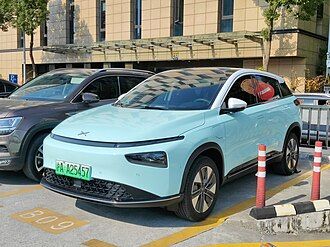
💡A major milestone in embodied AI: China's first mass-produced L4 robotaxi with 3,000 TOPS compute.
⚡ 30-Second TL;DR
What Changed
First full-stack self-developed robotaxi from a major Chinese automaker to enter mass production.
Why It Matters
This development signals a shift toward vertical integration in the autonomous vehicle industry, where automakers control both the hardware and the AI software stack. It increases competitive pressure on existing robotaxi operators to optimize their compute-to-performance ratios.
What To Do Next
Monitor XPeng's open-source autonomous driving datasets or developer SDKs to understand their L4 perception stack architecture.
Key Points
- •First full-stack self-developed robotaxi from a major Chinese automaker to enter mass production.
- •Equipped with 3,000 TOPS of on-board computing power for complex autonomous tasks.
- •Designed specifically for L4 autonomous driving capabilities.
- •Pilot operations are officially targeted for H2 2026.
🧠 Deep Insight
Web-grounded analysis with 14 cited sources.
🔑 Enhanced Key Takeaways
- •The robotaxi is built on XPeng's GX platform, which is designed from the ground up for L4 autonomous driving, rather than being a retrofit of existing consumer vehicles.
- •XPeng's robotaxi adopts a pure vision-based approach, operating without LiDAR sensors or high-definition maps, and is powered by its VLA 2.0 end-to-end large model, which reduces system response latency to under 80 milliseconds.
- •The company aims to achieve fully driverless operations without an on-site safety officer by early 2027, following pilot operations in the second half of 2026.
- •The robotaxi is part of XPeng's broader 'physical AI strategy,' sharing its VLA 2.0 foundation with other projects like the humanoid robot IRON and future flying vehicles.
- •XPeng established a dedicated Robotaxi Business Unit in March 2026 to oversee product definition, R&D testing, and operations, accelerating its commercialization roadmap.
📊 Competitor Analysis▸ Show
| Company/Service | Key Technology Approach | Operational Status (China) | Operational Status (US/Global) | XPeng Differentiator |
|---|---|---|---|---|
| XPeng Robotaxi | Vision-only (VLA 2.0 end-to-end model), no LiDAR/HD maps | Mass production started, pilot operations H2 2026 in Guangzhou | N/A (targeting global expansion) | Full-stack in-house development (software, chips, vehicle), GX platform designed for L4, 3,000 TOPS with Turing AI chips |
| Baidu Apollo Go | Hybrid (LiDAR, cameras, radar) | Dominates with >700 robotaxis in 16 cities (as of 2024) | Partnered with Lyft for Europe (pending approval), Uber in Abu Dhabi | Largest fleet and operational presence in China |
| Pony.ai | Hybrid (LiDAR, cameras, radar) | Rapidly expanding, >1,000 vehicles by end of 2025, operations in Guangzhou, Shenzhen, Beijing, Shanghai | Operations in Dubai, Qatar, Singapore (with Grab) | Strong AI capabilities, backed by major investors like Toyota |
| WeRide | Hybrid (LiDAR, cameras, radar) | Fully driverless service in Guangzhou, expanding | Operations in Singapore (with Grab), Dubai, Abu Dhabi (with Uber) | Aggressive global expansion, strategic partnerships |
| Didi Chuxing | Hybrid | Emerging as top competitor to Baidu, integrating into existing ride-hailing platform | N/A | Leverages large existing ride-hailing user base |
| Waymo (US) | Lidar-based | N/A | >600 vehicles in Phoenix, San Francisco, Los Angeles; testing in 10+ cities | Industry leader in the U.S., slow but steady approach, strong safety records |
| Tesla FSD (US) | Vision-only (cameras, neural networks) | N/A (FSD Beta in China for consumer vehicles) | FSD Beta in US, aiming for robotaxi | Relies entirely on cameras and neural networks, potentially more scalable and cost-effective |
🛠️ Technical Deep Dive
- Built on XPENG's GX platform, engineered for L4 autonomous driving from the factory floor.
- Powered by four self-developed Turing AI chips.
- Delivers a combined effective on-board computing power of 3,000 TOPS.
- Adopts a pure vision-based approach, operating without LiDAR sensors or high-definition maps.
- Decision-making is driven by XPENG's VLA 2.0 end-to-end large model.
- The VLA 2.0 model eliminates the 'language translation' step found in traditional Vision-Language-Action architectures, compressing system response latency to under 80 milliseconds.
- Offers enhanced urban generalization capabilities, supporting cross-city and potentially cross-border deployment.
- Features practical intelligent cabin configurations including privacy glass, zero-gravity comfort seating, and rear in-car entertainment screens.
- Includes a built-in voice assistant for passengers to control settings and access multimedia features.
- Incorporates dual hardware redundancy across perception, steering, braking, communications, energy, and compute systems.
🔮 Future ImplicationsAI analysis grounded in cited sources
⏳ Timeline
📎 Sources (14)
Factual claims are grounded in the sources below. Forward-looking analysis is AI-generated interpretation.
Weekly AI Recap
Read this week's curated digest of top AI events →
👉Related Updates
AI-curated news aggregator. All content rights belong to original publishers.
Original source: Pandaily ↗