Xpeng Enters Robotaxi Market to Challenge Tesla FSD
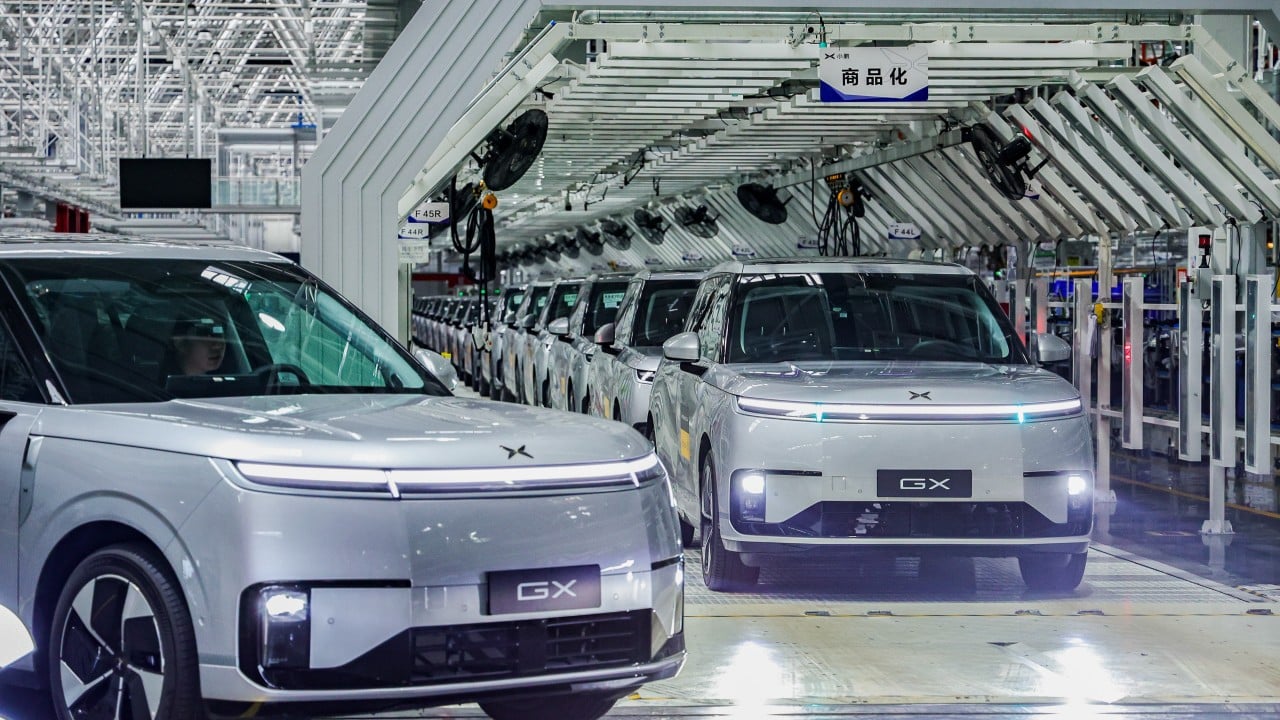
💡Xpeng's push into L4 robotaxis with custom silicon marks a major shift in the global autonomous driving AI race.
⚡ 30-Second TL;DR
What Changed
Xpeng has commenced mass production of L4 autonomous robotaxis.
Why It Matters
The shift toward proprietary hardware for L4 autonomy suggests a vertical integration strategy that could lower costs and accelerate deployment. It intensifies the global race for autonomous driving dominance between Chinese and US tech firms.
What To Do Next
Monitor Xpeng's technical documentation on their proprietary AI chip architecture to understand how it compares to Tesla's Dojo or FSD inference hardware.
Key Points
- •Xpeng has commenced mass production of L4 autonomous robotaxis.
- •The vehicles are powered by Xpeng's proprietary self-developed chips.
- •This initiative positions Xpeng as a direct competitor to Tesla's FSD in the autonomous mobility sector.
🧠 Deep Insight
Web-grounded analysis with 14 cited sources.
🔑 Enhanced Key Takeaways
- •Xpeng's L4 autonomous robotaxis are built on the same GX platform as its consumer flagship SUV, utilizing a shared hardware and software stack to reduce costs and accelerate development.
- •The robotaxis employ a 'pure vision solution,' operating without LiDAR sensors or high-definition maps, and are driven by Xpeng's VLA 2.0 end-to-end AI model, which boasts a system response latency under 80 milliseconds.
- •Xpeng plans to initiate pilot robotaxi operations with safety drivers in the second half of 2026 and aims to achieve fully autonomous operations without on-site safety officers by early 2027.
- •The robotaxis are powered by four self-developed Turing AI chips, delivering an effective on-board computing power of 3,000 TOPS (tera operations per second), which Xpeng claims is an industry-leading figure.
- •Xpeng has partnered with Alibaba's Amap, China's leading digital mapping and navigation platform, to integrate its robotaxi service into Amap's ride-hailing platform and build a global robotaxi service network.
📊 Competitor Analysis▸ Show
While direct pricing and benchmark comparisons for Xpeng's L4 robotaxi against all competitors are not fully available, key differentiators and operational statuses can be compared:
| Feature/Aspect | Xpeng Robotaxi
🛠️ Technical Deep Dive
- The robotaxi is built on the Xpeng GX platform, sharing its core hardware with the consumer flagship SUV.
- It is engineered to L4 autonomous driving standards from the factory floor, rather than through aftermarket retrofits.
- The system utilizes a 'pure vision solution,' meaning it operates without LiDAR sensors and high-definition maps.
- Decision-making is driven by Xpeng's VLA 2.0 end-to-end AI model, which compresses system response latency to under 80 milliseconds.
- The VLA 2.0 model eliminates the 'language-translation step' found in traditional Vision-Language-Action architectures, enhancing urban generalization capabilities for cross-city and potentially cross-border deployment.
- The vehicle is powered by four of Xpeng's self-developed Turing AI chips, providing a combined computing power of 3,000 TOPS.
- It incorporates a Bosch steer-by-wire system, which removes the mechanical steering shaft, allowing AI to control steering with less latency and higher precision.
- The robotaxi features an aviation-grade six-layer safety redundancy architecture across safety-critical systems.
- The interior is designed for passengers, including privacy glass, gravity seats, rear entertainment screens, and voice-controlled cabin settings.
🔮 Future ImplicationsAI analysis grounded in cited sources
⏳ Timeline
📎 Sources (14)
Factual claims are grounded in the sources below. Forward-looking analysis is AI-generated interpretation.
Weekly AI Recap
Read this week's curated digest of top AI events →
👉Related Updates
AI-curated news aggregator. All content rights belong to original publishers.
Original source: SCMP Technology ↗