Xiaomi Delays AI Monetization Amid Profit Pressure
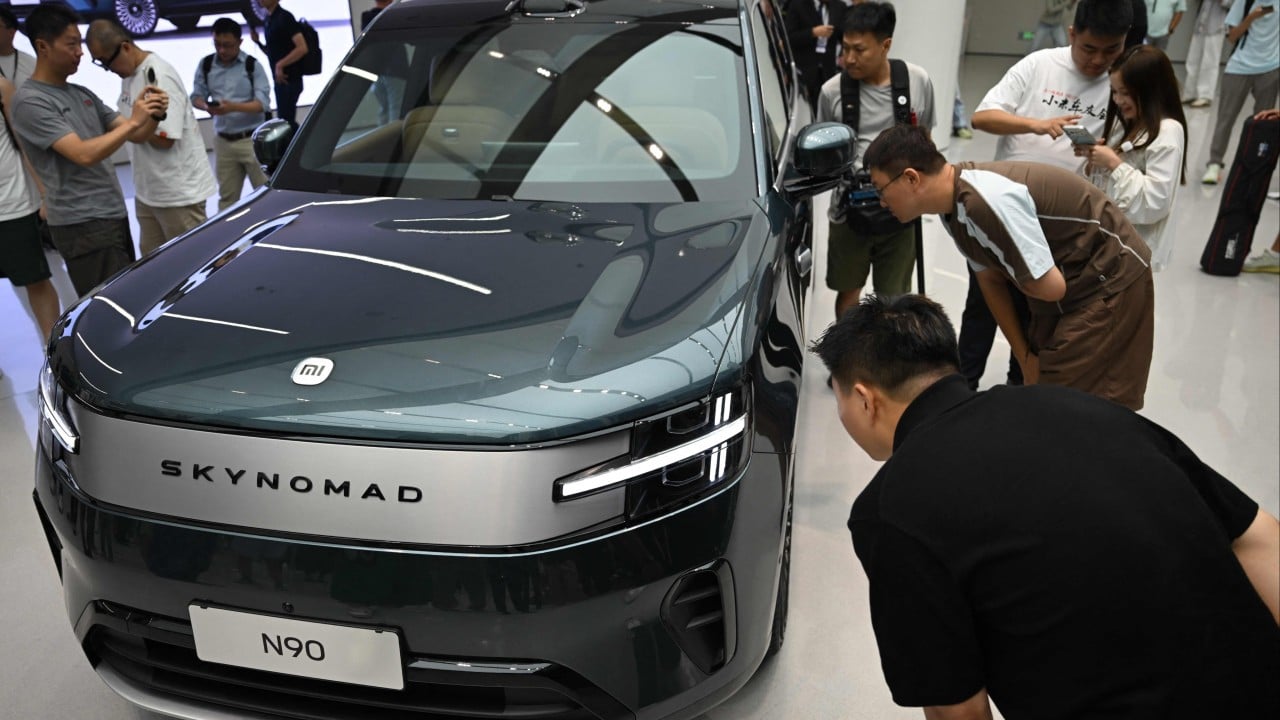
💡Xiaomi’s delayed AI monetization offers a reality check for teams balancing ambitious investment with profitability.
⚡ 30-Second TL;DR
What Changed
Xiaomi describes its AI spending as being in a large-scale investment phase.
Why It Matters
Xiaomi’s stance may give its AI teams more time to build capabilities before imposing strict revenue targets. For AI practitioners, it also highlights the financial pressure involved in scaling AI initiatives and the importance of measuring long-term strategic value.
What To Do Next
Build a quarterly AI investment dashboard tracking compute costs, deployment milestones, user adoption, and expected monetization for each initiative.
Key Points
- •Xiaomi describes its AI spending as being in a large-scale investment phase.
- •The company is not pursuing immediate monetization of its AI capabilities.
- •Second-quarter net profit declined amid competition and cost inflation.
- •The strategy indicates Xiaomi is willing to tolerate delayed AI returns.
🧠 Deep Insight
AI-generated analysis for this event.
🔑 Enhanced Key Takeaways
- •Xiaomi's AI strategy is heavily integrated into its 'Human x Car x Home' ecosystem, focusing on the SU7 electric vehicle's autonomous driving capabilities rather than standalone AI software sales.
- •The company has significantly increased its R&D headcount in the automotive division, which is currently the primary driver of its rising operational costs.
- •Xiaomi's 'MiLM' (Xiaomi Large Model) series has been deployed across its smartphone lineup to enhance on-device processing, aiming to reduce cloud dependency and associated infrastructure costs.
- •Market analysts note that Xiaomi is leveraging its massive existing user base of IoT devices to train proprietary models, creating a data moat that competitors without hardware ecosystems lack.
- •Despite profit pressures, Xiaomi has maintained its commitment to the 'Smart Manufacturing' initiative, which utilizes AI to optimize supply chain efficiency and reduce long-term production overhead.
📊 Competitor Analysis▸ Show
| Feature | Xiaomi (SU7/AI) | Huawei (HarmonyOS/ADS) | Tesla (FSD/Optimus) |
|---|---|---|---|
| AI Strategy | Ecosystem Integration | Platform/Software Licensing | Vertical Integration |
| Pricing Model | Hardware-Margin Focused | Software/Service Licensing | Subscription/Hardware Bundle |
| Key Benchmark | High-efficiency IoT/Auto | Advanced Autonomous Driving | Industry-leading FSD Data |
🛠️ Technical Deep Dive
- MiLM-1.3B and MiLM-6B: Lightweight large language models optimized for on-device execution on Qualcomm Snapdragon and MediaTek chipsets.
- BEV + Transformer + Occupancy Network: The core architecture powering Xiaomi's Pilot autonomous driving system, designed to handle complex urban navigation.
- HyperOS AI Subsystem: A kernel-level integration that manages AI task scheduling across mobile, automotive, and smart home hardware to minimize latency.
- End-to-End Large Model: Xiaomi has transitioned its autonomous driving stack to an end-to-end model, reducing the reliance on traditional rule-based programming.
🔮 Future ImplicationsAI analysis grounded in cited sources
⏳ Timeline
Weekly AI Recap
Read this week's curated digest of top AI events →
👉Related Updates
AI-curated news aggregator. All content rights belong to original publishers.
Original source: SCMP Technology ↗