Woolworths Pushes Compute to Store Edges
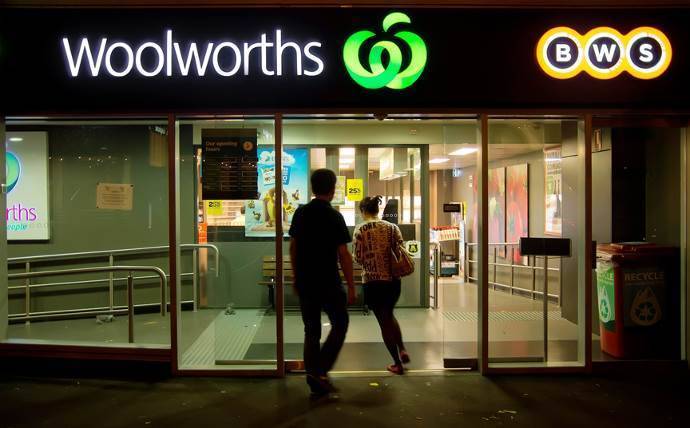
💡See how retail edge computing can keep AI workloads running when central systems are unreachable.
⚡ 30-Second TL;DR
What Changed
Woolworths intends to run workloads closer to its retail stores.
Why It Matters
For enterprise AI teams, the strategy highlights the importance of designing systems that can operate during network outages. Local execution may reduce latency and improve availability, but it also increases the complexity of deployment, monitoring, and model updates.
What To Do Next
Prototype an offline-capable edge service using containers and ONNX Runtime, then test model inference and data synchronization during simulated store network outages.
Key Points
- •Woolworths intends to run workloads closer to its retail stores.
- •The move is driven by concerns that stores could be stranded if centralised compute becomes unreachable.
- •Edge deployment could support more resilient local applications and inference workloads.
🧠 Deep Insight
AI-generated analysis for this event.
🔑 Enhanced Key Takeaways
- •Woolworths is leveraging hyper-converged infrastructure (HCI) at the edge to reduce latency for real-time inventory management and point-of-sale (POS) systems.
- •The initiative is part of a broader 'cloud-to-edge' architectural shift aimed at reducing the company's reliance on public cloud egress costs for high-frequency store data.
- •The deployment utilizes containerized microservices, allowing Woolworths to push software updates to thousands of stores simultaneously without requiring manual intervention.
- •This edge strategy is specifically designed to support AI-driven computer vision applications for shelf-stocking and loss prevention that require sub-millisecond inference.
- •Woolworths has partnered with major hardware vendors to standardize edge server footprints, ensuring the hardware can operate in non-climate-controlled back-of-store environments.
📊 Competitor Analysis▸ Show
| Feature | Woolworths (Edge Strategy) | Coles (Edge Strategy) | Amazon/Whole Foods (Edge Strategy) |
|---|---|---|---|
| Primary Focus | Resilience & Offline Continuity | Cloud-First/Hybrid | Autonomous Retail/Just Walk Out |
| Compute Model | Hyper-converged Edge | Centralized/Hybrid Cloud | Distributed Edge/Cloud Hybrid |
| Inference Location | Local Store Edge | Centralized/Cloud | Local Edge/Cloud Hybrid |
🛠️ Technical Deep Dive
- Implementation utilizes a Kubernetes-based orchestration layer to manage containerized workloads across distributed store nodes.
- Hardware architecture relies on ruggedized, fanless edge servers capable of maintaining performance in high-dust, variable-temperature retail environments.
- Data synchronization protocols employ asynchronous messaging queues to ensure local transactions are reconciled with the central data lake once connectivity is restored.
- Inference workloads are optimized using lightweight model quantization to run on local CPU/GPU resources without requiring high-end data center hardware.
🔮 Future ImplicationsAI analysis grounded in cited sources
⏳ Timeline
Weekly AI Recap
Read this week's curated digest of top AI events →
👉Related Updates
AI-curated news aggregator. All content rights belong to original publishers.
Original source: iTNews Australia ↗