Wildcat Lake Benchmarks Match Ultra 9
💡Low-cost Intel chips rivaling Ultra 9 boost affordable AI PC hardware options
⚡ 30-Second TL;DR
What Changed
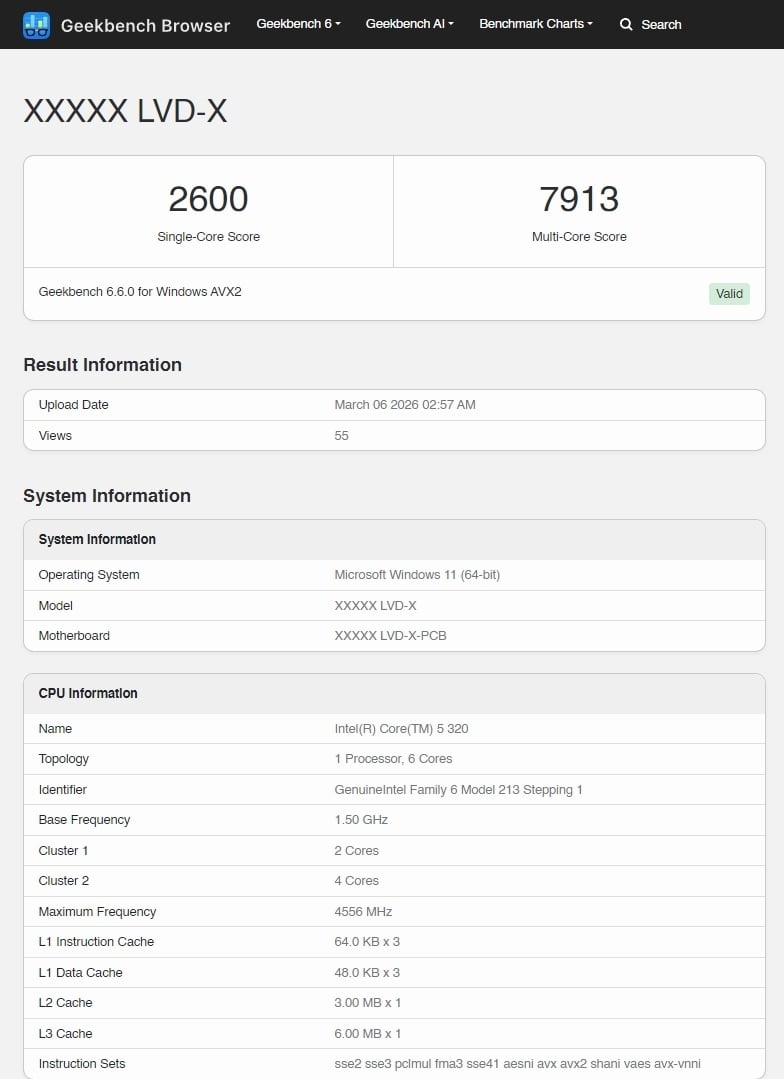
Core 3 310 and Core 5 320 confirmed in CrossMark and Geekbench databases
Why It Matters
These affordable chips could expand access to high-performance mobile computing, benefiting edge AI deployments on budget laptops. Developers may see cost-effective options for NPU-accelerated inference similar to Lunar Lake successors.
What To Do Next
Benchmark Geekbench on Core Ultra systems to compare potential Wildcat Lake edge AI perf.
Key Points
- •Core 3 310 and Core 5 320 confirmed in CrossMark and Geekbench databases
- •Single-core scores match Core Ultra 9 levels
- •Positioned as low-price mobile processors pre-launch
🧠 Deep Insight
AI-generated analysis for this event — not the original article.
🔑 Enhanced Key Takeaways
- •Wildcat Lake is reportedly utilizing a refined version of the 'Cougar Cove' P-core architecture, which explains the significant IPC gains allowing entry-level chips to compete with previous-generation flagship single-core performance.
- •The platform is expected to transition exclusively to LPDDR6 memory support, marking a departure from the hybrid memory controller designs seen in earlier Core Ultra generations.
- •Industry analysts suggest the high single-core performance is achieved through aggressive thermal management and a new 'burst-mode' power delivery profile specifically tuned for thin-and-light mobile chassis.
📊 Competitor Analysis▸ Show
| Feature | Intel Core 3 310 (Wildcat Lake) | AMD Ryzen 3 9000-series (Mobile) | Qualcomm Snapdragon X Elite |
|---|---|---|---|
| Architecture | Cougar Cove (Refined) | Zen 5 | Oryon |
| Target Segment | Entry-level Mobile | Entry-level Mobile | Premium Mobile |
| Single-Core Performance | High (Flagship-tier) | Moderate | High |
| Memory Support | LPDDR6 | LPDDR5X | LPDDR5X |
🛠️ Technical Deep Dive
- •Architecture: Utilizes a monolithic die design for the entry-level SKUs to reduce latency compared to the tiled architecture of the Ultra series.
- •Process Node: Manufactured on Intel 18A process, leveraging RibbonFET gate-all-around transistors for improved power efficiency.
- •Cache Hierarchy: Features an expanded L2 cache per core to minimize memory access bottlenecks during burst workloads.
- •Integrated Graphics: Equipped with a cut-down Xe3-LPG architecture, optimized for media encoding rather than high-end gaming.
🔮 Future ImplicationsAI analysis grounded in cited sources
⏳ Timeline
Weekly AI Recap
Read this week's curated digest of top AI events →
👉Related Updates
AI-curated news aggregator. All content rights belong to original publishers.
Original source: cnBeta (Full RSS) ↗
This is a summary, not the original. Read the source, or get the weekly briefing.
The weekly digest
One email a week. Unsubscribe anytime.