Why Vision-Tactile Sensors May Be Overhyped
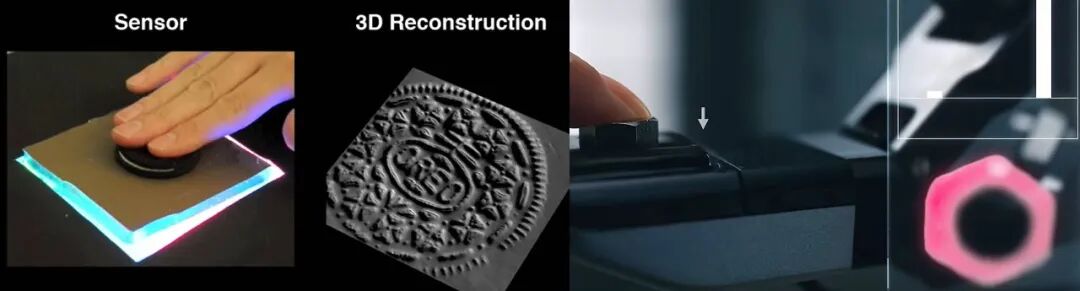
💡The tactile-sensing route powering embodied AI may be easy to copy—and hard to scale reliably.
⚡ 30-Second TL;DR
What Changed
VBTS commonly combines a miniature camera, light source, transparent elastomer, and surface markers.
Why It Matters
For embodied-AI builders, the analysis highlights that tactile sensing performance alone is insufficient; packaging, durability, calibration, and multi-sensor integration determine whether a system can scale. Teams evaluating tactile hardware should compare long-term reliability and total integration cost instead of relying only on spatial resolution or academic demonstrations.
What To Do Next
Benchmark one VBTS module against a resistive or capacitive tactile sensor under 1,000-cycle compression, curved-surface mounting, and multi-sensor synchronization tests before choosing a production architecture.
Key Points
- •VBTS commonly combines a miniature camera, light source, transparent elastomer, and surface markers.
- •Research often reuses ResNet/CNN, U-Net, and optical-flow techniques from computer vision.
- •Camera-based designs may exceed 10 mm in thickness, creating packaging constraints in dexterous robot fingertips.
- •Rigid optical cavities limit deployment on curved bodies and flexible electronic-skin surfaces.
- •The article argues that low hardware barriers and supplier dependence could produce high homogeneity and weak investment defensibility.
🧠 Deep Insight
AI-generated analysis for this event.
🔑 Enhanced Key Takeaways
- •Recent advancements in 'GelSight-like' sensors have shifted focus toward high-resolution tactile sensing for slip detection and texture classification, which are critical for handling delicate objects in unstructured environments.
- •The integration of neuromorphic vision sensors (event cameras) with tactile skins is emerging as a solution to reduce power consumption and latency compared to traditional frame-based CMOS cameras.
- •Standardization efforts, such as the development of open-source tactile datasets (e.g., TacBench), are attempting to address the lack of benchmarking protocols that currently hinder the comparison of different VBTS architectures.
- •Manufacturing challenges extend beyond thickness; the degradation of the elastomer (silicone) surface due to friction and repetitive contact remains a significant hurdle for long-term industrial deployment.
- •Emerging research into 'optical-fiber-based' tactile sensing is being explored as a potential alternative to camera-based VBTS to overcome the rigid cavity and thickness limitations mentioned in the article.
🛠️ Technical Deep Dive
- Sensor Architecture: Typically utilizes a transparent elastomer membrane coated with reflective markers or fluorescent particles, illuminated by internal LEDs (RGB or IR).
- Signal Processing: Employs deep learning models to map pixel-level deformations (optical flow) to force vectors, contact geometry, and shear stress.
- Data Modality: Converts mechanical contact into high-dimensional visual data, allowing the use of pre-trained computer vision backbones (e.g., Vision Transformers or CNNs) for tactile feature extraction.
- Integration: Often requires custom FPGA or SoC processing to handle high-frame-rate visual data locally to minimize latency in closed-loop robotic control.
🔮 Future ImplicationsAI analysis grounded in cited sources
⏳ Timeline
Weekly AI Recap
Read this week's curated digest of top AI events →
👉Related Updates

AI-curated news aggregator. All content rights belong to original publishers.
Original source: 虎嗅 ↗