Why restaurants are pushing group-buying vouchers online
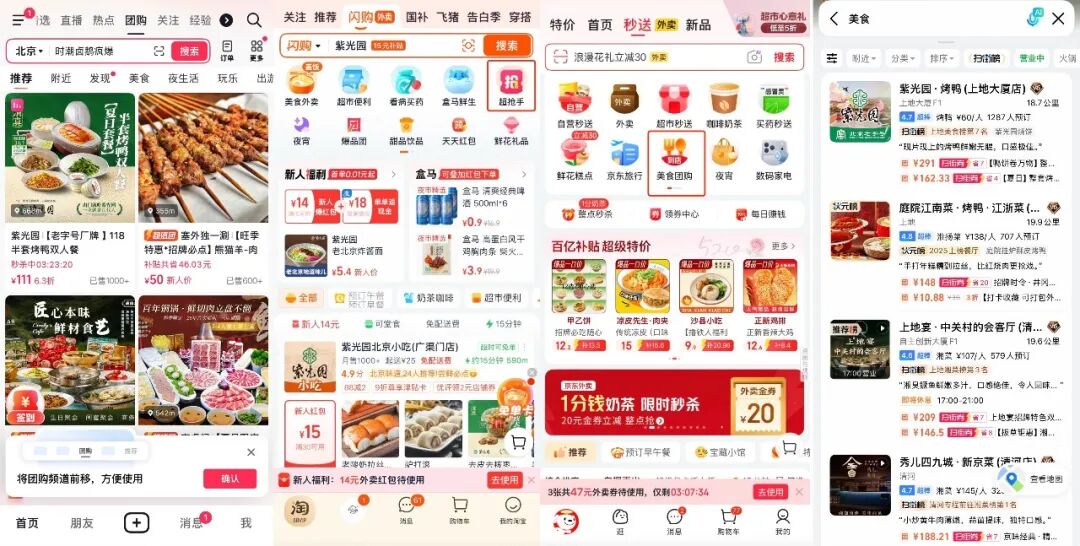
💡See how traditional service industries are digitizing, creating new data opportunities for AI recommendation agents.
⚡ 30-Second TL;DR
What Changed
Traditional businesses are aggressively moving sales to digital platforms.
Why It Matters
While not directly AI-model news, this reflects the digital transformation of the service economy, which is the primary target for AI-driven local search and recommendation agents.
What To Do Next
If building local search or recommendation AI, integrate with local voucher APIs to provide real-time value to users.
Key Points
- •Traditional businesses are aggressively moving sales to digital platforms.
- •Group-buying vouchers serve as a key customer acquisition tool.
- •Digital transformation in the service sector is accelerating to survive market competition.
🧠 Deep Insight
Web-grounded analysis with 22 cited sources.
🔑 Enhanced Key Takeaways
- •Group buying (Tuangou) originated in China as early as 2005 through online forums for collective bargaining, predating the emergence of similar models like Groupon in the US.
- •Major Chinese tech giants, notably Meituan and Alibaba (through Ele.me), have evolved from pure group-buying platforms into comprehensive local service super-apps, offering a wide array of services beyond just restaurant vouchers, including food delivery, hotel bookings, and entertainment.
- •The COVID-19 pandemic significantly accelerated the adoption of online food delivery and community group buying for essential goods; however, post-pandemic trends show a shift towards instant delivery services due to consumer preference for immediacy and the inherent profitability challenges of community group buying for groceries.
- •Local governments in China have actively utilized consumption vouchers, including those specifically for dining, as a stimulus measure to boost retail recovery and encourage consumer spending, particularly in the aftermath of the pandemic.
- •Restaurants collaborating with third-party online platforms employ sophisticated pricing strategies, often influenced by customer sensitivity to service levels and platform operational costs, to optimize their profits, while platforms themselves use dynamic pricing and loyalty programs to drive engagement.
📊 Competitor Analysis▸ Show
| Feature/Metric | Meituan | Ele.me |
|---|---|---|
| Parent Company | Tencent-backed | Alibaba-backed |
| Core Services | Group buying, food delivery, restaurant reviews, hotel booking, travel, entertainment | Food delivery, local services, in-store group buying (via Taobao Shangou, Alipay, Amap integration) |
| Market Share (Food Delivery) | Dominant player (e.g., 60% of group-buying market by 2014, significant share in food delivery) | Major competitor, part of Alibaba's local services ecosystem |
| Group Buying Strategy | Pioneered group buying, integrated social elements for food delivery (Pinhaofan) | Launched 'explosion Group' for catering products, integrated in-store group buying with Alibaba ecosystem (Taobao Shangou) |
| User Base | ~400 million combined users with Ele.me by 2020 (dominant share) | ~260 million users (as of 2017 for O2O catering) |
| Diversification | Extensive diversification into various local life services | Focus on food ordering and delivery, deepening integration into Alibaba's 'New Retail' strategy |
🛠️ Technical Deep Dive
- QR Code Integration: Restaurants leverage QR codes for seamless food ordering and payment processes, enhancing efficiency and customer convenience.
- IoT and Kitchen Display Systems (KDS): Implementation of IoT devices and KDS helps restaurants digitize food production monitoring, streamline kitchen operations, and improve overall efficiency.
- AI and Robotics: Advanced AI-powered telephone robots and robot waiters are being introduced to automate customer service and food delivery within smart restaurants.
- Cloud-Based Recipe Management: Recipes are stored on cloud servers, enabling standardized meal preparation processes and facilitating data-driven optimization of kitchen management.
- Big Data and AI for Personalization: Platforms utilize artificial intelligence and big data technologies for refined management, personalized recommendations, and to enhance content-based interaction with consumers.
- WeChat Mini-Program Integration: Group buying features are often integrated into WeChat mini-programs, leveraging the widespread social platform for user engagement and discounts.
- Logistics Technology: Core to food delivery and group buying platforms is a robust logistics system that provides last-mile delivery services, optimizing routes and delivery times.
🔮 Future ImplicationsAI analysis grounded in cited sources
⏳ Timeline
📎 Sources (22)
Factual claims are grounded in the sources below. Forward-looking analysis is AI-generated interpretation.
Weekly AI Recap
Read this week's curated digest of top AI events →
👉Related Updates

AI-curated news aggregator. All content rights belong to original publishers.
Original source: 钛媒体 ↗