📱Engadget•Freshcollected in 50m
Why RAM Prices Are Rising—and When They’ll Fall
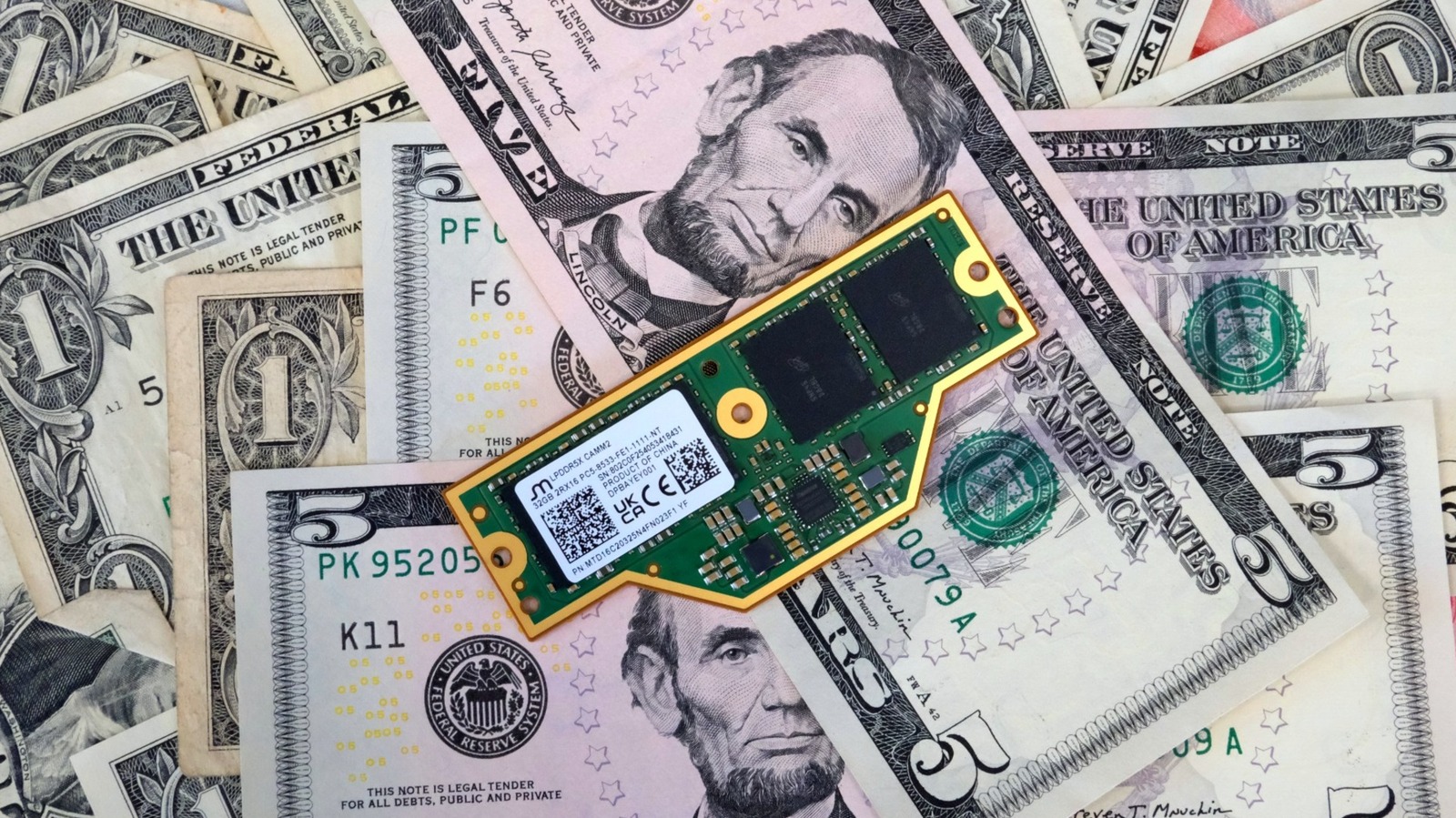
💡RAM costs can change the economics of AI servers and development workstations.
⚡ 30-Second TL;DR
What Changed
Focuses on the current increase in RAM prices
Why It Matters
Higher RAM prices can raise the cost of AI development machines, inference servers, and data-center deployments. Teams may need to revisit hardware procurement plans if elevated prices persist.
What To Do Next
Check your cloud provider’s GPU instance pricing and RAM quotas before committing to a larger AI inference deployment.
Who should care:Enterprise & Security Teams
Key Points
- •Focuses on the current increase in RAM prices
- •Examines when memory costs could come back down
- •Relevant to hardware and infrastructure budgeting for AI workloads
🧠 Deep Insight
AI-generated analysis for this event.
🔑 Enhanced Key Takeaways
- •The surge in RAM pricing is primarily driven by the aggressive reallocation of production capacity from standard DDR5 DRAM to High Bandwidth Memory (HBM3e/HBM4) to satisfy insatiable AI accelerator demand.
- •Major memory manufacturers (Samsung, SK Hynix, Micron) have implemented strict supply discipline, prioritizing high-margin HBM contracts over commodity memory modules to improve fiscal year profitability.
- •The transition to HBM4, which requires more complex logic die integration and advanced packaging (TSV), is creating bottlenecks in overall wafer output that indirectly constrains legacy DRAM supply.
- •Enterprise-grade server memory costs are being further inflated by the industry-wide shift toward higher-density modules (64GB and 128GB DIMMs) required to support large language model (LLM) inference workloads.
- •Geopolitical trade restrictions and raw material supply chain volatility for rare gases and photoresists have increased the baseline manufacturing cost per gigabit, preventing a return to 2024-era price floors.
🛠️ Technical Deep Dive
- HBM3e utilizes 8-high or 12-high stacks of DRAM dies connected via Through-Silicon Vias (TSVs) to achieve bandwidths exceeding 1 TB/s.
- The shift to HBM4 introduces a 2048-bit wide interface compared to the 1024-bit interface of HBM3, necessitating a move to 12nm or 10nm-class process nodes for the base logic die.
- DDR5-6400 and higher speeds are increasingly standard, but signal integrity requirements at these frequencies are driving up the cost of PCB materials and power management integrated circuits (PMICs) on the DIMMs themselves.
🔮 Future ImplicationsAI analysis grounded in cited sources
Commodity RAM prices will remain elevated through Q2 2027.
The current capital expenditure cycles for HBM-dedicated fabrication lines are locked in, preventing a rapid shift back to consumer-grade DRAM production.
AI infrastructure budgets will shift toward memory-centric procurement.
As memory costs become a larger percentage of total server cost (TCO), organizations will prioritize memory capacity and bandwidth efficiency over raw GPU compute performance.
⏳ Timeline
2023-05
Initial surge in HBM demand begins as generative AI adoption accelerates.
2024-02
Major DRAM manufacturers announce production cuts for legacy DDR4/DDR5 to stabilize market prices.
2025-01
Industry-wide transition to HBM3e production reaches mass-market scale, tightening wafer availability.
2026-03
Memory manufacturers report record-breaking revenue driven by AI-specific memory premiums.
📰
Weekly AI Recap
Read this week's curated digest of top AI events →
👉Related Updates
AI-curated news aggregator. All content rights belong to original publishers.
Original source: Engadget ↗