Who Blocks CPO's Golden Era?
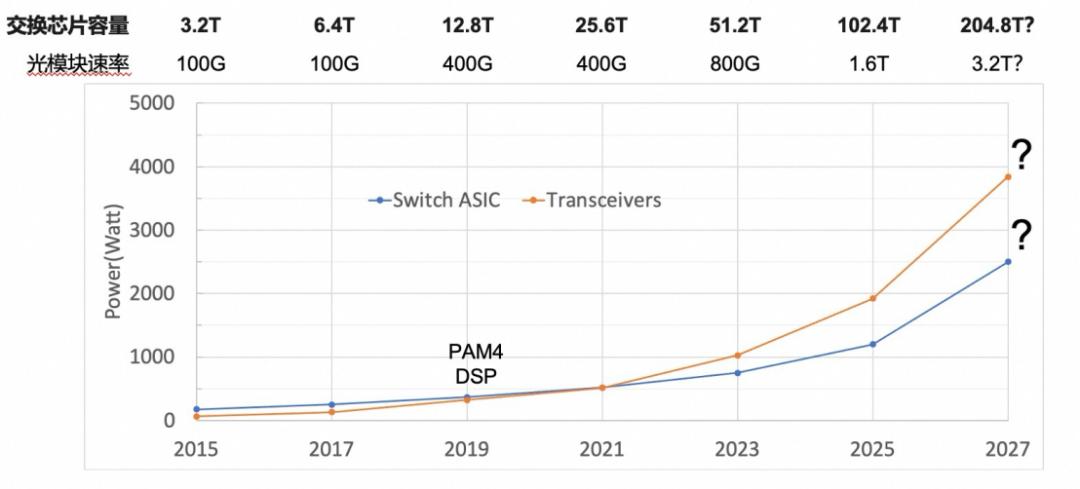
💡Uncover barriers to CPO optics critical for AI infra scaling
⚡ 30-Second TL;DR
What Changed
Unspecified entities are blocking CPO's widespread adoption
Why It Matters
Delays in CPO adoption could slow AI data center scaling amid GPU bandwidth bottlenecks.
What To Do Next
Evaluate CPO vs linear pluggables for your next AI cluster optics RFP.
Key Points
- •Unspecified entities are blocking CPO's widespread adoption
- •CPO eyed as future standard for optical interconnects
- •Current alternatives outperform CPO in practicality
🧠 Deep Insight
Background and context from public sources — not the original article. 5 sources cited.
🔑 Enhanced Key Takeaways
- •CPO (Co-Packaged Optics) integrates photonic and electronic devices via advanced packaging, offering advantages in power consumption, latency reduction, and bandwidth density over conventional pluggable optical modules[1][2].
- •JCET achieved a breakthrough in CPO technology on January 21, 2026, with silicon photonics engine products passing customer validation using its XDFOI® platform[1].
- •UMC confirmed silicon photonics as a key focus, planning optoelectronic integration modules with risk production in 2026 and mass production in 2027[1].
- •Current pluggable optics (e.g., 800G/1.6T transceivers) are prioritized for immediate AI data center needs due to maturity, while CPO remains in development and not yet ready for mass deployment[3].
- •CPO enhances signal density but reduces switch radix in scale-up networks, requiring new topologies; it complements technologies like optical circuit switches (OCS) for AI interconnects[2].
📊 Competitor Analysis▸ Show
| Technology | Maturity | Power/Latency | Bandwidth Density | Deployment Status |
|---|---|---|---|---|
| Pluggable Optics (e.g., 800G/1.6T) | Mature, mass production | Higher power via PCB traces/DSP | Lower than CPO | Commercial now for AI clusters [3] |
| CPO | Development/pilots | Lower power, reduced latency | Significantly higher | Samples validated, risk prod 2026 [1][2] |
🛠️ Technical Deep Dive
- CPO co-packages optical engines with logic chips, eliminating long PCB traces and DSP reliance for lower power and higher density using small MPO fiber connectors[1][2].
- Leverages silicon photonics with XDFOI® multidimensional heterogeneous packaging for microsystem integration[1].
- Supports wavelength-division multiplexing (WDM) for high bandwidth density, but fiber pairs limit switch radix vs. electrical lanes[2].
- Integrated photonics embeds modulators, waveguides, lasers at chip/package level for ultra-low energy per bit and minimized electro-optical conversions[4].
🔮 Future ImplicationsAI analysis grounded in cited sources
CPO promises to address AI-driven bandwidth and power limits of copper/pluggable optics in hyperscale data centers, enabling larger AI clusters with higher efficiency, though current focus on mature pluggables delays its 'golden era' amid ecosystem maturation needs[1][2][3].
⏳ Timeline
📎 Sources (5)
Factual claims are grounded in the sources below. Forward-looking analysis is AI-generated interpretation.
- trendforce.com — News Cpo Emerges As the New Sought After As Jcet and Umc Secure Early Position
- global.fujitsu — Scasia26 Emerging Technologies and Future Arhitecture
- enkiai.com — Hyperscale Interconnects 2026 the New AI Bottleneck
- photonectcorp.com — The Future of Hpc Is Photonics and It S Closer Than You Think
- semiengineering.com — Silicon Photonics in the Data Center What a Cmos Exec Needs to Know
Weekly AI Recap
Read this week's curated digest of top AI events →
👉Related Updates


AI-curated news aggregator. All content rights belong to original publishers.
Original source: 钛媒体 ↗
This is a summary, not the original. Read the source, or get the weekly briefing.
Weekly AI briefing
One email a week. Unsubscribe anytime.