What Exactly Is a Personal Agent?
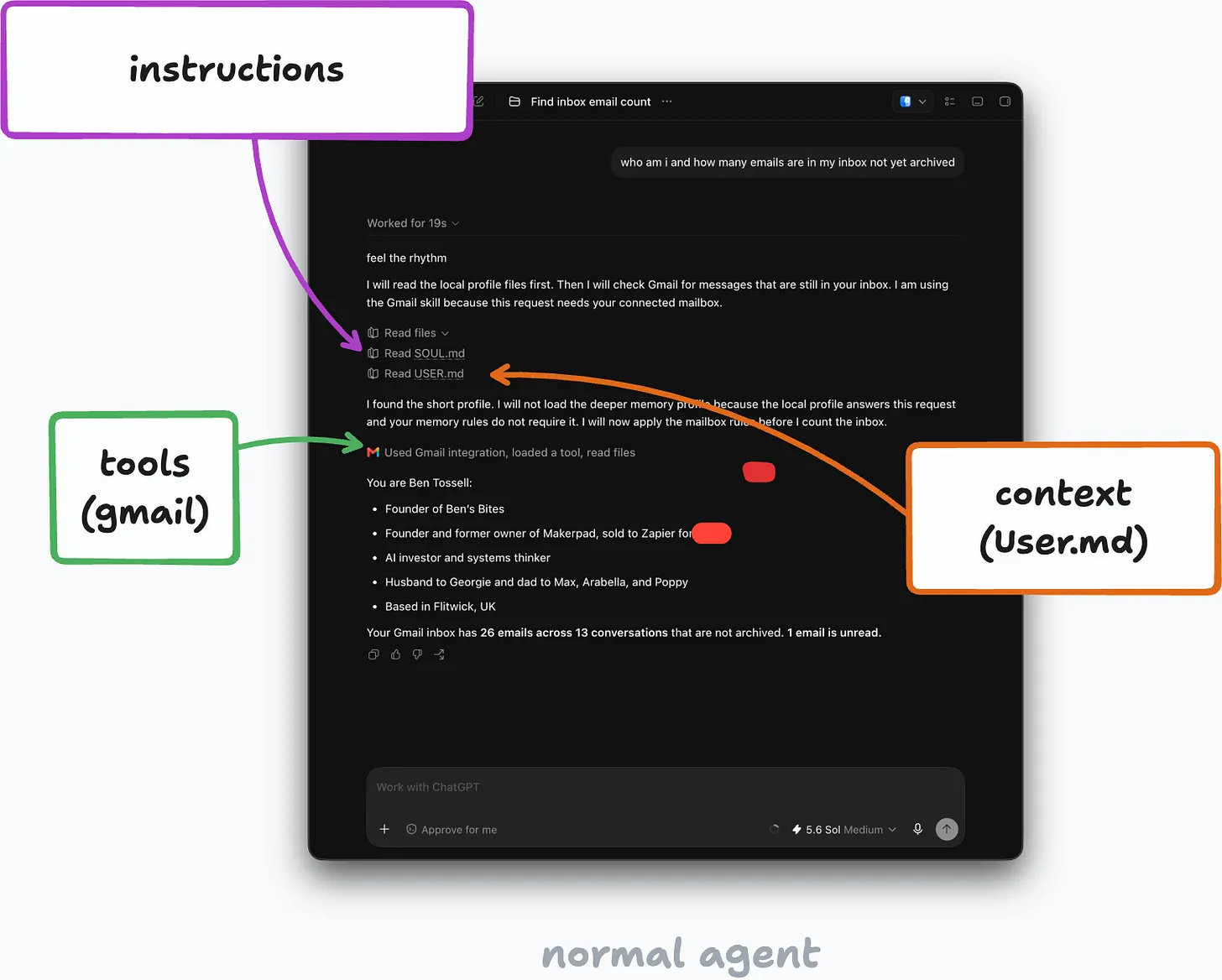
💡A concise prompt to clarify what separates personal agents from ordinary AI assistants.
⚡ 30-Second TL;DR
What Changed
This is Ben’s second session in the series.
Why It Matters
A clear definition of personal agents could help builders distinguish them from general-purpose chatbots and task-specific agents. However, the excerpt is too limited to support conclusions about architecture, capabilities, or market impact.
What To Do Next
Write a one-page definition of a personal agent for your product, covering its user context, memory, tools, and autonomy boundaries.
Key Points
- •This is Ben’s second session in the series.
- •The session focuses specifically on defining the concept of a personal agent.
- •No implementation details, product launch, or vendor announcement are provided.
🧠 Deep Insight
AI-generated analysis for this event.
🔑 Enhanced Key Takeaways
- •The concept of 'Personal Agents' in 2026 has shifted from simple task automation to 'Agentic Workflows' that utilize long-term memory and cross-application autonomy.
- •Industry consensus now distinguishes between 'Copilots' (human-in-the-loop) and 'Agents' (human-on-the-loop), where the latter can execute multi-step reasoning chains without constant user prompts.
- •Current research focuses on 'Agentic Orchestration,' which involves managing the hand-off between specialized models to prevent hallucination in complex personal workflows.
- •Privacy-preserving local inference is becoming a standard requirement for personal agents to handle sensitive user data, moving away from pure cloud-based processing.
- •The definition of a personal agent now explicitly includes 'Contextual Awareness,' meaning the agent maintains a persistent state of the user's preferences, past interactions, and professional goals.
🔮 Future ImplicationsAI analysis grounded in cited sources
Weekly AI Recap
Read this week's curated digest of top AI events →
👉Related Updates
AI-curated news aggregator. All content rights belong to original publishers.
Original source: Ben's Bites ↗