WeChat Reading releases API-based Skill for data access
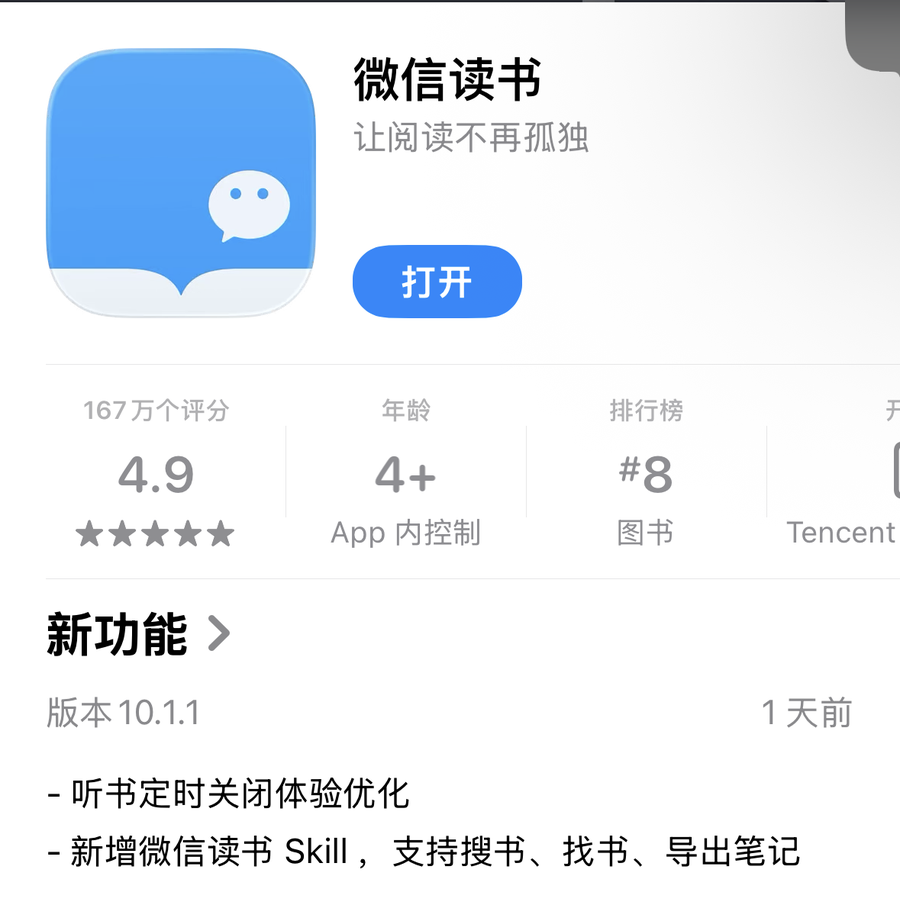
💡A rare example of a major Chinese tech platform opening user data via API for AI-driven analysis.
⚡ 30-Second TL;DR
What Changed
WeChat Reading now offers an open API (packaged as 'Skill') for personal data retrieval.
Why It Matters
Opening user data via APIs encourages a more vibrant ecosystem of third-party tools, potentially increasing the utility and stickiness of the reading platform.
What To Do Next
Use the new WeChat Reading API to build a personalized book recommendation engine that filters by your specific reading preferences.
Key Points
- •WeChat Reading now offers an open API (packaged as 'Skill') for personal data retrieval.
- •Users can leverage LLMs to perform complex tasks like book categorization, sentiment analysis, and style-based reviews.
- •The move signals a shift toward data ownership, allowing users to move beyond app-constrained data silos.
- •Developers can create secondary filtering systems for book recommendations based on personal preferences.
🧠 Deep Insight
Web-grounded analysis with 11 cited sources.
🔑 Enhanced Key Takeaways
- •The 'Skill' package, officially launched on May 16, 2026 (UTC+8), provides six core data access capabilities, including viewing private bookshelves, analyzing reading habits, extracting highlighted notes, searching the global bookstore, checking book progress, and receiving personalized recommendations.
- •The API key mechanism ensures that the accessed reading data remains private and is visible only to the individual user, addressing potential privacy concerns.
- •This new feature streamlines personal knowledge management and reading analytics by replacing the need for manual exports or reliance on third-party scripts.
- •Users can install the 'Skill' by deploying a downloadable
.zippackage to an AI assistant, such as Tencent AI Assistant WorkBuddy, and then binding their WeChat Reading account via a personal API Key obtained through a QR code scan. - •The API allows large language models (LLMs) to directly access deep behavioral data, including highlighted notes and reading duration, enabling more sophisticated and personalized AI interactions.
🛠️ Technical Deep Dive
- The 'Skill' is delivered as a downloadable
.zippackage (e.g.,https://cdn.weread.qq.com/skills/weread-skills.zip) for deployment to AI assistants. - Users obtain a unique API Key by logging into WeChat Reading via a QR code, which is then configured in the AI assistant, potentially through environment variables (e.g.,
export WEREAD_API_KEY=xxx). - The API enables direct access for LLMs to granular user data such as private bookshelves, highlighted notes, and reading duration.
- Data accessed through the API Key is explicitly restricted to the individual user, ensuring privacy.
- The functionality encompasses six primary data reading capabilities: Bookshelf Lookup, Book Search, Reading Statistics, Book Details, Notes and Highlights (with export options), and Personalized Book Recommendations.
- This API integration is part of WeChat's broader open platform ecosystem, which includes various APIs for Mini Programs and official accounts.
- Tencent also develops open-source LLM knowledge platforms like WeKnora, which supports integration with multiple LLM providers and data sources, indicating a wider strategy for AI-powered data utilization.
🔮 Future ImplicationsAI analysis grounded in cited sources
⏳ Timeline
📎 Sources (11)
Factual claims are grounded in the sources below. Forward-looking analysis is AI-generated interpretation.
Weekly AI Recap
Read this week's curated digest of top AI events →
👉Related Updates

AI-curated news aggregator. All content rights belong to original publishers.
Original source: 虎嗅 ↗