📊Bloomberg Technology•Stalecollected in 5m
Waymo vs Tesla Driverless Strategies
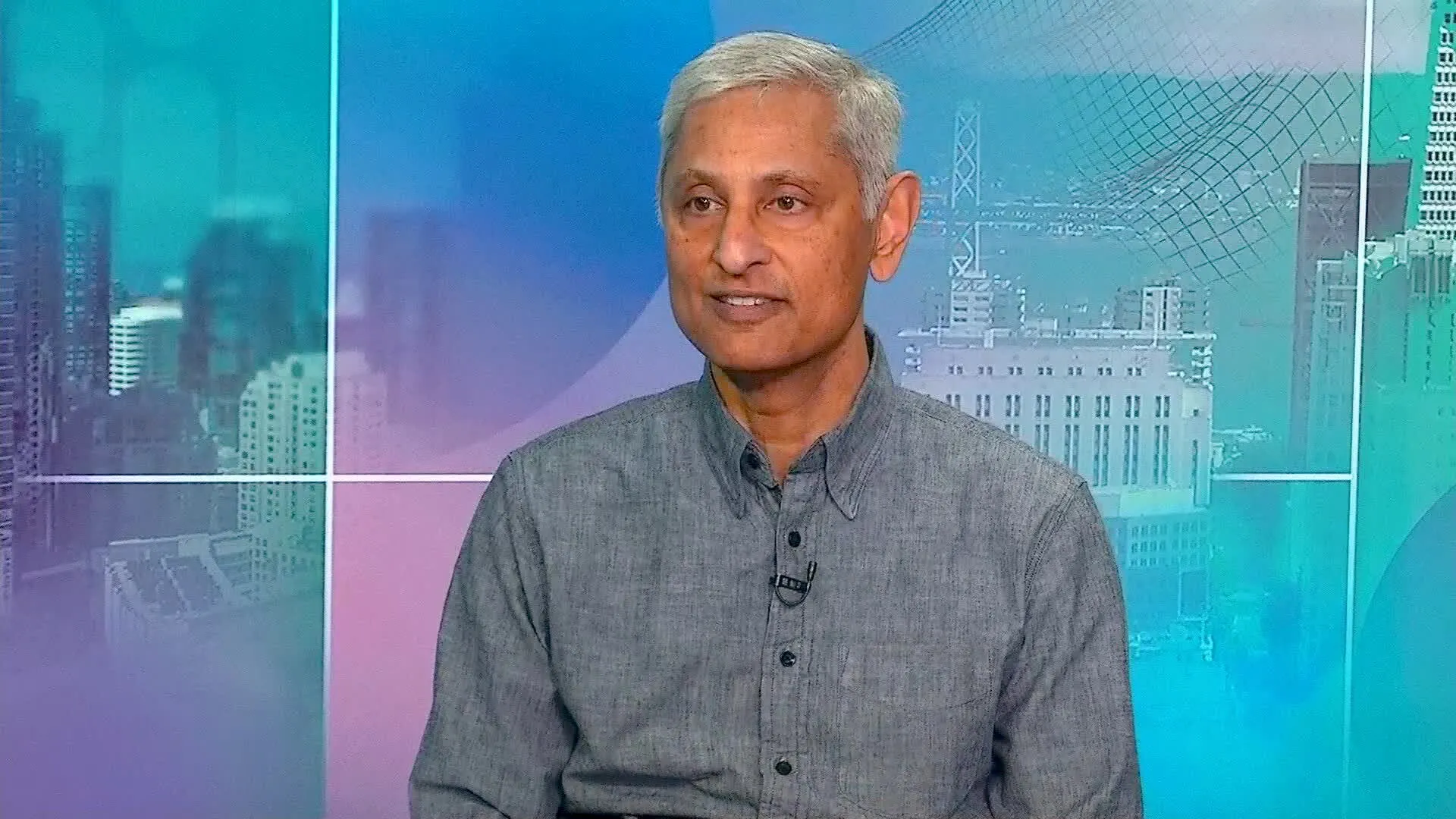
💡Waymo VP pits simulator safety vs Tesla—critical AV strategy decode.
⚡ 30-Second TL;DR
What Changed
Full-stack drive simulator at Waymo
Why It Matters
Highlights simulation-driven safety edge, guiding AV investment priorities.
What To Do Next
Build a safety-critique loop in your AV simulator like Waymo's.
Who should care:Researchers & Academics
Key Points
- •Full-stack drive simulator at Waymo
- •Safety-critique mechanisms explained
- •Direct comparison to Tesla's AV strategy
🧠 Deep Insight
AI-generated analysis for this event.
🔑 Enhanced Key Takeaways
- •Waymo utilizes a 'Simulation City' approach, where millions of miles are driven in virtual environments based on real-world edge cases, allowing for rapid iteration of the driving stack without physical fleet exposure.
- •The 'Safety-Critique' mechanism functions as a secondary, independent verification layer that evaluates the primary planner's trajectory against a set of hard-coded safety constraints before execution.
- •Waymo's strategy relies on high-definition (HD) mapping and LiDAR-centric sensor fusion, contrasting with Tesla's 'vision-only' approach which prioritizes scalability over the high-precision localization provided by HD maps.
📊 Competitor Analysis▸ Show
| Feature | Waymo (Alphabet) | Tesla (FSD) | Zoox (Amazon) |
|---|---|---|---|
| Sensor Suite | LiDAR, Radar, Cameras | Cameras Only | LiDAR, Radar, Cameras |
| Mapping | HD Maps Required | Mapless/Vision-based | HD Maps Required |
| Operational Domain | Geofenced (L4) | Unrestricted (L2+) | Geofenced (L4) |
| Safety Architecture | Redundant/Safety-Critique | Probabilistic/End-to-End | Redundant/Safety-Critique |
🛠️ Technical Deep Dive
- •Waymo's stack utilizes a multi-modal sensor fusion architecture that processes LiDAR point clouds, radar returns, and camera imagery into a unified 3D voxel representation of the environment.
- •The 'Safety-Critique' system operates as a formal verification engine, utilizing reachability analysis to ensure that the proposed vehicle trajectory does not enter a 'collision-inevitable' state within a short time horizon.
- •Waymo's simulation engine, 'Carcraft', leverages generative AI to create synthetic traffic scenarios, including rare 'long-tail' events, to stress-test the perception and prediction models.
🔮 Future ImplicationsAI analysis grounded in cited sources
Waymo will maintain a higher safety record than Tesla in urban environments.
The reliance on redundant sensor modalities and HD maps provides a deterministic safety buffer that vision-only systems currently lack in complex, high-density traffic.
Tesla will achieve wider geographic deployment faster than Waymo.
The absence of HD mapping requirements allows Tesla to scale its FSD software to new regions without the significant time and capital investment required for mapping.
⏳ Timeline
2009-01
Google Self-Driving Car Project (later Waymo) begins development.
2016-12
Waymo becomes an independent subsidiary of Alphabet Inc.
2018-12
Waymo launches Waymo One, the first commercial driverless ride-hailing service.
2023-08
Waymo receives approval to operate 24/7 commercial robotaxi services in San Francisco.
2025-06
Waymo expands driverless operations to multiple major metropolitan areas across the US.
📰
Weekly AI Recap
Read this week's curated digest of top AI events →
👉Related Updates
AI-curated news aggregator. All content rights belong to original publishers.
Original source: Bloomberg Technology ↗