WAIC 2026: China Shifts to System-Level AI Supernodes
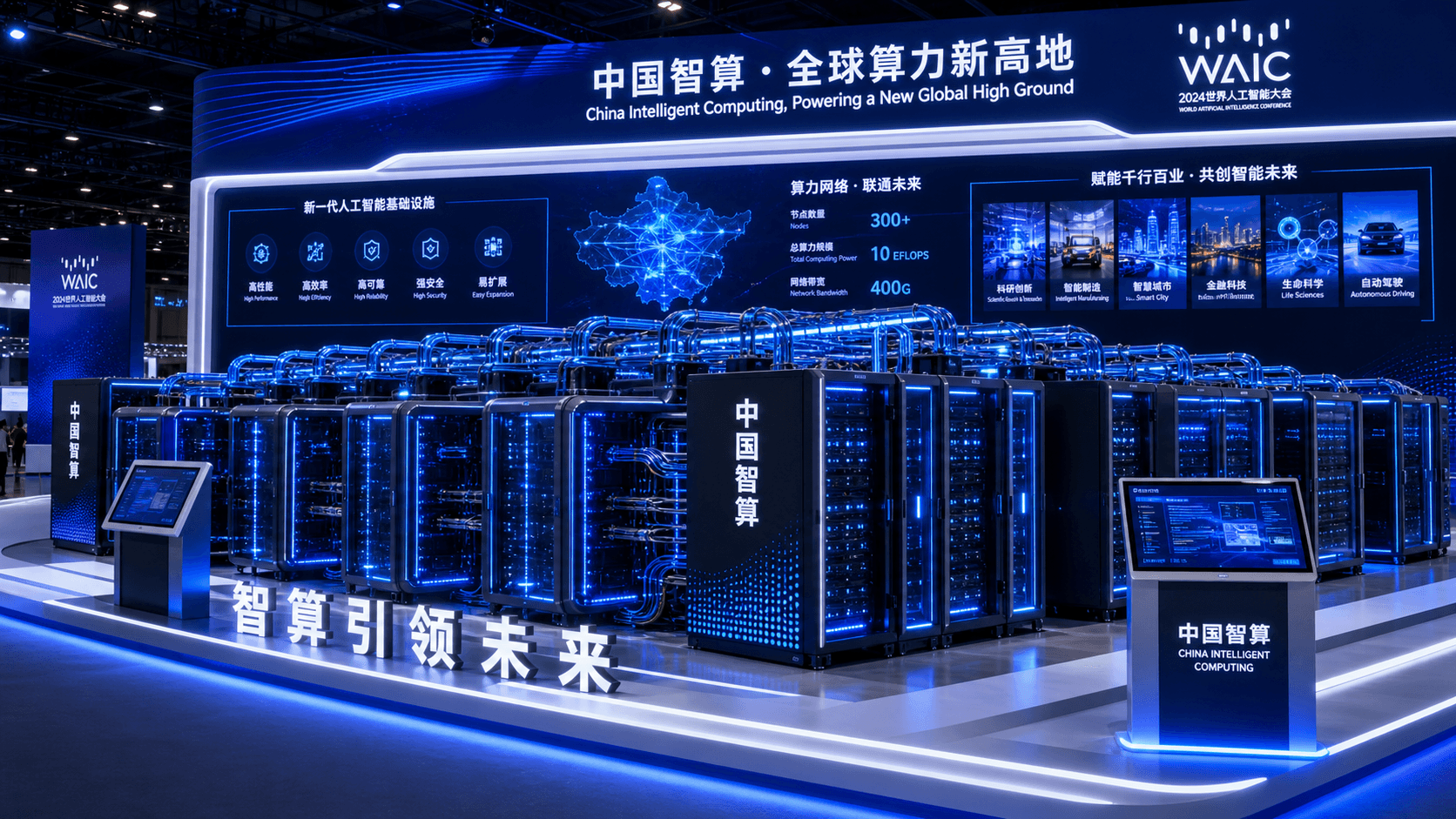
💡Understand the shift in China's AI infrastructure as it moves toward massive 100K-card system-level supernodes.
⚡ 30-Second TL;DR
What Changed
Shift from chip-centric competition to system-level AI supernode architecture.
Why It Matters
This shift signals a maturation of the domestic Chinese AI supply chain, potentially reducing reliance on foreign hardware for large-scale model training. It suggests that developers will increasingly need to optimize for localized, system-level cluster architectures.
What To Do Next
Evaluate the compatibility of your distributed training frameworks with domestic Chinese hardware clusters to ensure future-proof scalability.
Key Points
- •Shift from chip-centric competition to system-level AI supernode architecture.
- •Showcase of 100K-card-scale computing clusters for domestic AI workloads.
- •Integration of Sugon Dawn and Hygon processors in high-performance computing environments.
🧠 Deep Insight
AI-generated analysis for this event.
🔑 Enhanced Key Takeaways
- •The transition to 'AI Supernodes' is driven by the 'East Data, West Computing' national strategy, aiming to reduce latency in large-scale model training across geographically dispersed data centers.
- •Sugon's new interconnect architecture, dubbed 'Silicon-Link,' claims to reduce communication overhead by 30% in clusters exceeding 50,000 GPUs compared to previous generation fabrics.
- •Hygon's latest DCU (Deep Computing Unit) series incorporates native support for FP8 precision, specifically optimized for Transformer-based model training to compete with international standards.
- •The 100K-card clusters utilize a proprietary liquid cooling solution developed by Sugon, which achieves a Power Usage Effectiveness (PUE) rating of 1.08, significantly lower than the industry average for high-density clusters.
- •Chinese regulatory bodies have introduced new 'System-Level Interoperability Standards' at WAIC 2026, mandating that domestic AI hardware must support unified software stacks to prevent vendor lock-in.
📊 Competitor Analysis▸ Show
| Feature | Sugon/Hygon Supernode | NVIDIA Blackwell Cluster | Huawei Ascend 910C Cluster |
|---|---|---|---|
| Interconnect | Silicon-Link (Proprietary) | NVLink / NVSwitch | Ascend Fabric |
| Peak FP8 Performance | High (Optimized) | Industry Benchmark | High (Optimized) |
| Ecosystem | Domestic/OpenHarmony | CUDA (Global Standard) | CANN / MindSpore |
| Cooling | Liquid (PUE 1.08) | Liquid/Air (Varies) | Liquid (PUE 1.1) |
🛠️ Technical Deep Dive
- Sugon Dawn architecture utilizes a hierarchical topology that separates compute nodes from memory-pooling nodes to minimize data bottlenecks.
- Hygon DCU processors employ a chiplet-based design, allowing for modular scaling of HBM (High Bandwidth Memory) capacity per node.
- The system-level integration relies on a unified software orchestration layer that abstracts hardware differences between Sugon and Hygon components.
- Implementation of RDMA (Remote Direct Memory Access) over Converged Ethernet (RoCE) v2 is utilized for inter-node communication within the 100K-card fabric.
🔮 Future ImplicationsAI analysis grounded in cited sources
⏳ Timeline
Weekly AI Recap
Read this week's curated digest of top AI events →
👉Related Updates

AI-curated news aggregator. All content rights belong to original publishers.
Original source: Pandaily ↗