VW considers closing four factories amid restructuring
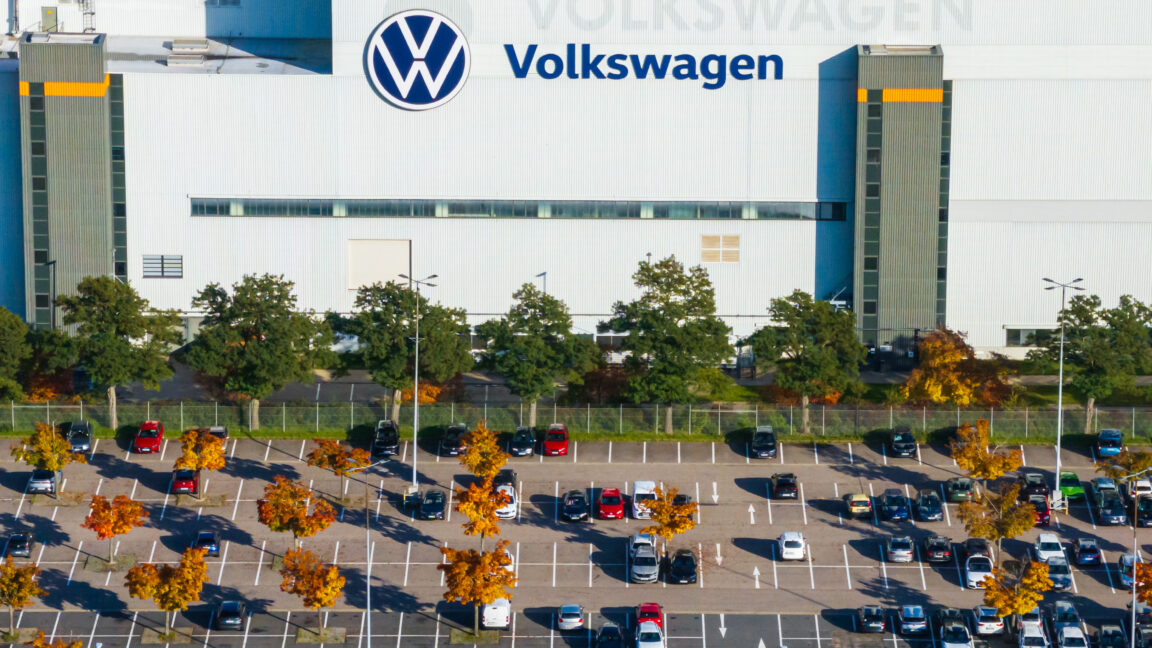
Understand the operational shifts in legacy auto giants as they struggle to compete in the modern software-defined era.
30-Second TL;DR
What Changed
VW Group faces significant sales pressure in key markets like the US and China.
Why It Matters
The potential downsizing reflects the broader challenges traditional automotive giants face in transitioning to new energy and software-defined vehicle markets.
What To Do Next
Monitor how legacy automotive companies integrate AI-driven supply chain optimization to recover from manufacturing inefficiencies.
Key Points
- •VW Group faces significant sales pressure in key markets like the US and China.
- •The company is evaluating the closure of four manufacturing facilities.
- •Restructuring is deemed necessary to ensure long-term competitiveness.
Deep Insight
AI-generated analysis for this event — not the original article.
Enhanced Key Takeaways
- •The proposed closures mark a historic shift for Volkswagen, as the company has historically avoided shutting down domestic German plants due to long-standing labor agreements and the influence of the works council.
- •Volkswagen's restructuring plan is heavily influenced by the 'Performance Program,' an initiative launched in 2023 aimed at cutting costs by 10 billion euros by 2026 to improve profit margins.
- •The decline in demand is particularly acute in the EV sector, where VW has struggled to maintain market share against aggressive pricing from Chinese manufacturers like BYD and Tesla.
- •Labor unions, specifically IG Metall, have strongly opposed the potential closures, threatening significant industrial action and complicating the company's ability to execute its cost-cutting strategy.
- •Beyond factory closures, the restructuring includes a potential reduction in the workforce through voluntary buyouts and a freeze on new hiring to address structural overcapacity.
Competitor Analysis
- Volkswagen Group
- Legacy transition (MEB/SSP)
- Tesla
- Software-defined/Direct sales
- BYD
- Vertical integration/Cost leadership
- Volkswagen Group
- High (Global legacy plants)
- Tesla
- Low (Gigafactory model)
- BYD
- Very High (In-house supply chain)
- Volkswagen Group
- Cost-cutting/Restructuring
- Tesla
- Margin optimization
- BYD
- Volume/Market share
| Feature | Volkswagen Group | Tesla | BYD |
|---|---|---|---|
| EV Market Strategy | Legacy transition (MEB/SSP) | Software-defined/Direct sales | Vertical integration/Cost leadership |
| Manufacturing Footprint | High (Global legacy plants) | Low (Gigafactory model) | Very High (In-house supply chain) |
| Profitability Focus | Cost-cutting/Restructuring | Margin optimization | Volume/Market share |
Technical Deep Dive
- Transition from MEB (Modular Electric Drive Matrix) platform to the upcoming SSP (Scalable Systems Platform) to unify software and hardware architectures.
- Implementation of 'Unified Cell' battery technology aimed at reducing battery costs by up to 50% across different vehicle segments.
- Shift toward Zonal Architecture in vehicle electronics to reduce wiring complexity and enable over-the-air (OTA) updates across the entire fleet.
Future ImplicationsAI analysis grounded in cited sources
Timeline
- 2023-12VW announces a 10 billion euro cost-cutting program to boost efficiency.
- 2024-09VW officially terminates its decades-old job security agreement with German unions.
- 2024-10Management confirms that factory closures in Germany are under active consideration.
- 2025-03VW reports a significant drop in annual operating profit, citing high fixed costs and weak demand.
Weekly AI Recap
Read this week's curated digest of top AI events →
AI-curated news aggregator. All content rights belong to original publishers.
Original source: Ars Technica ↗
This is a summary, not the original. Read the source, or get the weekly briefing.
The weekly digest
One email a week. Unsubscribe anytime.