Vibe Coding Outdated? Agentic Engineering Emerges
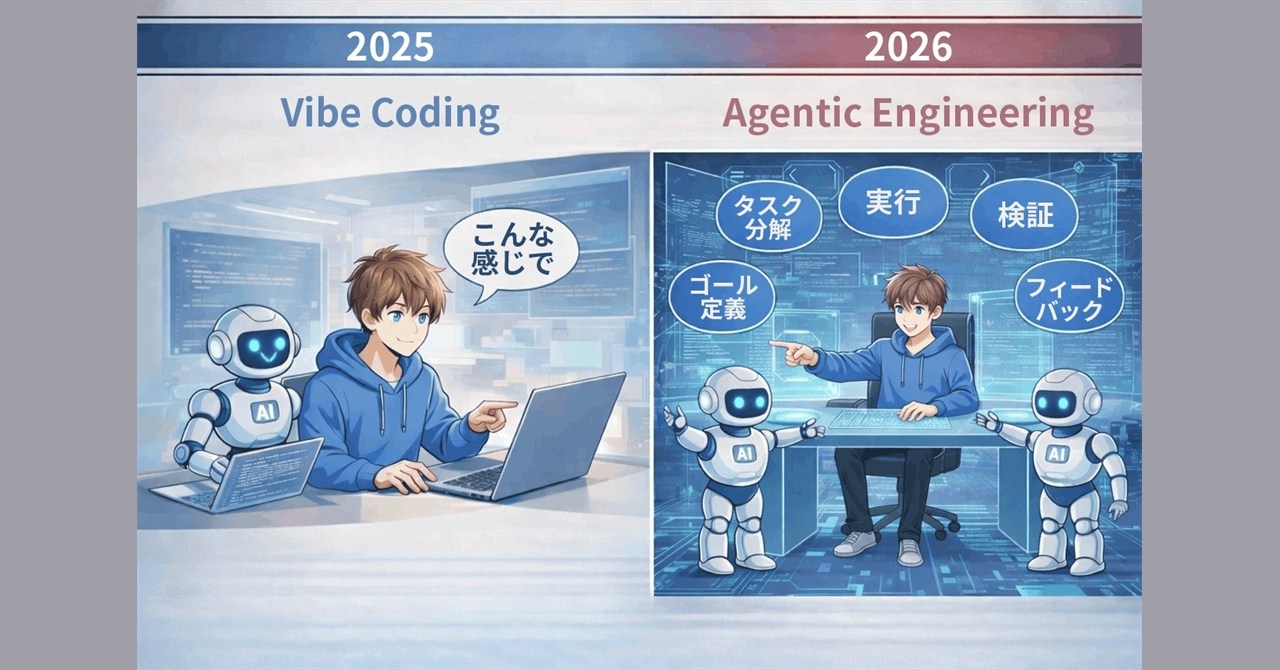
💡New paradigm 'agentic engineering' replaces vibe coding—essential shift for AI devs tackling complex tasks
⚡ 30-Second TL;DR
What Changed
Vibe coding concept born one year ago
Why It Matters
Shifts AI practitioners from intuitive vibe coding to structured agentic workflows, potentially boosting complex project efficiency. Encourages adoption of autonomous AI agents in engineering.
What To Do Next
Experiment with agentic AI frameworks like LangChain to build autonomous coding agents beyond vibe coding.
Key Points
- •Vibe coding concept born one year ago
- •Agentic engineering overcomes vibe coding limits
- •New name for evolving AI development styles
- •Explains agentic approach and why needed now
🧠 Deep Insight
Background and context from public sources — not the original article. 8 sources cited.
🔑 Enhanced Key Takeaways
- •Vibe coding, coined by Andrej Karpathy approximately one year ago, described a 'gleefully reckless' approach where developers prompt AI, accept outputs without review, and iterate on errors—suitable for quick prototypes but unsuitable for production systems[3]
- •Agentic engineering represents a disciplined evolution where AI agents autonomously plan, execute, and test complex tasks while humans maintain ownership of architecture, quality, and correctness[3][6]
- •The critical differentiator between vibe coding and agentic engineering is comprehensive testing; solid test suites enable AI agents to iterate reliably until tests pass, transforming unreliable agents into dependable systems[3]
- •Agentic systems employ structured memory management and long-running process coordination across specialized agent teams (frontend, backend, testing, documentation), executing work in parallel rather than reactive single-prompt interactions[2][5]
- •The terminology shift from 'vibe coding' to 'agentic engineering' carries professional legitimacy, enabling integration into job descriptions, team practices, and enterprise software development workflows where compliance and consistency are mandatory[4]
🛠️ Technical Deep Dive
- Agentic Architecture: Multi-agent systems with specialized roles (frontend, backend, testing, documentation agents) that work in parallel while tracking dependencies and coordinating execution[2]
- Memory Management: Structured memory systems that retain context across extended interactions, preventing context window degradation that occurs in traditional vibe coding workflows[5]
- Autonomous Planning: AI agents generate design documents, break work into well-defined tasks, and propose architecture before execution—a critical distinction from reactive prompt-response cycles[3]
- Test-Driven Execution: Agents iterate against comprehensive test suites until all tests pass, providing high confidence in code correctness without human line-by-line review[3]
- Specification-Driven Development: Clear architectural specifications and design documents guide agent behavior, enabling agents to maintain system-level reasoning rather than addressing only immediate prompts[5]
- Workflow Pattern: Define intent → discuss plan with agent → confirm direction → AI team executes → human reviews architecture and results → merge[2]
🔮 Future ImplicationsAI analysis grounded in cited sources
Agentic engineering is reshaping developer roles from code writers to system orchestrators and architects, with senior developers focusing on architecture validation, quality assurance, and strategic direction rather than manual implementation[6]. This shift enables enterprise adoption of AI-assisted development while maintaining production-grade quality standards, potentially accelerating software delivery cycles from 'a few sprints' to 'a few hours' for complex tasks[2]. The professionalization of agentic terminology signals industry maturation, moving AI-assisted development from experimental weekend projects into mainstream enterprise software engineering practices[4]. However, this requires developers to adopt disciplined practices including upfront planning, comprehensive testing, and continuous architectural oversight—skills that differentiate agentic engineering from its chaotic predecessor[3].
⏳ Timeline
📎 Sources (8)
Factual claims are grounded in the sources below. Forward-looking analysis is AI-generated interpretation.
- rocket.new — Vibe Coding vs Agentic Coding a Shift in Developer Mindset
- yu-wenhao.com — Agentic Coding
- addyosmani.com — Agentic Engineering
- observer.com — Andrej Karpathy New Term AI Coding
- youtube.com — Watch
- mkennedy.codes — Its Not Vibe Coding Agentic Engineering
- youtube.com — Watch
- oreateai.com — 37f14996a071aba21cd64310bb96153d
Weekly AI Recap
Read this week's curated digest of top AI events →
👉Related Updates
AI-curated news aggregator. All content rights belong to original publishers.
Original source: ITmedia AI+ (日本) ↗
This is a summary, not the original. Read the source, or get the weekly briefing.
Weekly AI briefing
One email a week. Unsubscribe anytime.