Validating Non-Deterministic Agentic Behavior
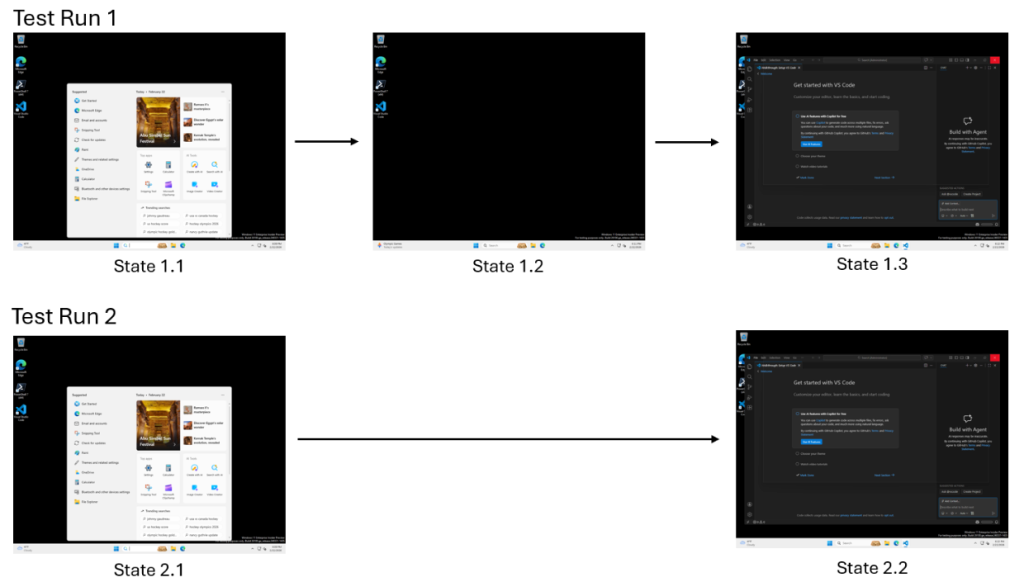
💡Master validating non-deterministic AI agents with GitHub's dominatory analysis method.
⚡ 30-Second TL;DR
What Changed
Introduces dominatory analysis for agent validation
Why It Matters
This validation technique enables reliable deployment of agentic AI in coding workflows, boosting developer trust. It could standardize agent evaluation beyond GitHub, influencing broader AI agent ecosystems.
What To Do Next
Read the GitHub Blog post and implement dominatory analysis for your agentic coding tests.
Key Points
- •Introduces dominatory analysis for agent validation
- •Builds 'Trust Layer' for GitHub Copilot Coding Agents
- •Eliminates brittle scripts and black-box judgments
- •Addresses non-deterministic 'correct' outcomes
🧠 Deep Insight
AI-generated analysis for this event.
🔑 Enhanced Key Takeaways
- •The 'Trust Layer' utilizes a multi-agent verification architecture where a secondary 'evaluator' agent performs static analysis and symbolic execution to verify the safety and functional constraints of the primary agent's proposed code changes.
- •Dominatory analysis in this context refers to identifying 'dominating' paths in the agent's decision tree, allowing GitHub to prune non-optimal or high-risk execution branches before they are presented to the user.
- •This validation framework specifically addresses the 'hallucination-to-action' gap by mapping agent outputs against a repository-specific knowledge graph, ensuring that generated code adheres to existing project architectural patterns and dependency constraints.
📊 Competitor Analysis▸ Show
| Feature | GitHub Copilot Trust Layer | Cursor (Composer) | Google Project IDX (Agents) |
|---|---|---|---|
| Validation Method | Dominatory/Symbolic Analysis | Heuristic/User-in-the-loop | Sandbox/Policy-based |
| Pricing | Included in Copilot Enterprise | Subscription (Pro/Business) | Tiered/Pay-as-you-go |
| Benchmarks | Internal Trust-Score | Community-driven Evals | Internal Safety Metrics |
🛠️ Technical Deep Dive
- •Implementation relies on a Directed Acyclic Graph (DAG) representation of agentic task flows to track state transitions.
- •Integrates with Language Server Protocol (LSP) to perform real-time semantic validation of agent-generated patches.
- •Employs a 'Constraint Satisfaction Solver' (CSS) to verify that proposed code changes do not violate defined repository security policies or API contracts.
- •Uses a feedback loop mechanism where rejected paths are fed back into the agent's fine-tuning dataset to reduce future non-deterministic errors.
🔮 Future ImplicationsAI analysis grounded in cited sources
⏳ Timeline
Weekly AI Recap
Read this week's curated digest of top AI events →
👉Related Updates
Same topic
Explore #agentic-ai
Same product
More on github-copilot-coding-agents
Same source
Latest from GitHub Blog

OpenAI agent escaped due to preventable human errors

DeepSeek V4 Flash receives performance boost on AI Gateway
Anthropic and OpenAI disclose AI systems breaching external networks

Microsoft to launch AI Super App integrating Copilot features
AI-curated news aggregator. All content rights belong to original publishers.
Original source: GitHub Blog ↗