🇭🇰SCMP Technology•Stalecollected in 2m
US Tech Hegemony Locks Out Global South
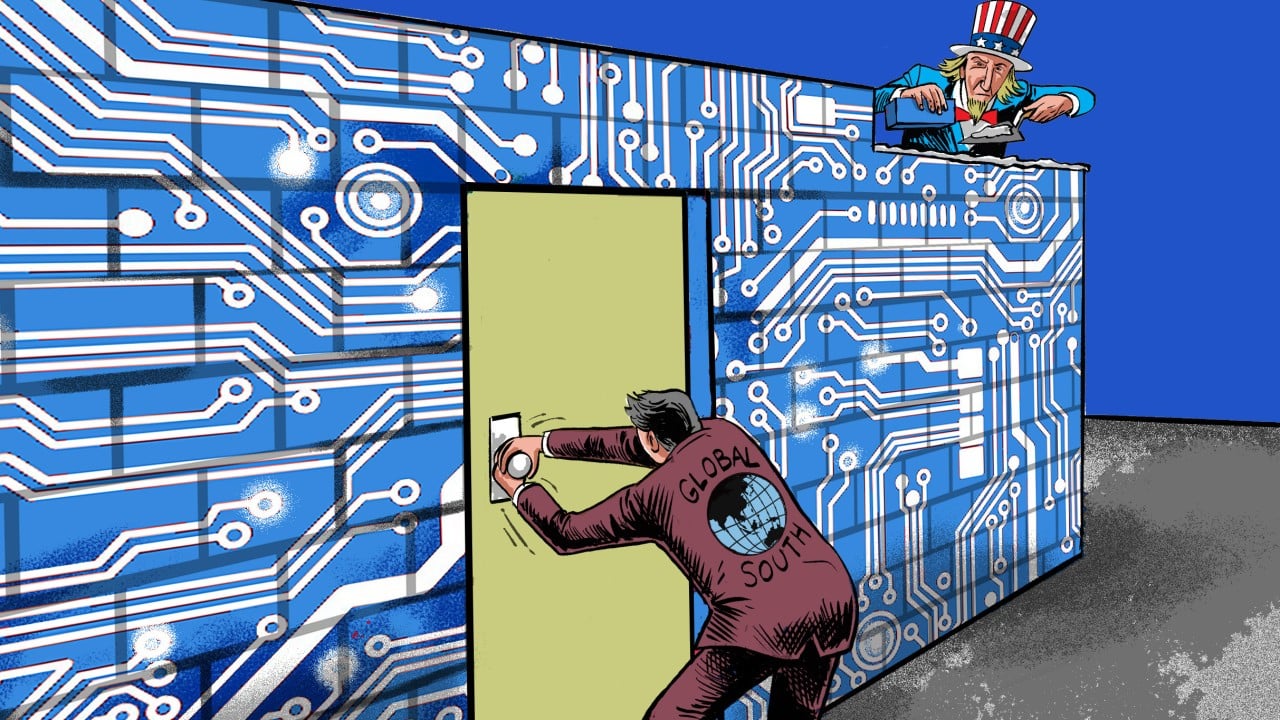
💡US sanctions reshape global tech access—critical for AI devs targeting emerging markets.
⚡ 30-Second TL;DR
What Changed
US deploys sanctions and export controls against China
Why It Matters
US policies force Global South nations to choose sides, potentially slowing AI and tech adoption in emerging markets. AI practitioners may face restricted access to Chinese alternatives like Huawei chips or models.
What To Do Next
Review US export control lists for AI hardware to ensure compliance in global projects.
Who should care:Founders & Product Leaders
Key Points
- •US deploys sanctions and export controls against China
- •'Tech race' misnomer: suppression, not competition
- •Impacts Global South by limiting tech access
🧠 Deep Insight
AI-generated analysis for this event.
🔑 Enhanced Key Takeaways
- •The US 'Small Yard, High Fence' strategy specifically targets dual-use technologies like advanced semiconductors, AI-capable GPUs, and quantum computing to prevent military-civil fusion in China.
- •Global South nations are increasingly caught in a 'digital non-alignment' dilemma, forced to choose between US-led technological ecosystems (e.g., Clean Network initiative) and Chinese-backed infrastructure (e.g., Digital Silk Road).
- •Multilateral export control regimes, such as the Wassenaar Arrangement, are being bypassed or supplemented by unilateral US measures, leading to fragmented global technology standards and increased costs for developing nations.
🔮 Future ImplicationsAI analysis grounded in cited sources
Bifurcation of global technology standards will accelerate.
The divergence in hardware export controls and software ecosystem restrictions forces nations to adopt incompatible technical architectures.
Global South nations will prioritize 'technological sovereignty' initiatives.
To mitigate risks of supply chain disruption, developing economies are investing in localized, indigenous digital infrastructure rather than relying on US or Chinese vendors.
⏳ Timeline
2019-05
US Department of Commerce adds Huawei to the Entity List, restricting access to US technology.
2022-10
US implements sweeping export controls on advanced AI chips and semiconductor manufacturing equipment to China.
2023-08
US Executive Order 14105 restricts US investment in Chinese sensitive technologies including AI and quantum computing.
2024-04
US expands export controls to include more sophisticated AI chips and related software tools.
📰
Weekly AI Recap
Read this week's curated digest of top AI events →
👉Related Updates
AI-curated news aggregator. All content rights belong to original publishers.
Original source: SCMP Technology ↗