US Monetary Policy Shifts and AI Investment Trends
💡Understand how the Fed's new monetary framework could impact your AI startup's access to credit and capital.
⚡ 30-Second TL;DR
What Changed
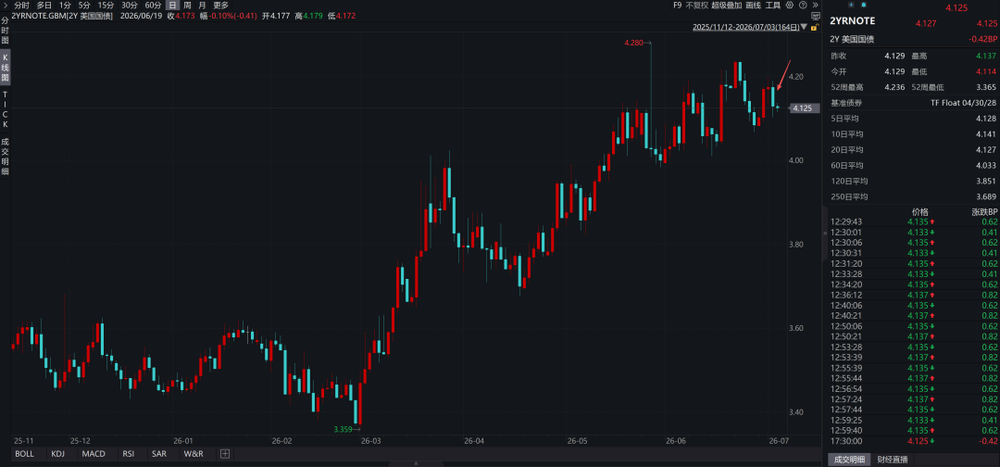
The Fed has shifted to a 'scarce reserves' framework, making the 2-year Treasury yield the primary driver of economic activity.
Why It Matters
AI founders and builders should anticipate tighter credit conditions and higher sensitivity to long-term interest rates as the Fed shifts its policy framework to stabilize the economy post-AI boom.
What To Do Next
Monitor 2-year Treasury yields closely when planning long-term CAPEX or debt-financed AI infrastructure projects.
Key Points
- •The Fed has shifted to a 'scarce reserves' framework, making the 2-year Treasury yield the primary driver of economic activity.
- •The 'abundant reserves' framework was suitable for the AI investment boom, but it risks interest rate overshooting as AI investment cools.
- •The new framework acts as a 'scaffolding' to manage the potential decline in AI-related credit and capital expenditure.
- •Market sentiment is becoming less important than actual supply and demand of long-term capital in the current monetary regime.
🧠 Deep Insight
AI-generated analysis for this event — not the original article.
🔑 Enhanced Key Takeaways
- •The transition to a 'scarce reserves' framework is largely driven by the Federal Reserve's ongoing quantitative tightening (QT) program, which has significantly reduced the size of the System Open Market Account (SOMA) portfolio.
- •Data from the Fed's H.4.1 statistical release indicates that the decline in reverse repo (ON RRP) balances has accelerated the depletion of liquidity, forcing the central bank to monitor reserve levels more closely to prevent volatility in the federal funds rate.
- •AI-driven capital expenditure has become highly sensitive to the term premium in long-term Treasury yields, as the cost of debt financing for hyperscalers has risen compared to the zero-interest-rate environment of the early 2020s.
- •The shift in monetary policy is forcing a 'valuation reset' in the AI sector, where companies are now being judged on free cash flow generation rather than speculative growth metrics that were sustainable under the previous abundant liquidity regime.
- •Institutional investors are increasingly utilizing the Secured Overnight Financing Rate (SOFR) futures market to hedge against liquidity shocks, reflecting a structural change in how capital is allocated to AI infrastructure projects.
🔮 Future ImplicationsAI analysis grounded in cited sources
⏳ Timeline
Weekly AI Recap
Read this week's curated digest of top AI events →
👉Related Updates




AI-curated news aggregator. All content rights belong to original publishers.
Original source: 虎嗅 ↗
This is a summary, not the original. Read the source, or get the weekly briefing.
Weekly AI briefing
One email a week. Unsubscribe anytime.