US military seeks cheaper hunter-killer drones
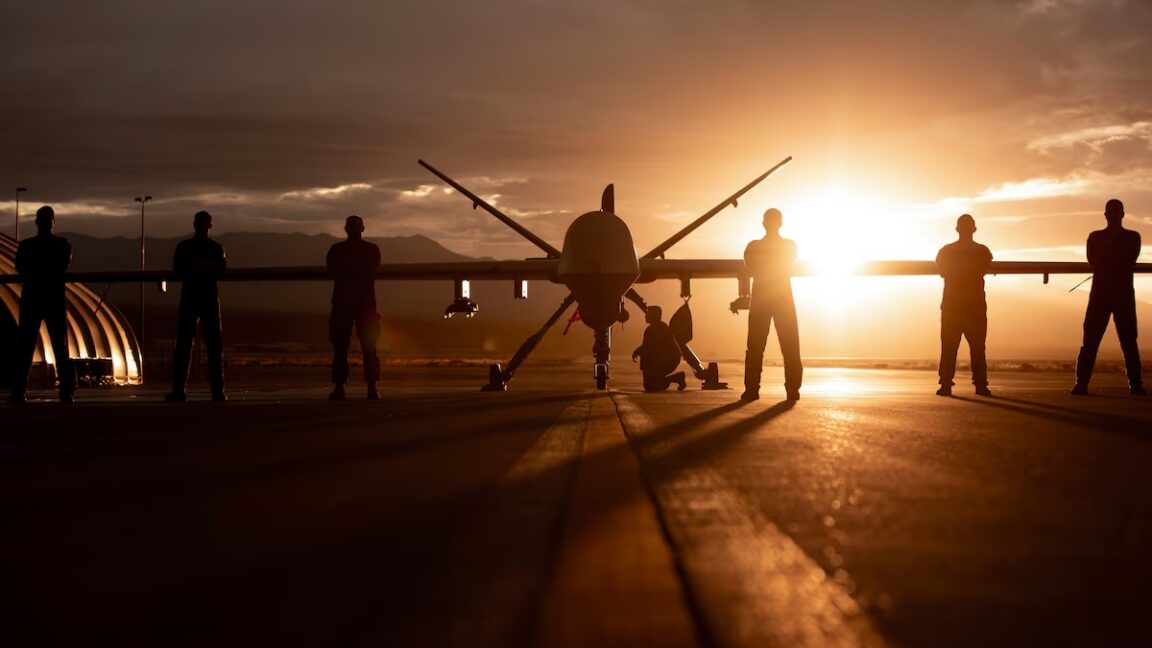
💡See how defense AI is shifting toward low-cost, high-volume autonomous hardware.
⚡ 30-Second TL;DR
What Changed
Pentagon shifts strategy due to high drone attrition
Why It Matters
This shift signals a move toward 'attritable' AI-enabled hardware, influencing how defense contractors design autonomous systems.
What To Do Next
Explore the 'attritable' design philosophy for your AI hardware projects to optimize for cost-efficiency in high-risk environments.
Key Points
- •Pentagon shifts strategy due to high drone attrition
- •Focus on cost-effective, mass-producible autonomous systems
- •Need for rapid replacement cycles in active conflict zones
🧠 Deep Insight
AI-generated analysis for this event — not the original article.
🔑 Enhanced Key Takeaways
- •The Pentagon's 'Replicator' initiative is the primary vehicle driving this shift, aiming to field thousands of attritable autonomous systems across multiple domains by late 2026.
- •Defense officials are prioritizing 'software-defined' architectures to allow for rapid field updates, enabling drones to adapt to evolving electronic warfare countermeasures in real-time.
- •Supply chain diversification is a critical component, with the DoD actively seeking to reduce reliance on non-allied microelectronics and battery components for these low-cost platforms.
- •The shift includes a move toward 'swarming' capabilities, where low-cost drones coordinate autonomously to overwhelm enemy air defense systems through sheer volume.
- •Budgetary adjustments are being made to move away from traditional long-term procurement cycles in favor of 'middle-tier' acquisition pathways that allow for rapid prototyping and iterative deployment.
📊 Competitor Analysis▸ Show
| Feature | Replicator-Class Systems | Traditional MQ-9 Reaper | Commercial Off-the-Shelf (COTS) |
|---|---|---|---|
| Unit Cost | $50k - $500k | ~$30M+ | <$10k |
| Attrition Tolerance | High (Expendable) | Low (Asset-protected) | Very High |
| Autonomy Level | High (Swarm-capable) | Low (Human-in-the-loop) | Minimal |
| Deployment Speed | Rapid (Months) | Slow (Years) | Immediate |
🛠️ Technical Deep Dive
- Architecture: Utilization of modular, open-systems architecture (MOSA) to ensure interoperability between different drone airframes and sensor payloads.
- Propulsion: Focus on electric and hybrid-electric powertrains to reduce acoustic signatures and simplify maintenance compared to internal combustion engines.
- Navigation: Integration of AI-driven visual odometry and inertial navigation systems to maintain operational capability in GPS-denied environments.
- Communication: Implementation of mesh networking protocols that allow drones to maintain connectivity and share targeting data even when individual nodes are lost.
🔮 Future ImplicationsAI analysis grounded in cited sources
⏳ Timeline
Weekly AI Recap
Read this week's curated digest of top AI events →
👉Related Updates
AI-curated news aggregator. All content rights belong to original publishers.
Original source: Ars Technica ↗
This is a summary, not the original. Read the source, or get the weekly briefing.
The weekly digest
One email a week. Unsubscribe anytime.