US EV Market Faces Pressure from Low-Cost Chinese Models
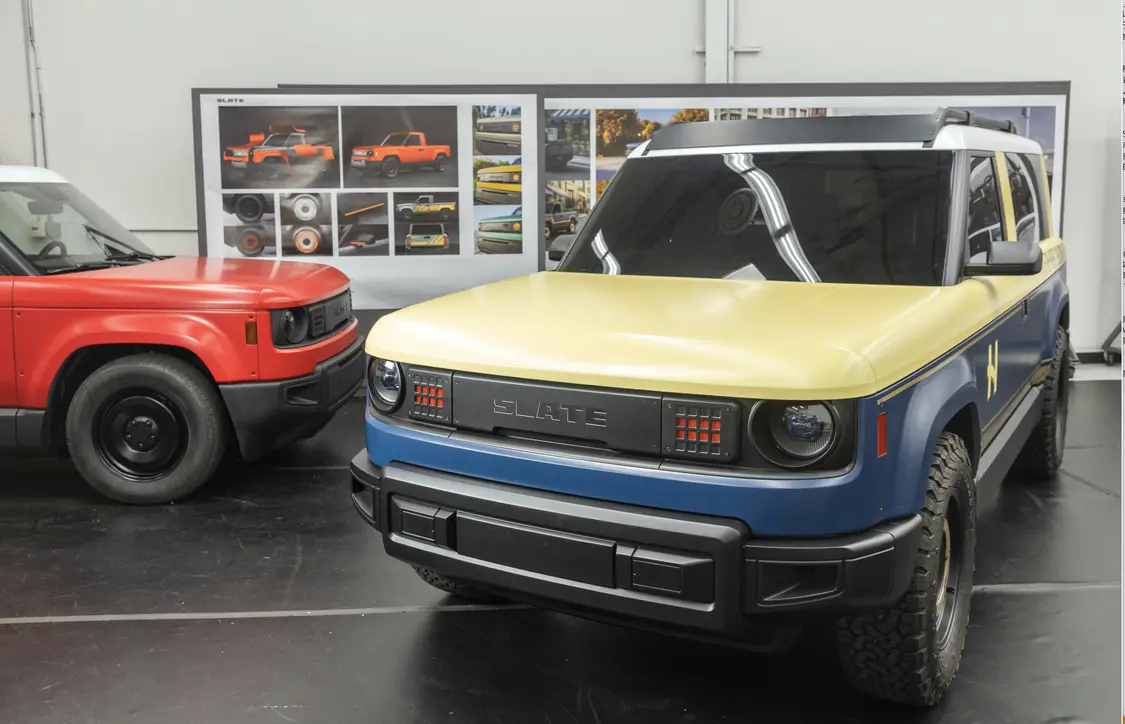
💡Understand the competitive landscape shift in the EV market and the role of manufacturing efficiency.
⚡ 30-Second TL;DR
What Changed
US new car prices continue to trend upward
Why It Matters
This shift highlights a potential market gap for AI-driven manufacturing efficiency and cost-reduction technologies in the US automotive sector.
What To Do Next
Analyze the cost-structure of Chinese EV supply chains to identify opportunities for AI-based manufacturing automation.
Key Points
- •US new car prices continue to trend upward
- •Chinese manufacturers are successfully entering mainstream price segments
- •Limited availability of affordable EV models in the US market
🧠 Deep Insight
AI-generated analysis for this event — not the original article.
🔑 Enhanced Key Takeaways
- •The US government maintains a 100% tariff on Chinese-made electric vehicles, effectively creating a price floor that prevents direct competition from ultra-low-cost models like the BYD Seagull.
- •US automakers are increasingly shifting focus toward hybrid and plug-in hybrid (PHEV) architectures to bridge the affordability gap while battery costs for full EVs remain elevated.
- •Chinese manufacturers are circumventing direct import barriers by establishing manufacturing footprints in Mexico, leveraging the US-Mexico-Canada Agreement (USMCA) to potentially access the North American market.
- •The 'average transaction price' for new vehicles in the US has remained persistently above $48,000, driven by a product mix heavily weighted toward large SUVs and trucks rather than compact, entry-level EVs.
- •Supply chain localization requirements under the Inflation Reduction Act (IRA) have complicated the ability of US manufacturers to source low-cost components, further widening the cost gap with Chinese vertically integrated supply chains.
📊 Competitor Analysis▸ Show
| Feature | US Domestic EV (Avg) | Chinese Export EV (e.g., BYD/MG) | Key Difference |
|---|---|---|---|
| Avg Price | $50,000+ | $20,000 - $30,000 | Significant cost delta |
| Battery Tech | NCM (Nickel Cobalt Manganese) | LFP (Lithium Iron Phosphate) | LFP is cheaper/safer |
| Vertical Integration | Moderate | High | Chinese firms own supply chain |
| Market Strategy | Premium/Performance | Mass Market/Value | Different target segments |
🛠️ Technical Deep Dive
- Chinese manufacturers utilize Cell-to-Pack (CTP) battery architecture, which eliminates modules to increase energy density and reduce manufacturing complexity.
- Widespread adoption of Lithium Iron Phosphate (LFP) chemistry in Chinese models provides a lower cost-per-kWh compared to the NCM chemistries favored by US manufacturers.
- High levels of vertical integration allow Chinese OEMs to produce proprietary power electronics and motor controllers, reducing reliance on third-party Tier 1 suppliers.
- Software-defined vehicle (SDV) architectures in Chinese models often feature centralized compute units, reducing wiring harness weight and production costs.
🔮 Future ImplicationsAI analysis grounded in cited sources
⏳ Timeline
Weekly AI Recap
Read this week's curated digest of top AI events →
👉Related Updates


AI-curated news aggregator. All content rights belong to original publishers.
Original source: cnBeta (Full RSS) ↗
This is a summary, not the original. Read the source, or get the weekly briefing.
Weekly AI briefing
One email a week. Unsubscribe anytime.