Unpredictable Agents in Production
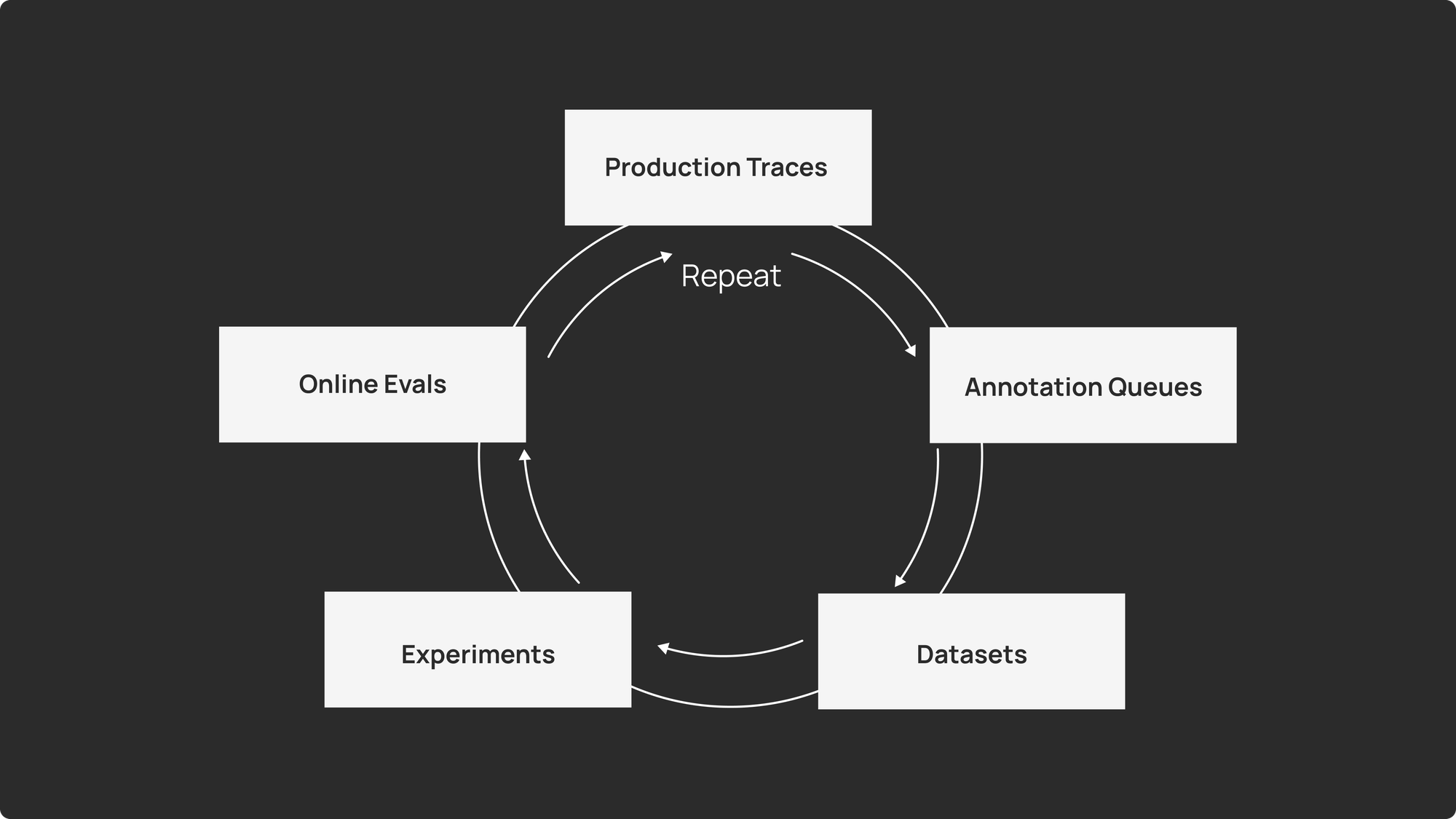
💡Master monitoring non-deterministic AI agents to avoid production failures.
⚡ 30-Second TL;DR
What Changed
Infinite inputs and non-deterministic behavior challenge traditional monitoring.
Why It Matters
Provides essential framework for safely deploying agents at scale, mitigating production surprises. Enables data-driven iteration, boosting reliability for AI applications.
What To Do Next
Implement LangSmith tracing in your LangChain agent deployments to capture production conversations.
Key Points
- •Infinite inputs and non-deterministic behavior challenge traditional monitoring.
- •Agent quality is assessed through conversations, not outputs alone.
- •Scale evaluations beyond manual checks using production data.
- •Production traces form the basis for iterative agent improvements.
🧠 Deep Insight
Background and context from public sources — not the original article. 10 sources cited.
🔑 Enhanced Key Takeaways
- •LangSmith provides automatic trace capture via a single environment variable, enabling visual timelines, token tracking, and dataset creation from production traces for scalable evaluations[3].
- •89% of organizations have implemented observability for agents, with 94% of production users achieving full tracing of multi-step reasoning and tool calls, making it essential for debugging[5].
- •LangChain's 2026 State of AI Agents report reveals 57% of organizations have agents in production, but quality remains the top barrier at 32%, surpassing cost concerns[3][5].
- •Agent autonomy exists on a spectrum from Level 2 branching workflows to Level 4 multi-agent systems, with Levels 2-3 recommended as the production sweet spot to balance reliability and complexity[2].
📊 Competitor Analysis▸ Show
| Platform | Key Features | Pricing | Benchmarks |
|---|---|---|---|
| LangSmith | Auto trace capture, visual debugging, production dataset evals, human annotation, low overhead | Usage-based; free tier | Tight LangChain integration; near-zero perf overhead; limited outside ecosystem [3] |
| Others (e.g. simulation platforms) | Persona-based scenario gen, cross-framework support | Varies | Broader sim but less tracing focus [3] |
🛠️ Technical Deep Dive
- •Agent decision loop: Action (select tool), Observe (examine output), Reason (reflect and decide next step), enabling autonomous adaptation[1].
- •ReAct agents interleave reasoning traces with tool calls for transparency and improved interpretability during debugging[1][6].
- •LangGraph supports stateful workflows with cycles, loops, and multi-agent orchestration like hierarchical managers or peer-to-peer designs[1][2].
- •Planner-Executor pattern: Planner decomposes goals into steps, executor handles each, reducing hallucinations by focusing on sub-tasks[1].
- •Observability in LangSmith: Waterfall views, token usage tracking, batch evals from traces, integrated with chains/tools/retrievers[3].
🔮 Future ImplicationsAI analysis grounded in cited sources
⏳ Timeline
📎 Sources (10)
Factual claims are grounded in the sources below. Forward-looking analysis is AI-generated interpretation.
- leanware.co — Langchain Agents Complete Guide in 2025
- 47billion.com — AI Agents in Production Frameworks Protocols and What Actually Works in 2026
- getmaxim.ai — Top 5 Platforms to Simulate AI Agents to Ensure Production Reliability in 2026
- blog.langchain.com — Agent Engineering a New Discipline
- langchain.com — State of Agent Engineering
- oneuptime.com — View
- blog.jetbrains.com — Langchain Tutorial 2026
- teqnovos.com — Why Langchain Still Leads AI Orchestration Key Advantages Explained
- blog.langchain.com — Customers Monday
- stackone.com — AI Agent Tools Landscape 2026
Weekly AI Recap
Read this week's curated digest of top AI events →
👉Related Updates
AI-curated news aggregator. All content rights belong to original publishers.
Original source: LangChain Blog ↗
This is a summary, not the original. Read the source, or get the weekly briefing.
Weekly AI briefing
One email a week. Unsubscribe anytime.