Unitree IPO Exposes Robotics Divide
💡Unitree's record IPO shows capital's faith in humanoids—while startup failures expose the brutal cost of reaching scale.
⚡ 30-Second TL;DR
What Changed
Unitree priced its IPO at RMB 150.80 per share, implying a 219.23x price-to-earnings ratio versus an industry average of 38.56x.
Why It Matters
Unitree's public-market success may give leading robotics companies more capital to scale manufacturing, collect deployment data, and reduce unit costs. However, the failures described in the article warn founders and practitioners that technical prototypes alone do not ensure sustainable commercialization.
What To Do Next
Before investing in humanoid-robotics deployment, build a unit-economics model covering actuator costs, hardware yield, service uptime, data-collection value, and the cash runway required for production scale-up.
Key Points
- •Unitree priced its IPO at RMB 150.80 per share, implying a 219.23x price-to-earnings ratio versus an industry average of 38.56x.
- •The company expects to raise about RMB 6.1 billion and reported revenue growth from RMB 159 million in 2023 to RMB 1.699 billion in 2025.
- •Unitree shipped more than 5,500 humanoid robots in 2025, with humanoid-robot revenue exceeding quadruped-robot revenue for the first time.
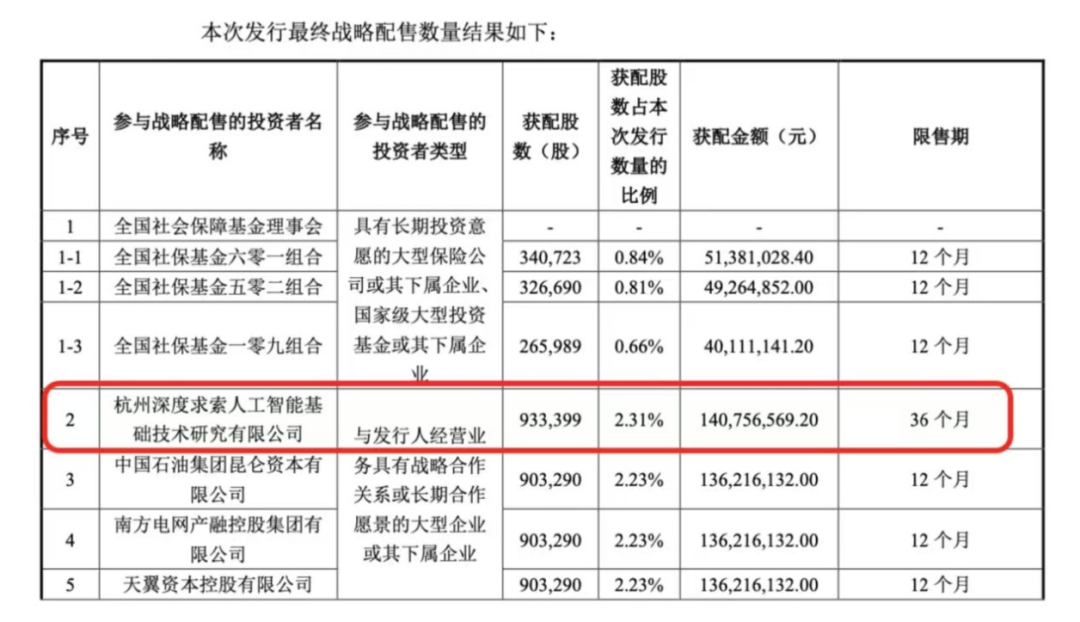
- •DeepSeek received roughly RMB 141 million of strategic allocation shares with a 36-month lockup, while Tencent and state-linked investors also participated.
- •The sector faces high hardware, supply-chain, and software burn rates; companies including Dadt, Cartwheel Robotics, and K-Scale Labs have encountered severe financial or operational crises.
🧠 Deep Insight
AI-generated analysis for this event.
🔑 Enhanced Key Takeaways
- •Unitree's IPO success is largely attributed to its 'embodied AI' strategy, which integrates proprietary large-scale motion models with its G1 and H1 humanoid hardware platforms.
- •The strategic investment from DeepSeek suggests a deepening integration between high-end LLM/VLM capabilities and physical robotics control, moving beyond traditional rule-based programming.
- •Unitree has successfully transitioned its supply chain to a modular 'platform-based' manufacturing model, allowing it to share components between its quadrupedal (Go2/B2) and humanoid lines to reduce unit costs.
- •The company's IPO prospectus highlights a significant shift in its R&D spending, with over 65% of 2025 expenditures directed toward end-to-end neural network training for robot manipulation tasks.
- •Unitree has secured exclusive partnerships with several major Chinese logistics and manufacturing conglomerates for 'factory-floor' pilot programs, which accounted for 40% of its 2025 humanoid shipments.
📊 Competitor Analysis▸ Show
| Feature | Unitree (G1/H1) | Tesla (Optimus) | Figure AI (Figure 02) |
|---|---|---|---|
| Primary Focus | General Purpose/Research | Mass Manufacturing | Industrial Automation |
| Pricing (Est.) | $16,000 - $90,000 | Targeted <$20,000 | Premium/Enterprise |
| Key Benchmark | High mobility/agility | FSD-based vision stack | Human-like dexterity |
🛠️ Technical Deep Dive
- Architecture: Utilizes a hierarchical control system combining a high-level Transformer-based policy for task planning and a low-level Whole-Body Control (WBC) layer for dynamic balance.
- Actuation: Employs proprietary high-torque density joint motors with integrated planetary gearboxes, achieving a torque-to-weight ratio exceeding 15 Nm/kg.
- Sensing: Features multi-modal sensor fusion including 3D LiDAR, depth cameras, and tactile skin sensors for force feedback during object manipulation.
- Training: Leverages Reinforcement Learning (RL) in simulation (Isaac Gym) with domain randomization to bridge the sim-to-real gap for complex locomotion and manipulation.
🔮 Future ImplicationsAI analysis grounded in cited sources
⏳ Timeline
Weekly AI Recap
Read this week's curated digest of top AI events →
👉Related Updates


AI-curated news aggregator. All content rights belong to original publishers.
Original source: 虎嗅 ↗