Ukrainian Drones Overwhelm U.S. Brigade in War Game
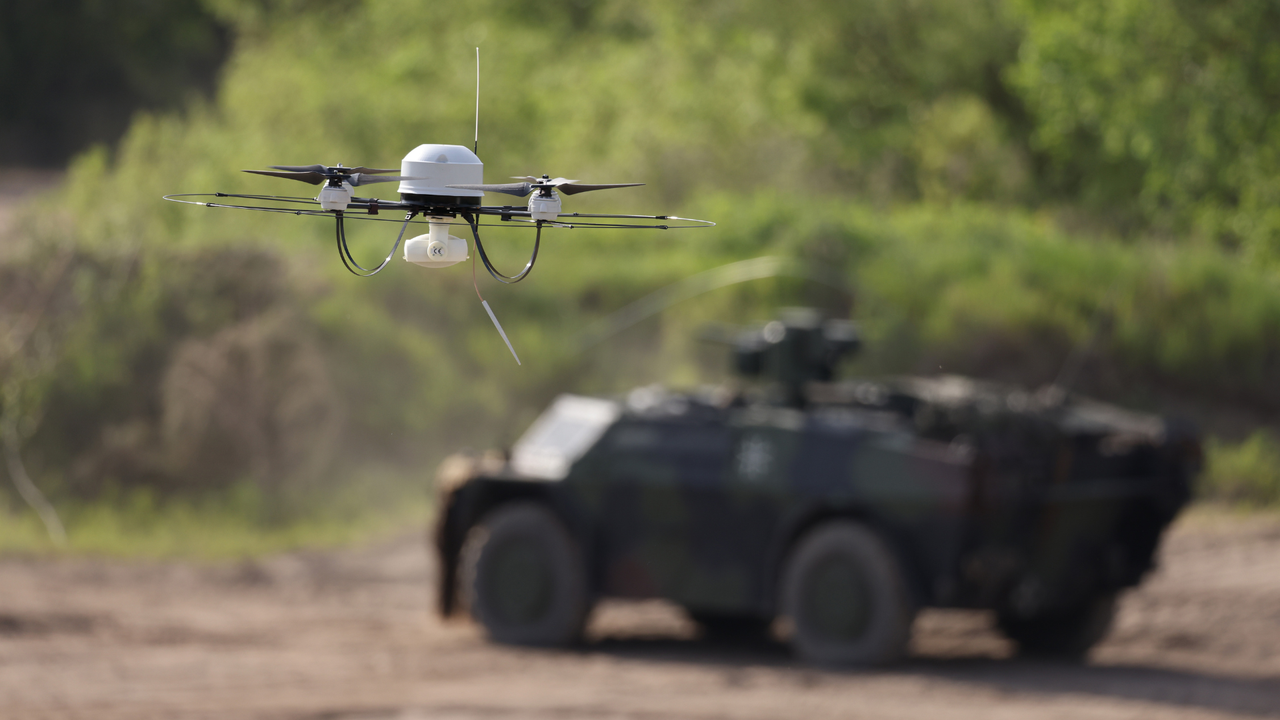
💡A battlefield exercise shows how quickly drones can overwhelm armored units and expose perception gaps.
⚡ 30-Second TL;DR
What Changed
The 3rd Brigade Combat Team fielded tanks, armored vehicles, and counter-drone units.
Why It Matters
The result suggests that inexpensive, networked drones can seriously challenge conventional armored formations. For AI and robotics teams, it underscores the importance of robust perception, electronic resilience, and rapid human-machine coordination in contested environments.
What To Do Next
Benchmark your YOLO- or OpenCV-based small-drone detector against cluttered, low-altitude footage and measure detection latency, false positives, and resilience to signal loss.
Key Points
- •The 3rd Brigade Combat Team fielded tanks, armored vehicles, and counter-drone units.
- •Ukrainian drone operators reportedly spotted and simulated the destruction of American vehicles with a high kill rate.
- •Repeated simulated losses forced the brigade to continuously respawn units during the exercise.
- •The exercise highlighted challenges in detecting, protecting, and responding to small drones.
🧠 Deep Insight
AI-generated analysis for this event.
🔑 Enhanced Key Takeaways
- •The exercise took place at the Joint Readiness Training Center (JRTC) at Fort Johnson, Louisiana, a premier facility for simulating large-scale combat operations.
- •The Ukrainian drone operators involved were invited to participate as subject matter experts to provide U.S. forces with realistic, modern battlefield experience against low-cost, high-volume drone threats.
- •The 'respawn' mechanism mentioned refers to the use of the Multiple Integrated Laser Engagement System (MILES) and digital tracking systems that allow commanders to simulate attrition and force regeneration in real-time.
- •The exercise revealed that traditional U.S. electronic warfare (EW) systems struggled to distinguish between commercial off-the-shelf (COTS) drones and background noise in complex electromagnetic environments.
- •This simulation is part of a broader U.S. Army initiative to integrate 'lessons learned' from the ongoing conflict in Ukraine into the Army's doctrine for Division-level operations.
🛠️ Technical Deep Dive
- The simulation utilized the Army's Integrated Tactical Network (ITN) to track drone telemetry and simulated kinetic effects against armored assets.
- Counter-drone tactics tested included both kinetic (jamming/spoofing) and non-kinetic (detection/tracking) measures, which proved insufficient against swarm-like tactics.
- The drone operators employed FPV (First Person View) drone simulations that mimic the flight characteristics, signal signatures, and payload capabilities of current Ukrainian-modified commercial drones.
- The exercise highlighted a critical gap in 'sensor-to-shooter' latency, where the time taken to identify a drone and authorize a counter-measure exceeded the drone's time-to-target.
🔮 Future ImplicationsAI analysis grounded in cited sources
⏳ Timeline
Weekly AI Recap
Read this week's curated digest of top AI events →
👉Related Updates
AI-curated news aggregator. All content rights belong to original publishers.
Original source: Tom's Hardware ↗