Ukraine's Terminator-Like Robots Boost War Effort
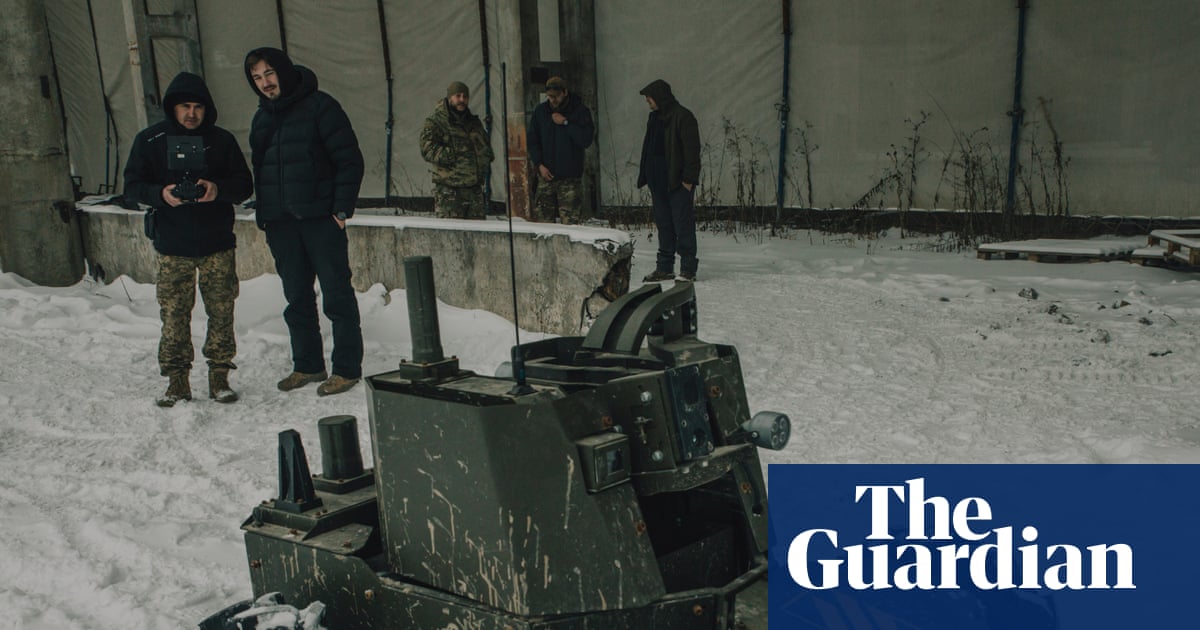
💡UGVs exploding in Ukraine war show embodied AI's battlefield edge—key for robotics devs.
⚡ 30-Second TL;DR
What Changed
Exponential growth in UGVs since spring 2024
Why It Matters
Rapid UGV adoption signals shift to robotics-dominated warfare, accelerating embodied AI innovations. This could spur global investment in autonomous systems for defense, influencing civilian robotics applications.
What To Do Next
Prototype UGV navigation using ROS2 for real-world terrain testing.
Key Points
- •Exponential growth in UGVs since spring 2024
- •Diverse designs: tracked, wheeled, mine-carrying robots
- •Battery-powered, resembling roofless milk float
- •Frontline warfare likened to Terminator movie
- •Provides hope against Russia in tech contest
🧠 Deep Insight
AI-generated analysis for this event — not the original article.
🔑 Enhanced Key Takeaways
- •The proliferation of Ukrainian UGVs is largely driven by the 'Brave1' defense cluster, a government-backed platform that accelerates the development and procurement of military-grade robotics by connecting private developers with the Ministry of Defense.
- •Beyond simple transport, these systems are increasingly integrated with Starlink terminals for low-latency remote operation, allowing operators to control units from secure bunkers several kilometers behind the frontline.
- •The tactical shift toward UGVs is a direct response to the 'drone-saturated' battlefield, where human reconnaissance and logistics teams face extreme attrition rates from FPV loitering munitions.
🛠️ Technical Deep Dive
- •Chassis Architecture: Primarily modular, low-profile frames utilizing commercial-off-the-shelf (COTS) electric drivetrains to minimize acoustic and thermal signatures.
- •Communication Stack: Hybrid mesh networks utilizing encrypted radio frequency (RF) links for short-range operations and Starlink for long-range, beyond-line-of-sight (BLOS) control.
- •Payload Versatility: Systems utilize standardized mounting rails allowing for rapid reconfiguration between casualty evacuation (CASEVAC) stretchers, anti-tank mine deployment, or remote weapon station (RWS) integration.
- •Power Management: High-density lithium-ion battery packs optimized for high-torque, low-speed operation in mud and uneven terrain, often featuring field-swappable modules.
🔮 Future ImplicationsAI analysis grounded in cited sources
⏳ Timeline
Weekly AI Recap
Read this week's curated digest of top AI events →
👉Related Updates



AI-curated news aggregator. All content rights belong to original publishers.
Original source: The Guardian Technology ↗
This is a summary, not the original. Read the source, or get the weekly briefing.
Weekly AI briefing
One email a week. Unsubscribe anytime.