Ukraine’s Robot Surge Offsets Drone Risks
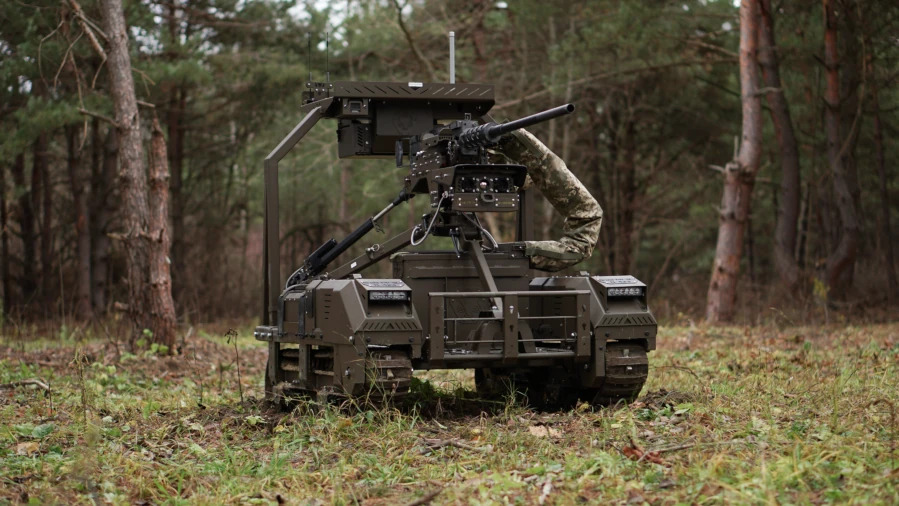
💡Ukraine's robot push vs drones: real embodied AI in combat lessons.
⚡ 30-Second TL;DR
What Changed
Ukraine surging military robots on battlefield
Why It Matters
Highlights embodied AI's role in warfare, spurring defense robotics R&D. AI practitioners gain insights into real-world autonomous systems under duress.
What To Do Next
Simulate robot-drone battles in Gazebo ROS to test evasion algorithms.
Key Points
- •Ukraine surging military robots on battlefield
- •Robots replacing soldiers in high-risk kill zones
- •Strategy offsets human risks from enemy drones
🧠 Deep Insight
AI-generated analysis for this event — not the original article.
🔑 Enhanced Key Takeaways
- •Ukraine has established a dedicated 'Brave1' defense cluster to accelerate the development and procurement of Unmanned Ground Vehicles (UGVs), focusing on modular platforms capable of mine-laying, casualty evacuation, and remote weapon station operation.
- •The tactical shift toward UGVs is driven by the proliferation of First-Person View (FPV) loitering munitions, which have made traditional armored vehicle maneuvers increasingly vulnerable to low-cost, precision strikes.
- •Deployment strategies now prioritize 'swarm-capable' ground units that utilize mesh networking to maintain command and control in high-interference electronic warfare environments.
🛠️ Technical Deep Dive
- •UGV platforms utilize modular chassis designs allowing for rapid field-swapping of payloads (e.g., anti-tank mines, medical litters, or 7.62mm machine gun mounts).
- •Communication architectures rely on encrypted, frequency-hopping radio links to mitigate Russian electronic warfare (EW) jamming capabilities.
- •Navigation systems incorporate redundant inertial measurement units (IMUs) and GNSS-denied localization algorithms to maintain operational integrity when GPS signals are spoofed or jammed.
- •Power systems are transitioning toward hybrid-electric drivetrains to reduce acoustic and thermal signatures, enhancing stealth during approach phases.
🔮 Future ImplicationsAI analysis grounded in cited sources
⏳ Timeline
Weekly AI Recap
Read this week's curated digest of top AI events →
👉Related Updates

AI-curated news aggregator. All content rights belong to original publishers.
Original source: Ars Technica AI ↗
This is a summary, not the original. Read the source, or get the weekly briefing.
Weekly AI briefing
One email a week. Unsubscribe anytime.