Typos as the new 'human' verification in AI era
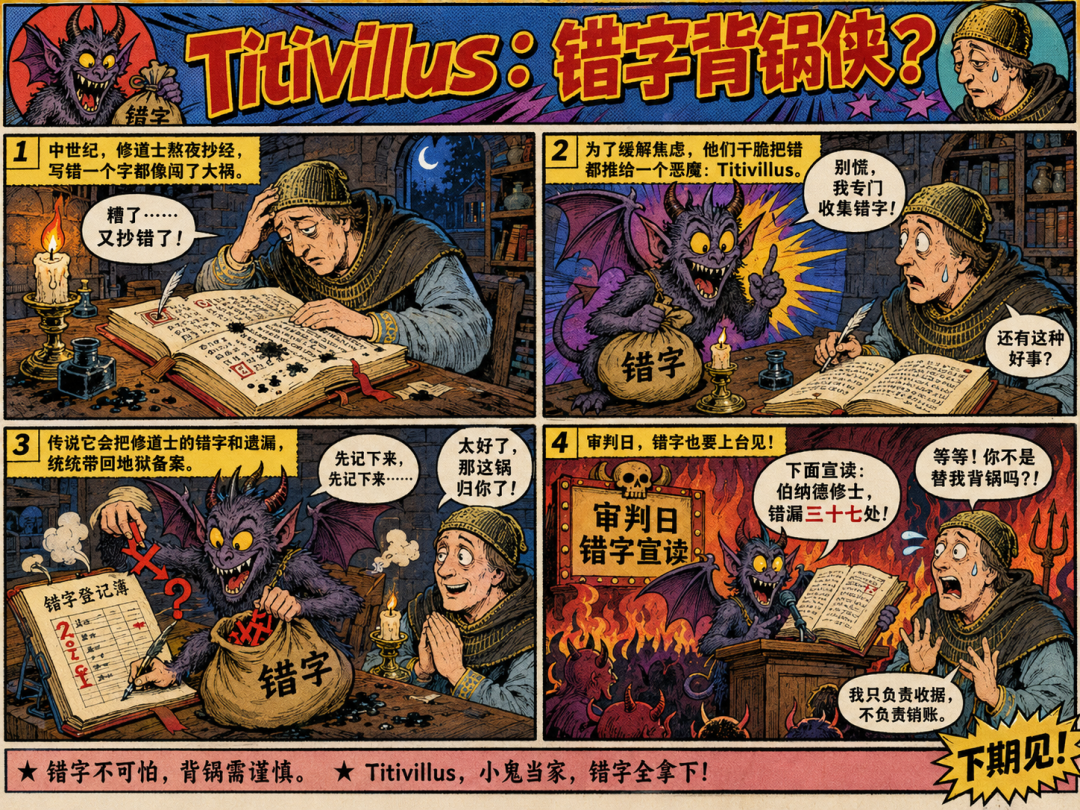
💡Discover why 'imperfection' is becoming a key metric for human-AI differentiation in content creation.
⚡ 30-Second TL;DR
What Changed
AI-generated content is often perceived as 'too perfect' and lacking human nuance.
Why It Matters
The pursuit of 'human-like' imperfections suggests that future AI models may need to incorporate controlled variability to feel more natural and trustworthy.
What To Do Next
Experiment with adjusting 'temperature' and 'presence penalty' parameters in your LLM prompts to introduce natural linguistic variation.
Key Points
- •AI-generated content is often perceived as 'too perfect' and lacking human nuance.
- •Users are intentionally introducing errors to bypass AI detection and signal authenticity.
- •The 'human touch' is becoming a commodity, with tools emerging to simulate human-like imperfections.
🧠 Deep Insight
Web-grounded analysis with 31 cited sources.
🔑 Enhanced Key Takeaways
- •The phenomenon of the 'uncanny valley of text' describes how AI-generated content, despite being grammatically flawless, can feel unnatural, soulless, or 'off' to human readers, leading to a sense of discomfort or distrust.
- •The proliferation of 'perfect' AI-generated content has devalued perfection itself, making human imperfections, such as minor errors or idiosyncratic phrasing, increasingly perceived as rare signals of authenticity and a new form of 'luxury' in digital communication.
- •An 'authenticity arms race' is emerging, where the development of sophisticated AI content generators is met with a counter-movement of AI detection tools, which in turn drives the creation of 'AI humanizer' tools designed to rewrite AI-generated text to bypass detection by introducing human-like variations and imperfections.
- •Some human writers are intentionally introducing errors, like typos, uneven punctuation, or aggressively casual language, into their work to proactively signal human authorship and avoid being falsely flagged as AI-generated content by detection algorithms or suspicious readers.
- •Transparency regarding the use of AI in content creation is becoming a critical factor for maintaining audience trust, with research indicating that consumers are more likely to trust brands and content creators who openly disclose when and how AI tools have been utilized.
🛠️ Technical Deep Dive
AI humanizer tools operate by analyzing AI-generated text for common patterns that reveal machine authorship, such as overly formal tone, repetitive phrasing, and uniform sentence structures.
- These tools then rewrite the content to introduce natural variations in rhythm, pacing, sentence length, vocabulary, and tone, aiming to mimic the less predictable and more expressive qualities of human writing.
- Conversely, AI detection tools (e.g., GPTZero, Turnitin, Originality.ai) analyze text for specific metrics like perplexity (how predictable the text is) and burstiness (variation in sentence length and structure) to identify patterns indicative of AI generation.
- Research into the 'uncanny valley of text' suggests that AI-generated text can be engineered to elicit discomfort when it is 'almost, but not quite' human, and that human readers generally prefer content with naturalness, imperfections, and vulnerability.
🔮 Future ImplicationsAI analysis grounded in cited sources
⏳ Timeline
📎 Sources (31)
Factual claims are grounded in the sources below. Forward-looking analysis is AI-generated interpretation.
- promptelixir.online
- mit.edu
- mit.edu
- wikipedia.org
- writingcooperative.com
- youtube.com
- almaterial.media
- psychologytoday.com
- linkbuildinghq.com
- notegpt.io
- aurawriteai.com
- hastewire.com
- ryne.ai
- substack.com
- scribbr.com
- phrasly.ai
- writehuman.ai
- humanizeai.pro
- finalscanpro.com
- substack.com
- medium.com
- medium.com
- berkeley.edu
- averi.ai
- emfluence.com
- grammarly.com
- dailywritingtips.com
- techdogs.com
- psychologytoday.com
- terminology.digital
- berkeley.edu
Weekly AI Recap
Read this week's curated digest of top AI events →
👉Related Updates



AI-curated news aggregator. All content rights belong to original publishers.
Original source: 虎嗅 ↗