Turning smartphones into a global earthquake detection network
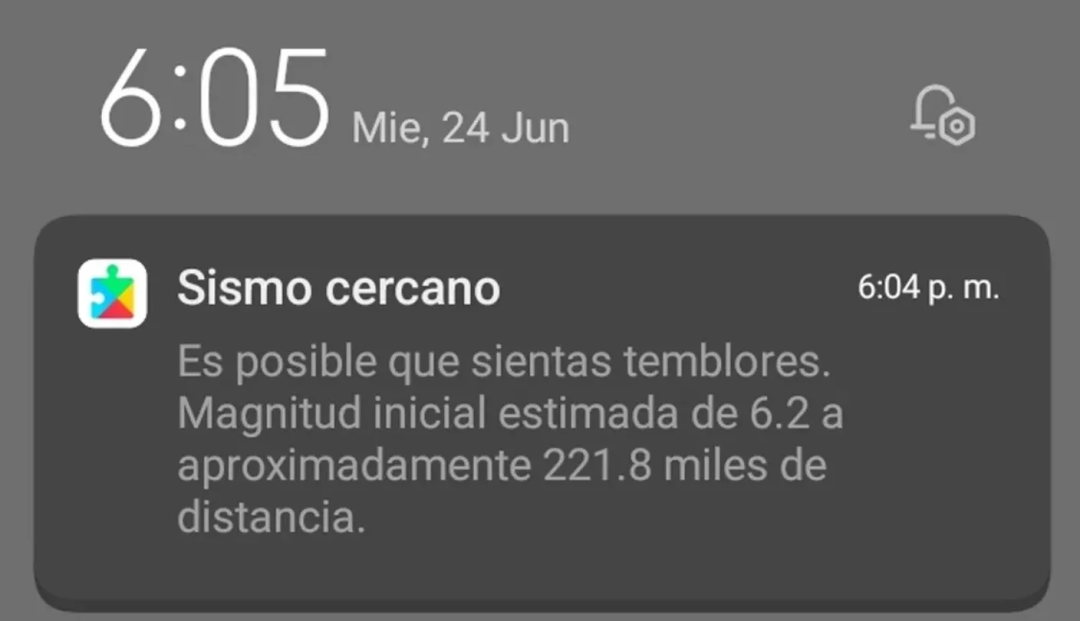
💡See how Google uses distributed edge computing to turn 2.5B phones into a global sensor network.
⚡ 30-Second TL;DR
What Changed
The system uses crowdsourced sensor data from 2.5 billion Android devices to detect P-waves.
Why It Matters
This technology demonstrates the power of distributed AI and sensor fusion, potentially saving thousands of lives by turning consumer hardware into critical infrastructure.
What To Do Next
Explore how to leverage distributed sensor data from edge devices for real-time anomaly detection in your own applications.
Key Points
- •The system uses crowdsourced sensor data from 2.5 billion Android devices to detect P-waves.
- •Algorithms process data in milliseconds to estimate epicenter and magnitude before S-waves hit.
- •The system provides critical seconds of warning, allowing users to take safety measures.
- •It is a prime example of distributed sensing and edge computing at a massive scale.
🧠 Deep Insight
AI-generated analysis for this event — not the original article.
🔑 Enhanced Key Takeaways
- •The system utilizes the Android Earthquake Alerts System (AEAS) which can function as a standalone detection network in regions lacking traditional seismometer infrastructure.
- •Google collaborates with the United States Geological Survey (USGS) and ShakeAlert to integrate smartphone data with professional seismic networks for enhanced accuracy.
- •The technology employs a 'ShakeReport' feature that allows users to provide feedback after an event, which helps refine the system's detection algorithms and ground-truth data.
- •Beyond detection, Google has expanded the system to include an API that allows third-party apps and businesses to receive earthquake alerts, facilitating automated safety responses like stopping elevators or shutting off gas lines.
- •The system distinguishes between seismic activity and everyday vibrations (like walking or dropping the phone) by requiring a 'coincidence' of multiple devices in a localized area to trigger an alert.
📊 Competitor Analysis▸ Show
| Feature | Android Earthquake Alerts | Apple (Wireless Emergency Alerts) | MyShake (UC Berkeley) |
|---|---|---|---|
| Detection Method | Crowdsourced Accelerometers | Government-issued alerts (Cell Broadcast) | Crowdsourced + USGS Integration |
| Pricing | Free (Built-in) | Free (OS Level) | Free (App) |
| Latency | Near-instant (Edge processing) | Dependent on government relay | Dependent on network/server processing |
🛠️ Technical Deep Dive
- The system treats the global fleet of Android devices as a distributed seismic array, utilizing the MEMS (Micro-Electro-Mechanical Systems) accelerometers present in smartphones.
- Data processing occurs via a two-tier architecture: local device-level detection of motion patterns followed by cloud-based aggregation to confirm seismic events.
- The algorithm specifically looks for the characteristic waveform of P-waves (primary waves), which travel faster but are less destructive than S-waves (secondary waves).
- Once a potential earthquake is detected, the system calculates the epicenter and magnitude by analyzing the time-of-arrival differences across multiple reporting devices.
- The system uses a 'coincidence filter' to reduce false positives, requiring a minimum threshold of devices in a specific geographic cluster to report similar motion signatures within a short time window.
🔮 Future ImplicationsAI analysis grounded in cited sources
⏳ Timeline
Weekly AI Recap
Read this week's curated digest of top AI events →
👉Related Updates



AI-curated news aggregator. All content rights belong to original publishers.
Original source: 虎嗅 ↗
This is a summary, not the original. Read the source, or get the weekly briefing.
The weekly digest
One email a week. Unsubscribe anytime.