🔥36氪•Stalecollected in 18m
Tsinghua AI Infra Secures Major Funding
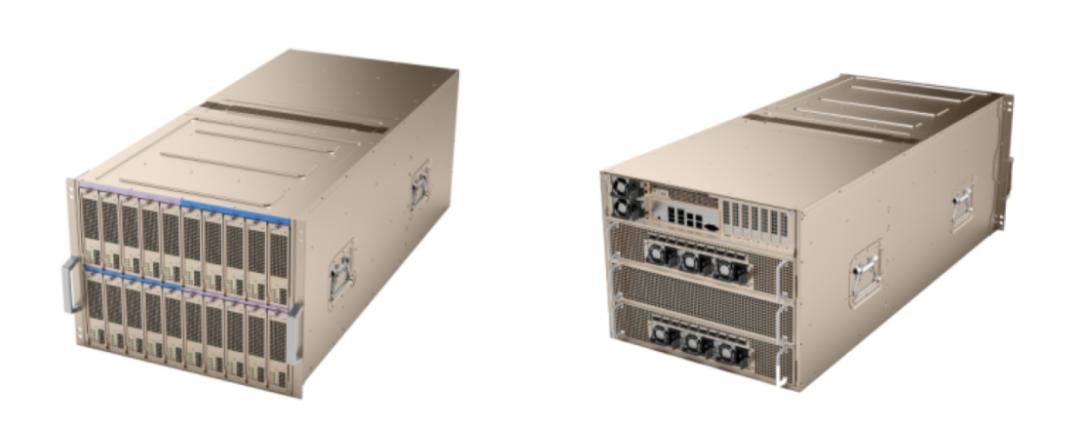
💡GPU-only arch hits 32:1 ratio, unlocks domestic AI infra scalability (hundreds of millions funding)
⚡ 30-Second TL;DR
What Changed
GPU-centric AGC architecture reduces CPU dependency, supports 20:1+ GPU ratios
Why It Matters
This funding and architecture shift could accelerate domestic AI infrastructure independence, lowering costs for large-scale training by optimizing GPU utilization and fault tolerance.
What To Do Next
Test AGC K20 server compatibility with your PCIe GPUs for high-ratio training clusters.
Who should care:Enterprise & Security Teams
Key Points
- •GPU-centric AGC architecture reduces CPU dependency, supports 20:1+ GPU ratios
- •Self-developed AI BMC enables microsecond fault response and hot-swappable GPU RAID
- •Blue Link optical interconnect uses Mini/MICRO LED for higher bandwidth and stability
- •Compatible with domestic CPUs like Loongson, Phytium; launched K20, AGC 64L products
- •Initiated RISC-V intelligent computing alliance for ecosystem standardization
🧠 Deep Insight
AI-generated analysis for this event.
🔑 Enhanced Key Takeaways
- •Beijing Rongxin Zhiyuan (Rongxin Zhiyuan) is strategically positioned to address the 'compute-to-memory' bottleneck in domestic AI clusters by offloading traditional CPU-bound management tasks to specialized AI BMC (Baseboard Management Controller) hardware.
- •The company's focus on RISC-V integration aims to reduce reliance on proprietary instruction set architectures, facilitating a more sovereign supply chain for Chinese data centers utilizing domestic processors like Loongson and Phytium.
- •The AGC architecture's high GPU-to-CPU ratio (32:1) is specifically optimized for large-scale model inference and training workloads where high-bandwidth, low-latency interconnects are prioritized over general-purpose CPU compute power.
🛠️ Technical Deep Dive
- •AGC Architecture: Implements a disaggregated hardware design that decouples GPU resources from host CPUs, allowing for dynamic resource pooling.
- •AI BMC: A proprietary management controller that handles GPU health monitoring, power management, and fault isolation at the hardware level, bypassing the host OS for faster recovery.
- •Blue Link Interconnect: Utilizes optical communication protocols to overcome the physical distance and signal degradation limitations of traditional PCIe-based GPU interconnects in large-scale clusters.
- •K-series/AGC-series: The K-series focuses on flexible, modular deployment for edge/mid-tier AI, while the AGC-series targets high-density, rack-scale AI training environments.
🔮 Future ImplicationsAI analysis grounded in cited sources
Rongxin Zhiyuan will achieve a 15% reduction in total cost of ownership (TCO) for domestic AI clusters by 2027.
The high GPU-to-CPU ratio significantly lowers the per-node expenditure on expensive general-purpose CPUs in large-scale AI deployments.
The RISC-V intelligent computing alliance will establish a unified hardware abstraction layer for domestic AI accelerators by Q4 2026.
Standardization efforts are critical for the company to ensure interoperability between their AGC architecture and the fragmented landscape of domestic Chinese AI chips.
⏳ Timeline
2026-05
Beijing Rongxin Zhiyuan secures angel round funding led by Beijing Green Energy Fund and Sequoia China.
📰
Weekly AI Recap
Read this week's curated digest of top AI events →
👉Related Updates

AI-curated news aggregator. All content rights belong to original publishers.
Original source: 36氪 ↗