Tsinghua AI Ore Sorter Raises $28M Series C
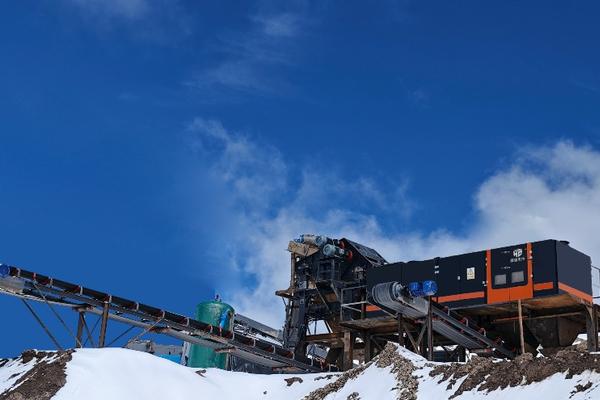
💡$28M fund for AI ore sorters revolutionizing mining efficiency sans water
⚡ 30-Second TL;DR
What Changed
Raised ~200M RMB Series C led by招商局資本 with multiple VCs.
Why It Matters
This funding boosts AI in mining, promoting sustainable dry sorting amid 'dual carbon' goals, potentially expanding to new industries.
What To Do Next
Prototype X-ray + AI vision pipelines using PyTorch for industrial object sorting.
Key Points
- •Raised ~200M RMB Series C led by招商局資本 with multiple VCs.
- •Self-developed X-ray detectors and AI algorithms enable dry sorting across ferrous/non-ferrous minerals.
- •99.9% separation accuracy, serves Zijin Mining and exports to Brazil/Indonesia.
- •Annual shipments >100 units, 40%+ CAGR, payback <1 year.
🧠 Deep Insight
AI-generated analysis for this event — not the original article.
🔑 Enhanced Key Takeaways
- •Horist Technology's core technology utilizes dual-energy X-ray transmission (DEXRT) combined with high-speed pneumatic ejection systems, allowing for real-time mineral identification at belt speeds exceeding 3 meters per second.
- •The company has successfully integrated its sorting solutions into 'smart mine' digital twin platforms, enabling remote monitoring and predictive maintenance for mining operators in remote regions.
- •Beyond traditional mining, Horist is actively piloting its AI-driven sorting technology for industrial solid waste recycling and construction debris separation to diversify its revenue streams beyond the cyclical mining sector.
📊 Competitor Analysis▸ Show
| Feature | Horist Technology | TOMRA Sorting Mining | Steinert |
|---|---|---|---|
| Core Tech | AI + Dual-Energy X-Ray | Sensor-Based Sorting (XRT/NIR) | X-Ray Transmission (XRT) |
| Market Focus | Emerging Markets/China | Global/Premium | Global/Premium |
| Pricing | Competitive/Cost-effective | High-end | High-end |
| Key Benchmark | 99.9% Accuracy | High throughput/Reliability | High throughput/Durability |
🛠️ Technical Deep Dive
- Sensor Fusion: Combines high-resolution X-ray transmission (XRT) sensors with visible light cameras for multi-modal data acquisition.
- AI Architecture: Utilizes proprietary convolutional neural networks (CNNs) optimized for edge computing on NVIDIA Jetson or similar industrial-grade embedded platforms to minimize latency.
- Ejection System: Employs high-frequency, low-latency pneumatic valve arrays capable of millisecond-level response times to ensure precise separation of ore particles.
- Material Handling: Features modular belt designs with vibration-dampening mechanisms to maintain stable particle distribution for consistent sensor readings.
🔮 Future ImplicationsAI analysis grounded in cited sources
⏳ Timeline
Weekly AI Recap
Read this week's curated digest of top AI events →
👉Related Updates
AI-curated news aggregator. All content rights belong to original publishers.
Original source: 36氪 ↗
This is a summary, not the original. Read the source, or get the weekly briefing.
The weekly digest
One email a week. Unsubscribe anytime.