🐯虎嗅•Stalecollected in 26m
Toyota vs BYD: EV Transformation Paths
💡Toyota's AV patents & BYD scaling offer AI-auto R&D lessons
⚡ 30-Second TL;DR
What Changed
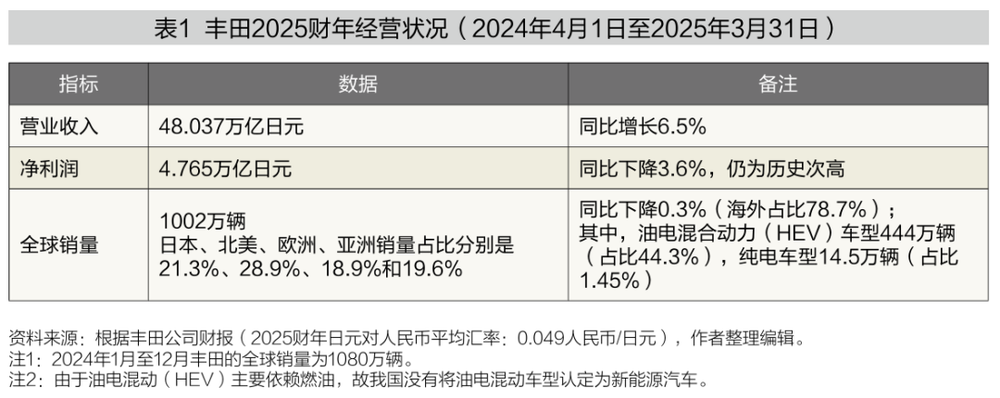
Toyota 2024 sales 10.8M vehicles, champions hybrids; BYD 4.25M NEVs leads new energy.
Why It Matters
Highlights steady vs agile paradigms for AI-auto integration, influencing AV strategy in enterprises.
What To Do Next
Analyze Toyota's 2428 AV patents via USPTO for inspiration in edge AI driving models.
Who should care:Enterprise & Security Teams
Key Points
- •Toyota 2024 sales 10.8M vehicles, champions hybrids; BYD 4.25M NEVs leads new energy.
- •Toyota R&D: global centers, 2428 US patents, >$2B in smart driving, partners Huawei/Momenta.
- •BYD from batteries to full EV chain, stopped fuel cars 2022, 100+ countries by 2025.
- •Toyota stages: 90yr accumulation to 2030 BEV 3.5M goal; BYD 4 stages to global expansion.
🧠 Deep Insight
AI-generated analysis for this event — not the original article.
🔑 Enhanced Key Takeaways
- •Toyota has shifted its strategy to prioritize 'Solid-State Battery' (SSB) commercialization by 2027-2028, aiming to leapfrog current lithium-ion limitations in range and charging speed.
- •BYD has successfully vertically integrated its supply chain to include proprietary semiconductor manufacturing (IGBTs and SiC power modules), insulating it from global chip shortages that impacted traditional OEMs.
- •Toyota's 'Arene' software platform is being developed as a unified operating system across its global fleet to standardize data collection and OTA updates, directly addressing its historical weakness in software-defined vehicle (SDV) capabilities.
📊 Competitor Analysis▸ Show
| Feature | Toyota (BEV/Hybrid) | BYD (BEV/PHEV) |
|---|---|---|
| Primary Tech | Hybrid/Hydrogen/SSB R&D | Blade Battery/e-Platform 3.0 |
| Pricing Strategy | Premium/Mid-market | Value-driven/Mass-market |
| Software | Arene OS (In-development) | DiLink Intelligent System |
| Supply Chain | Just-in-Time (Tiered) | High Vertical Integration |
🛠️ Technical Deep Dive
- Toyota Solid-State Battery: Focus on sulfide-based electrolytes to achieve 10-minute fast charging and 1,200km+ range; currently in pilot production phase.
- BYD Blade Battery: Cell-to-Pack (CTP) architecture utilizing lithium iron phosphate (LFP) chemistry, prioritizing thermal stability and volumetric efficiency over high-nickel density.
- BYD e-Platform 3.0: 800V high-voltage architecture enabling ultra-fast charging and integrated '8-in-1' electric powertrain system for reduced weight and space.
🔮 Future ImplicationsAI analysis grounded in cited sources
Toyota will achieve parity in BEV production costs with BYD by 2029.
The implementation of gigacasting manufacturing techniques and the scaling of solid-state battery production are projected to significantly reduce Toyota's per-unit manufacturing overhead.
BYD will surpass Toyota in total global vehicle sales volume by 2028.
Aggressive expansion into emerging markets and the cost advantage of their vertically integrated supply chain allow for faster market penetration than Toyota's cautious hybrid-first approach.
⏳ Timeline
2022-03
BYD officially ceases production of internal combustion engine (ICE) vehicles.
2023-06
Toyota announces a major technological breakthrough in solid-state battery durability.
2024-04
Toyota and Huawei announce a strategic partnership for intelligent driving solutions in the Chinese market.
2025-11
BYD reaches the milestone of operating in over 100 countries and regions globally.
📰
Weekly AI Recap
Read this week's curated digest of top AI events →
👉Related Updates


AI-curated news aggregator. All content rights belong to original publishers.
Original source: 虎嗅 ↗
This is a summary, not the original. Read the source, or get the weekly briefing.
Weekly AI briefing
One email a week. Unsubscribe anytime.