Three Interaction Models Between New Tech and Enterprises
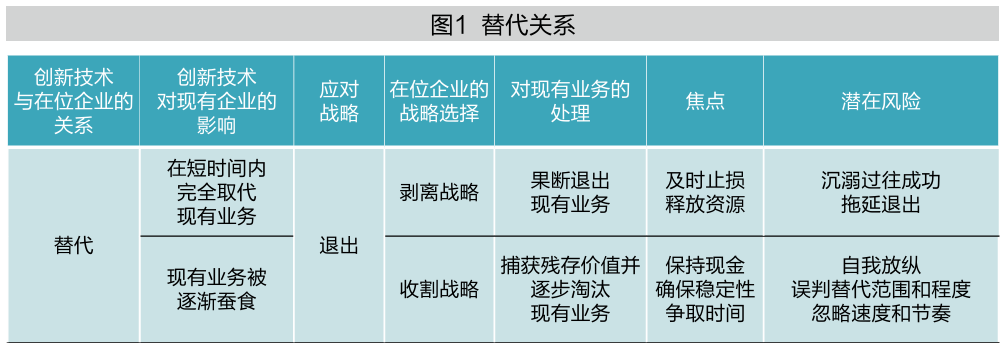
💡A strategic guide for AI builders to identify whether their solutions disrupt or empower traditional industries.
⚡ 30-Second TL;DR
What Changed
Substitution: New tech can rapidly replace or slowly erode existing business models.
Why It Matters
The framework helps AI practitioners and enterprise leaders align technical implementation with business value, avoiding the trap of 'innovation for innovation's sake'.
What To Do Next
Evaluate your current AI projects against the 'substitution vs. complementarity' matrix to determine if you should pivot or scale.
Key Points
- •Substitution: New tech can rapidly replace or slowly erode existing business models.
- •Complementarity: AI and digital tools can empower traditional operations through innovation or process optimization.
- •Strategic choices: Managers must choose between divestment, harvesting, embracing innovation, or assimilation based on technology impact.
- •Implementation risks: Over-adoption without considering organizational readiness or customer needs can lead to data silos and service degradation.
🧠 Deep Insight
AI-generated analysis for this event — not the original article.
🔑 Enhanced Key Takeaways
- •The 'Substitution' model is increasingly driven by 'Agentic Workflows,' where autonomous AI agents replace human-in-the-loop processes rather than just augmenting them.
- •Complementarity is shifting from simple process automation to 'Co-evolutionary' models, where enterprise data feedback loops continuously retrain proprietary models to create unique competitive moats.
- •The 'Parallel Coexistence' model is often observed in highly regulated industries (e.g., finance, healthcare) where legacy 'System of Record' architectures must remain isolated from 'System of Intelligence' AI layers for compliance.
- •Research indicates that 'Assimilation' failure is frequently linked to 'Technical Debt Accumulation,' where enterprises attempt to wrap legacy monolithic codebases with modern APIs without refactoring core logic.
- •Recent industry data suggests that enterprises adopting a 'Bimodal IT' strategy—balancing stable legacy systems with agile innovation—outperform those attempting full-scale digital transformation by 22% in operational efficiency.
🛠️ Technical Deep Dive
- Implementation of the 'Parallel Coexistence' model typically utilizes a 'Sidecar' or 'Adapter' pattern to decouple AI inference engines from legacy ERP/CRM databases.
- Integration of 'Complementarity' often involves RAG (Retrieval-Augmented Generation) architectures, where enterprise-specific vector databases are connected to LLMs to ensure domain-specific accuracy.
- 'Substitution' models frequently leverage 'Event-Driven Architecture' (EDA) to replace batch-processed legacy workflows with real-time, asynchronous AI-driven decisioning.
🔮 Future ImplicationsAI analysis grounded in cited sources
Weekly AI Recap
Read this week's curated digest of top AI events →
👉Related Updates


AI-curated news aggregator. All content rights belong to original publishers.
Original source: 虎嗅 ↗
This is a summary, not the original. Read the source, or get the weekly briefing.
Weekly AI briefing
One email a week. Unsubscribe anytime.