Third Net for EV Energy Self-Sufficiency
💡Quantum for full auto driving + EV infra: must-read for embodied AI builders.
⚡ 30-Second TL;DR
What Changed
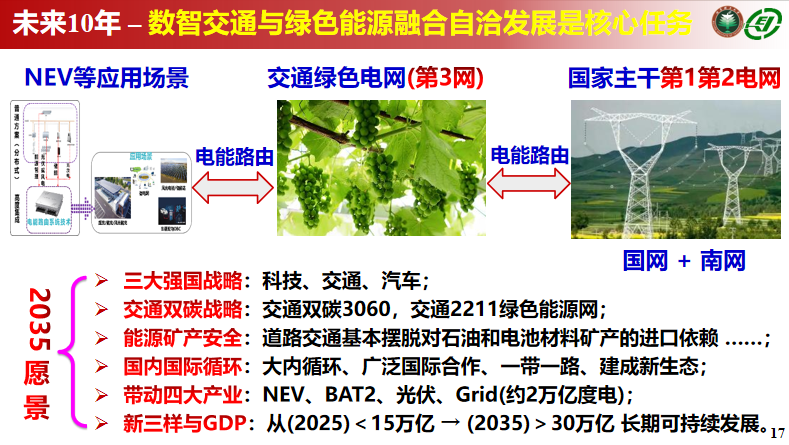
Highway solar-storage net yields 7000B kWh, independent of state grids
Why It Matters
Could end China's oil dependence, reshape NEV industry with AI autonomy. Spurs quantum-AI hardware investments amid global energy shifts.
What To Do Next
Prototype quantum-enhanced edge computing for L4+ autonomous simulations.
Key Points
- •Highway solar-storage net yields 7000B kWh, independent of state grids
- •EVs as dense mobile storage with multi-net routers for synergy
- •Autonomous driving beyond 100km/h needs quantum for microsecond latency
- •Solid-state batteries require full system innovation, not just safety hype
- •Industry reorganization essential to escape price wars
🧠 Deep Insight
Background and context from public sources — not the original article. 5 sources cited.
🔑 Enhanced Key Takeaways
- •China's expressways are actively integrating clean energy facilities like solar, supporting a green transformation to reduce reliance on traditional grids.[1]
- •Sun Fengchun co-authored research on extreme fast charging (XFC), proposing pulsed fast-charging protocols to enable 5-10 minute charges for 300-mile range, addressing battery degradation and infrastructure needs.[2]
- •Sun Fengchun's team at Beijing Institute of Technology developed data-driven energy management systems using offline reinforcement learning on real-world data from over 20 million Chinese EVs for hybrid energy storage optimization.[4]
🛠️ Technical Deep Dive
- •Extreme fast charging (XFC) targets 400-600 kW rates with pulsed protocols (e.g., 6s charge/4s pause cycles) to limit lithium plating, enabling <10 min charges for highway travel assuming 0.3 kWh/mile consumption and 65 mph speed.[2]
- •Data-driven EMS employs offline reinforcement learning on China's national EV platform data, integrating batteries and fuel cells in hybrid systems for improved efficiency across driving conditions.[4]
- •Model predictive control (MPC) for plug-in hybrid EVs with hybrid energy storage systems optimizes power split, as detailed in Sun Fengchun's publications.[3]
🔮 Future ImplicationsAI analysis grounded in cited sources
⏳ Timeline
📎 Sources (5)
Factual claims are grounded in the sources below. Forward-looking analysis is AI-generated interpretation.
Weekly AI Recap
Read this week's curated digest of top AI events →
👉Related Updates

AI-curated news aggregator. All content rights belong to original publishers.
Original source: 虎嗅 ↗
This is a summary, not the original. Read the source, or get the weekly briefing.
Weekly AI briefing
One email a week. Unsubscribe anytime.